

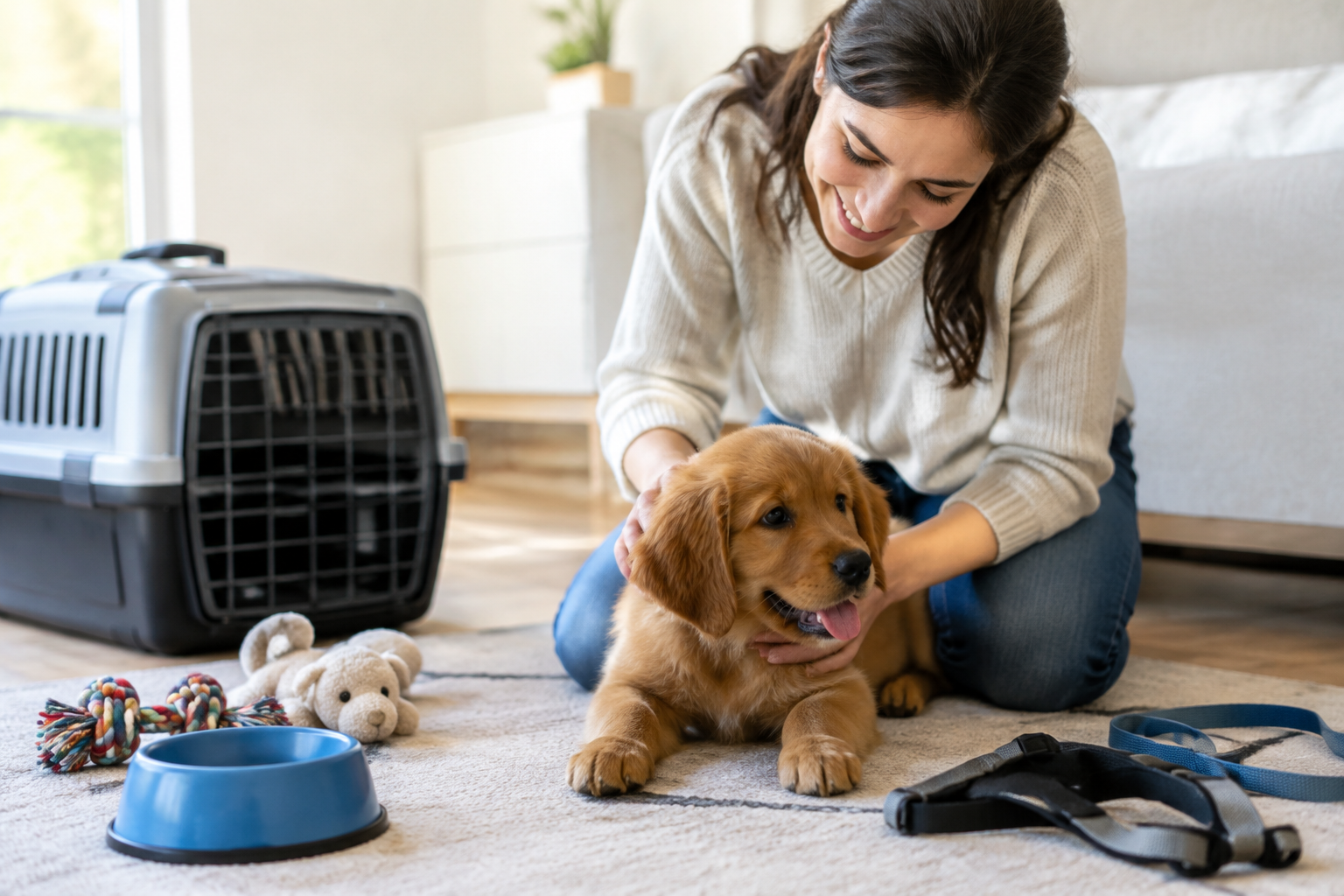
Bringing home a new pet can feel exciting and overwhelming at once. This first time dog owner essential supplies checklist will help you feel calm, prepared, and ready for those first few days.
Many new pet parents worry about getting everything right. However, dogs do not need perfection; they need safety, routine, and patience.
So, think of your first week as a gentle adjustment period. You are building trust, learning habits, and creating a home that helps your dog settle in.
What to Expect as a New Pet Parent
The first days often bring a mix of curiosity, clinginess, and confusion. Your dog may eat less, sleep more, or watch everything carefully.
That is normal, especially in a new environment. Therefore, try to keep the schedule simple and your expectations low.
Most dogs need time to understand where they sleep, eat, and potty. Also, they need time to learn your voice, your routines, and your rules.
Your job is to make the world feel safe and predictable. As a result, your dog can relax and start learning confidently.
First time dog owner essential supplies checklist: the basics
Before your dog comes home, gather the core items first. This helps reduce stress and prevents last-minute store runs.
You will usually need food, water bowls, a leash, a collar or harness, an ID tag, a bed, and safe toys. In addition, pick up waste bags, grooming tools, and a crate or gated area if you plan to use one.
Keep supplies simple at the start. Later, you can add extras once you know your dog’s size, preferences, and habits.
What your home should feel like
Your space does not need to look perfect. Instead, it should feel calm, safe, and easy to manage.
Choose one quiet area for rest, one spot for meals, and one easy potty plan. Also, remove chewable hazards like cords, small objects, and harmful foods.
This helps your dog succeed from day one. Moreover, it lowers your stress during the adjustment period.
Preparing Before Your Pet Comes Home
Preparation makes the transition smoother for everyone. So, set up the main areas before your dog arrives.
Start with a quiet resting spot. A bed or crate placed away from heavy foot traffic often works well.
Next, create a feeding station. Keep food and water in a consistent place so your dog learns the routine quickly.
Then, puppy-proof or dog-proof your home. Secure trash cans, store shoes, hide electrical cords, and remove anything you would not want chewed.
If you have children or other pets, plan introductions carefully. Calm, short, supervised meetings usually work better than busy, exciting ones.
first time dog owner essential supplies checklist for home setup
This part of your first time dog owner essential supplies checklist should include a collar with ID, a leash, food and water bowls, a crate or pen, and a comfy bed.
Also add cleaning supplies made for pet messes, safe chew toys, and a grooming brush. If your dog is small or young, include a carrier or transport option.
Finally, make sure your contact information is ready for an ID tag and registration. That small step can bring big peace of mind.
The First Day and the First Week
The first day should stay quiet and simple. Therefore, avoid inviting many visitors or scheduling a busy outing.
When your dog arrives, let them explore one room at a time. Give them water, show them the potty area, and then allow them to rest.
Keep greetings gentle and brief. If your dog seems nervous, that does not mean something is wrong.
During the first week, focus on routines. Feed at regular times, offer potty breaks often, and use the same cues each day.
Also, watch your dog’s behavior closely. Changes in eating, drinking, potty habits, or energy can help you understand what feels normal for them.
Introduce new people, sounds, and environments slowly. In addition, keep each new experience positive and short.
first time dog owner essential supplies checklist for the first week
For the first week, your first time dog owner essential supplies checklist should support comfort and consistency. Keep treats nearby for training, along with a leash for quick potty trips.
Also, have paper towels, enzymatic cleaner, and spare bedding ready. These items make early accidents far easier to handle.
Most importantly, keep your schedule flexible. Your dog is learning, and your patience matters more than perfection.
Feeding, Portions, and a Simple Routine
Feeding needs usually depend on age, size, and activity level. Because of that, your veterinarian or food label can help guide portions.
Young puppies often need several small meals each day. Older dogs usually do well with fewer meals, but individual needs can vary.
Try to feed at the same times daily. This helps with digestion, potty training, and general routine.
Fresh water should always stay available. However, some people limit water very briefly before bedtime to help overnight potty training, if their vet agrees.
Use treats carefully during training. Treats should stay small, since too many can upset balance and affect mealtime appetite.
If your dog eats too quickly, ask your vet about pacing strategies. For example, some dogs benefit from slow-feeding bowls or split meals.
Reading food guidance without the stress
Pet food labels can feel confusing at first. Still, you only need a few basics to begin.
Look for the feeding guide on the package, then ask your vet whether it fits your dog’s age and size. Also, choose a food made for your dog’s life stage.
If you want to change foods later, do it gradually. That helps your dog’s stomach adjust more comfortably.
Health, Vet Visits, and Early Safety
Schedule a first vet visit soon after your dog comes home. This visit helps you establish care and ask beginner questions.
Your vet will discuss vaccination timing, deworming in general terms, and any preventive care your dog may need. Since each dog is different, always follow your vet’s guidance.
Ask about microchipping and registration too. These steps can improve the chance of finding your pet if they ever get lost.
Also, keep an eye out for signs that deserve a call to the vet. These include repeated vomiting, severe diarrhea, trouble breathing, extreme tiredness, refusal to eat, or sudden pain.
When in doubt, call your vet. Early advice is often better than waiting and worrying.
Pet insurance may also be worth considering. For beginners, it can help you plan for unexpected costs more confidently.
first time dog owner essential supplies checklist for vet day
Your first time dog owner essential supplies checklist for vet visits should include a leash or carrier, vaccination records if available, notes about feeding, and a list of questions.
Bring your dog’s current food brand too, if your vet asks about it. That can help with diet discussions.
Finally, keep a folder or digital note for records. It makes future appointments much easier.
Training, Socialization, and Daily Habits
Training should begin with simple routines. Start with potty training, name recognition, and calm handling.
Use positive reinforcement only. That means rewarding behaviors you like with treats, praise, or play.
Crate training can help some dogs feel secure, if introduced gently. A crate should never feel like punishment; it should feel like a safe resting place.
Socialization matters too. This means helping your dog get used to different people, sounds, surfaces, and safe experiences in a gradual way.
Keep each new interaction brief and upbeat. Then, let your dog rest afterward.
Grooming can start simply with brushing, gentle paw handling, and short check-ins at home. That routine makes future baths or nail trims easier.
Exercise and play also help your dog settle. Short walks and interactive toys often work better than long, overwhelming sessions at first.
If you live with kids, teach them to use calm voices and gentle hands. Likewise, supervise every early interaction with other pets.
Common Mistakes and a Simple First-Month Checklist
New owners often try to do too much too soon. However, a slow and steady start usually works best.
One common mistake is changing routines every day. Another is offering too many visitors before the dog feels settled.
Some people also skip early vet care or forget to plan for costs. So, set aside money for food, routine care, supplies, and possible emergencies.
It also helps to avoid harsh corrections. Positive reinforcement builds trust and usually leads to better learning.
