

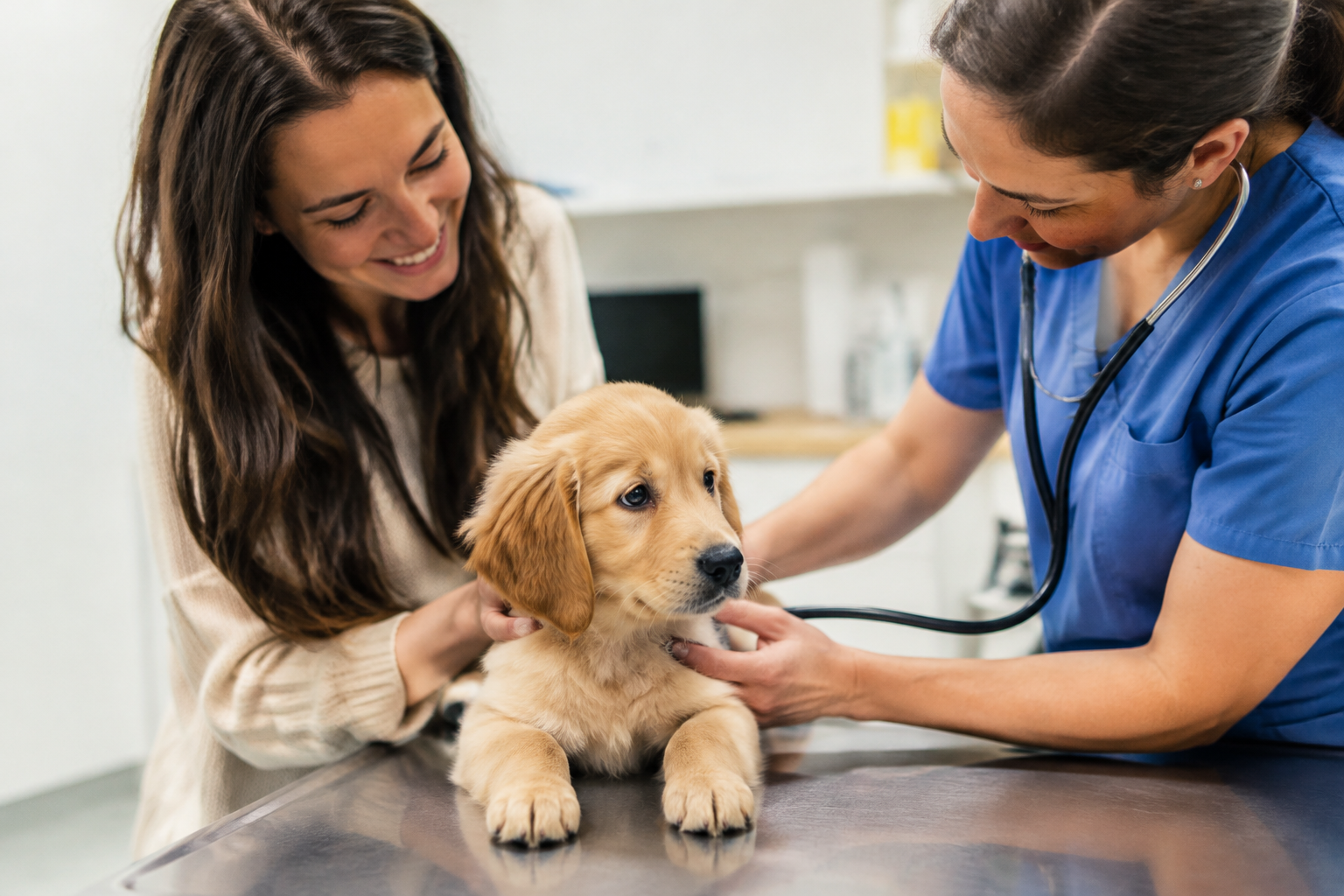
Bringing home a puppy feels exciting, and it can also feel overwhelming. A clear new puppy first vet visit checklist helps you feel calm, prepared, and confident.
That first week does not need to be perfect. Instead, it needs to be simple, safe, and full of small wins for both of you.
Many new pet parents worry they will forget something important. Thankfully, a little planning goes a long way, and your vet can help you adjust as you learn.
What to Expect in the First Days and Weeks
Your puppy’s first days at home usually bring energy, curiosity, and a few surprises. That is normal, and it does not mean you are doing anything wrong.
At first, your job is to help your puppy feel safe. Therefore, keep routines steady, keep interactions gentle, and keep expectations realistic.
In the first week, your puppy will likely need frequent potty breaks, regular naps, and time to explore. Also, your puppy may seem shy one moment and bouncy the next.
New pet parents often ask how quickly everything should fall into place. The answer is simple: slowly, with patience, praise, and consistency.
New puppy first vet visit checklist for a calm start
This new puppy first vet visit checklist begins before you even leave the house. Bring any adoption papers, vaccination notes, previous health records, and a list of questions.
Also, write down your puppy’s current food, feeding times, potty habits, and energy level. That information helps your vet understand your puppy’s routine and needs.
If you feel nervous, that is completely normal. In fact, most first-time owners do, and a good veterinary team expects that.
Prepare Your Home Before Your Puppy Arrives
Before your puppy comes home, set up one small safe area. This space should feel quiet, comfortable, and easy to clean.
Start with a crate, pen, or gated room if your vet or trainer suggests one. Then add soft bedding, water, and a few safe chew toys.
Next, gather the basics you will use every day. These usually include food, bowls, a leash, poop bags, puppy-safe cleaning supplies, a collar or harness, and a name tag.
Also, puppy-proof your home. Put away cords, shoes, medications, cleaning products, and anything small that could be swallowed.
new puppy first vet visit checklist for home prep
Your new puppy first vet visit checklist should also include home questions. For example, ask whether your puppy should sleep in a crate, a pen, or a bedroom spot at first.
Then, choose a potty area outside and make it easy to reach. If you can, use the same door each time to build a simple routine.
Finally, plan where family members will sit, play, and feed your puppy. Calm order helps your puppy settle in faster.
The First Day and First Week: Keep It Simple
The first day should feel quiet and predictable. So, limit visitors, avoid loud noises, and give your puppy time to sniff and rest.
Try a simple rhythm: potty, water, short play, nap, repeat. Because puppies tire quickly, short activities work better than long ones.
Also, introduce family members one at a time. Let children sit calmly and offer gentle praise, rather than excited grabbing or loud squealing.
If you have other pets, keep the first meeting slow and controlled. Use short, supervised introductions, and separate pets when you cannot watch closely.
During the first week, celebrate small progress. For example, a successful potty trip, a quiet nap, or a calm greeting all count as wins.
Feeding, Routine, and Mealtime Questions
Feeding can feel confusing at first, but it becomes easier with a routine. Ask your vet which food fits your puppy’s age, size, and breed.
In general, younger puppies need more frequent meals than older puppies. Therefore, many puppies do best with three or four meals a day at first.
Use the feeding guide on the package as a starting point. However, your vet may suggest changes based on your puppy’s growth and body condition.
Keep meals steady and portions measured. That way, you can spot changes in appetite more easily.
Water should stay available unless your vet gives different advice. Also, avoid too many treats during training, since small puppies fill up fast.
If you want help with food choices, bring the label to your appointment. Your vet can explain what to look for in simple terms.
new puppy first vet visit checklist for feeding questions
Use your new puppy first vet visit checklist to ask about meal timing, treats, and food transitions. Sudden food changes can upset a puppy’s stomach, so transition plans matter.
Also ask when your puppy should move from puppy food to adult food. That timing depends on growth and your vet’s guidance.
Finally, ask what weight changes to watch for. Regular checkups help you catch issues early and stay confident.
Health Basics: Vet Care, Vaccines, and When to Call
Your first vet visit does more than check weight and size. It also helps you build a health plan for vaccines, deworming, and routine care.
Vets often review your puppy’s early vaccine timeline and parasite prevention in general terms. Because schedules vary, always follow your own vet’s plan.
Many puppies also need deworming at some point. Again, your vet will advise you on timing and what is appropriate for your puppy.
Ask about microchipping if your puppy does not already have one. A microchip can help identify your pet if they ever get lost.
Also ask how to register the chip and keep contact details updated. A chip works best when your information stays current.
Some signs deserve a call to the vet right away. These include repeated vomiting, severe diarrhea, trouble breathing, collapse, a swollen belly, or a puppy who will not eat or drink.
Call your vet if your puppy seems unusually sleepy, painful, or weak. When in doubt, it is always better to ask.
Training, Socialization, and Gentle Daily Habits
Training should feel encouraging, not stressful. Use praise, treats, play, and cheerful repetition to reward the behavior you want.
For potty training, take your puppy out often and especially after sleep, meals, and play. Then reward right away when they go in the right spot.
Crate training can also help, if you use it kindly. Make the crate a comfortable place, never a punishment.
Short sessions work best. If your puppy finishes a calm potty trip or settles in the crate, give quiet praise and a small treat.
Early socialization matters too. Let your puppy safely experience different sounds, people, surfaces, and gentle handling at a pace they can handle.
Keep grooming simple in the beginning. Brush lightly, touch paws gently, and let your puppy get used to being handled.
Exercise should match your puppy’s age and energy level. Short play sessions, sniffing games, and brief walks usually work better than long outings.
Also, protect rest time. Puppies need plenty of sleep to grow, learn, and recover.
new puppy first vet visit checklist for training basics
Your new puppy first vet visit checklist can include questions about exercise limits, play ideas, and socialization safety. Your vet may also explain what your puppy should avoid while young.
Ask about nail trims, brushing, bathing, and handling. Small habits now can make future grooming much easier.
Finally, ask how to tell the difference between normal puppy mischief and a possible health concern. That guidance can save a lot of worry later.
Costs, First-Month Priorities, and Common Mistakes
New puppy costs add up quickly, so it helps to plan early. Food, routine vet care, preventive care, supplies, and training tools all belong in your budget.
Many beginners also consider pet insurance. It can help with unexpected bills, so ask how different plans work before you choose one.
Spaying or neutering is another question to discuss with your vet. The right timing depends on your puppy’s age, size, and health.
During the first month, focus on routine, safety, and trust. Do not worry about perfection, because steady progress matters more.
Common mistakes include offering too much freedom too soon, skipping potty breaks, using harsh corrections, and changing food too quickly. Also, avoid overbooking your puppy with too many new experiences in one day.
Instead, keep things simple. Consistency, positive reinforcement, and patient supervision will help your puppy adjust.
- Schedule the first vet visit and bring records.
- Set up a
