

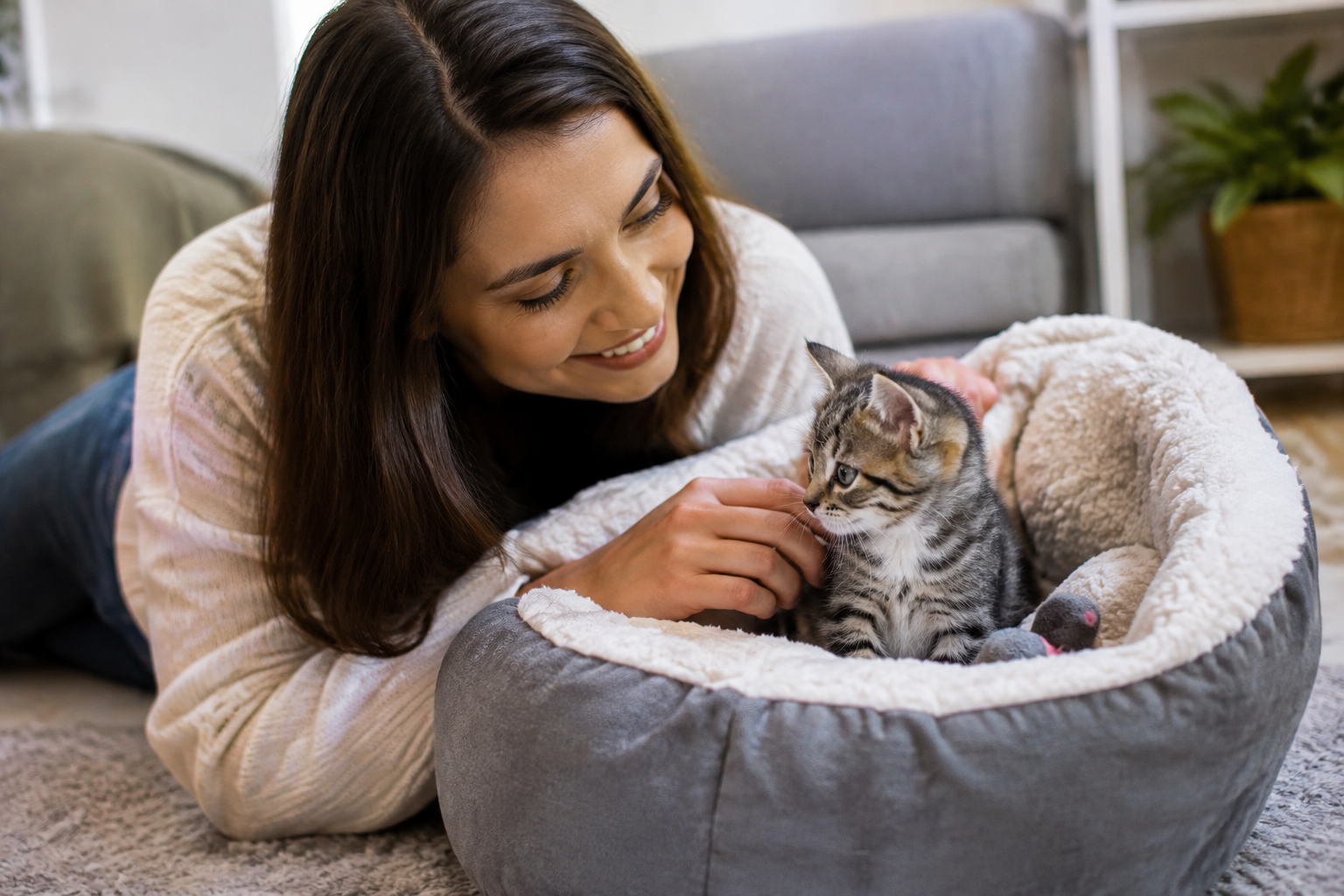
Bringing home a kitten is exciting, and it can feel a little overwhelming too. If you are wondering what to expect bringing home new kitten, you are already thinking like a caring pet parent.
That first day changes quickly from nervous planning to happy chaos. However, with a simple plan, you can make your kitten feel safe, calm, and welcome.
Your kitten may hide, sleep, explore, or watch you from a distance. All of that is normal, and patience will help more than rushing.
What to Expect Bringing Home New Kitten
The first days usually mix curiosity with caution. Your kitten may eat less, sleep more, or move from room to room in short bursts.
Because everything feels new, your kitten needs time to adjust. So, keep your home quiet, predictable, and gentle during the first week.
Some kittens bond quickly, while others need more space. Either way, trust grows through small, calm routines.
If you are unsure what to expect bringing home new kitten, remember this: progress often looks small at first. A kitten that steps out from hiding, eats well, or uses the litter box is already settling in.
What to expect bringing home new kitten in the first days
During the first days, your kitten may stick close to one safe spot. For example, many kittens choose a quiet room with food, water, a litter box, and a soft bed.
Meanwhile, keep visitors low and noise soft. This helps your kitten learn that home is safe and that people are not a threat.
Also, expect a lot of short naps. Kittens grow fast, and therefore sleep takes up much of their day.
What to expect bringing home new kitten in the first weeks
By the second week, your kitten may start exploring more confidently. However, new sounds, smells, and movement can still feel scary.
So, keep routines steady. Feed at similar times, use the same litter box setup, and offer play at regular points in the day.
As your kitten settles, personality often shows more clearly. You may see bursts of play, extra cuddles, or a strong love of climbing.
Preparing Your Home Before Kitten Arrival
Preparation makes the first days much easier. Start with a few essentials, and then build from there as you learn your kitten’s habits.
You will need food, water bowls, a litter box, litter, a carrier, and a few toys. In addition, a scratching post or pad helps protect furniture and gives your kitten a healthy outlet.
Create one small safe room first. This room should be quiet, easy to clean, and free from hazards.
Then, kitten-proof the larger home. Hide cords, secure breakables, close unsafe cabinets, and remove small items that could be swallowed.
Also, check windows, balconies, and tight spaces. Curious kittens can slip into surprising places, so prevention matters.
What to expect bringing home new kitten when the house is ready
A prepared space reduces stress for both of you. Therefore, your kitten can focus on settling in rather than searching for basic needs.
Place food and water away from the litter box. Most kittens prefer that separation, and it helps keep routines clean and clear.
Keep bedding soft, but simple. Too many new items can overwhelm a cautious kitten at first.
The First Day and First Week, Step by Step
On the first day, bring your kitten straight to the safe room. Then, open the carrier and let your kitten come out in their own time.
Do not force cuddles or carry your kitten from spot to spot. Instead, sit nearby, speak softly, and let curiosity build naturally.
Offer a small meal and fresh water. After that, show your kitten where the litter box is, but avoid repeating the lesson too many times.
During the first week, keep introductions gradual. If you have children or other pets, introduce them slowly and under close supervision.
For children, teach gentle hands and quiet voices. For other pets, use short, calm meetings and separate spaces at first.
Also, watch your kitten’s energy. A kitten that suddenly becomes withdrawn, refuses food, or seems unwell needs attention from a veterinarian.
If you are still wondering what to expect bringing home new kitten, remember that the first week is about trust, not perfection. Small wins matter more than big ones.
Feeding, Health, and First Vet Essentials
Feeding changes as kittens grow, so age matters. Younger kittens usually need several small meals a day, while older kittens can often move toward fewer meals.
Your veterinarian can help you choose a feeding plan based on age, weight, and overall health. Therefore, use general guidance at home, and confirm details at the first visit.
Keep fresh water available at all times. Also, use the same food at first if possible, because sudden changes can upset a kitten’s stomach.
Plan the first vet visit soon after arrival. That visit usually includes a general health check, a conversation about vaccines, deworming, parasite prevention, and an overall care plan.
In addition, ask about microchipping and registration. A microchip is a tiny ID placed by a veterinarian, and registration links that ID to your contact information.
Signs to call a vet include no eating for a full day, repeated vomiting, trouble breathing, obvious pain, severe diarrhea, or extreme low energy. Also call if your kitten cannot urinate or uses the litter box repeatedly without success.
Vaccines and deworming schedules vary by region and age. So, follow your veterinarian’s advice rather than guessing.
What to expect bringing home new kitten at the first vet visit
The first vet visit often feels like a big milestone. However, it is simply a chance to build a care plan and ask questions.
Bring any adoption papers, prior records, and a list of questions. Also, note your kitten’s eating, litter habits, and energy level before the appointment.
Training, Socialization, and Daily Care
Training works best with reward-based methods. Praise, treats, and gentle encouragement teach faster than fear ever will.
For litter box habits, place your kitten in the box after meals and naps. If your kitten uses it successfully, offer calm praise right away.
Crate training can also help, especially for travel and vet visits. Start with short, positive sessions, and make the carrier feel safe with soft bedding and treats.
Socialization means helping your kitten feel comfortable with everyday sights, sounds, and people. Begin slowly, and let your kitten choose the pace.
Grooming should stay simple at first. Gentle brushing, brief paw handling, and light ear checks help your kitten get used to care routines.
Play is not optional; it supports exercise, learning, and confidence. Use wand toys, balls, and short interactive games to burn energy safely.
Because kittens need both rest and activity, keep play sessions short but frequent. That balance helps prevent overstimulation while supporting healthy development.
What to expect bringing home new kitten with other pets at home
If you already have pets, slow introductions work best. First, let them smell each other through a door or barrier before face-to-face meetings.
Then, keep early meetings brief and positive. Separate food bowls, litter boxes, and resting areas so everyone feels safer.
Costs, Common Mistakes, and Your First-Month Checklist
New kitten costs can add up fast, especially in the first year. Food, litter, vet care, vaccines, microchipping, toys, and supplies all matter.
Pet insurance may help beginners manage unexpected veterinary costs. However, compare plans carefully and understand what each policy covers before signing up.
Another practical question is spaying or neutering. Your vet can explain the right timing for your kitten based on age and health.
Common mistakes include too much handling too soon, changing foods too quickly, and skipping the vet visit. Also, many new owners forget that kittens need both structure and patience.
Avoid punishment for accidents or scratching. Instead, guide behavior with litter box access, scratching posts, and consistent rewards.
For the first month, use a simple checklist. Keep it visible so you can track progress without feeling scattered.
- Set up a quiet safe room
- Provide food, water, litter box, carrier, bed, and toys
- Kitten-proof cords, cabinets, windows, and small openings
- Schedule the first veterinarian visit
- Ask about vaccines, deworming, microchip, and registration
- Establish a feeding and litter routine
- Start gentle play, grooming, and positive reinforcement training
- Introduce family members and other pets slowly
- Watch for any warning signs that need attention
