

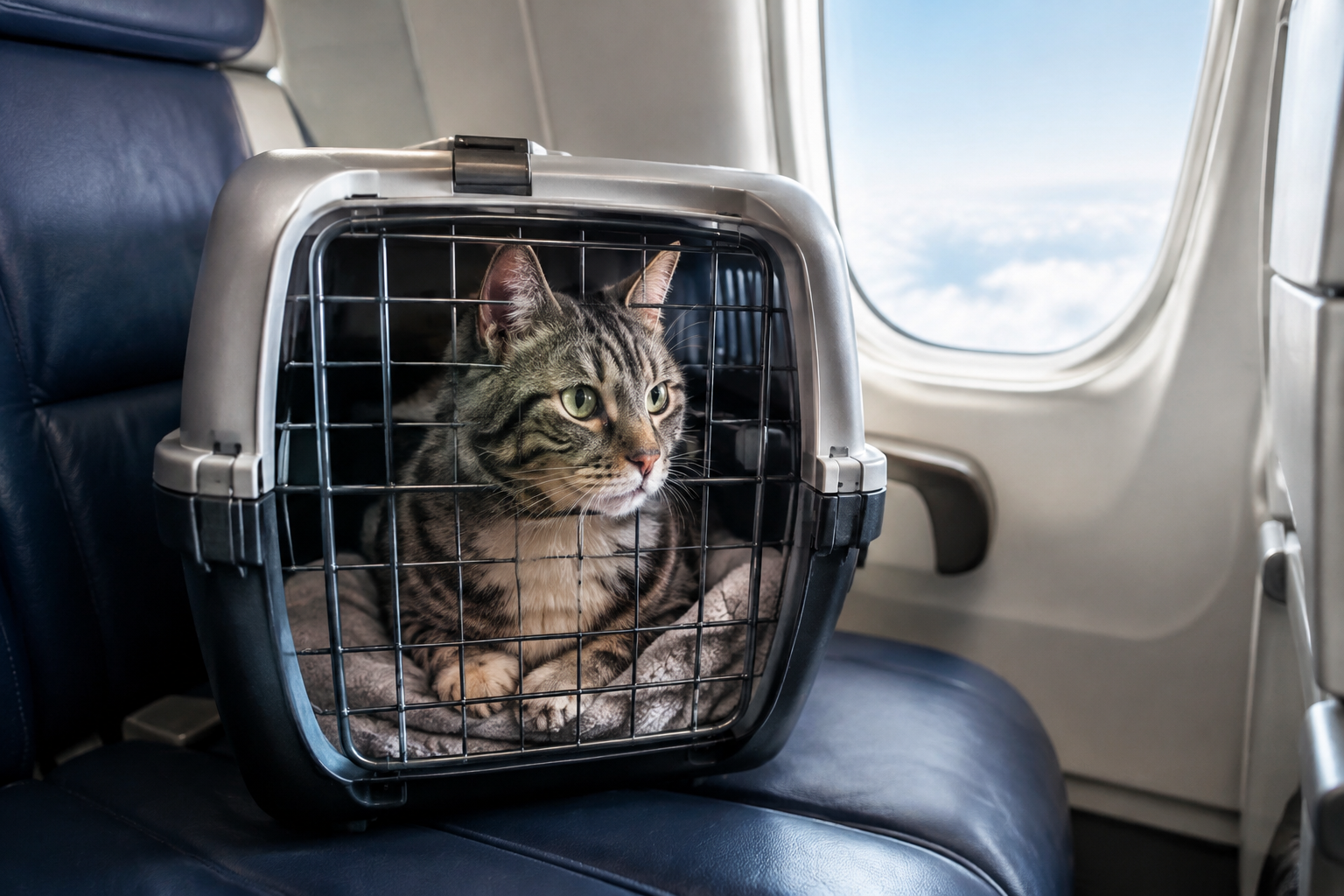
Flying with a cat can feel stressful before you even book the ticket. Flying with a cat cabin requirements often confuse first-time travelers, especially when airlines use different rules. In this guide, you will learn what those requirements usually include, how to prepare your cat, and how to avoid common mistakes.
What Airlines Usually Mean by Cabin Requirements
Most airlines allow small cats to travel in the cabin if they stay in an approved carrier under the seat. However, each airline sets its own rules for carrier size, total pet weight, and booking limits. Therefore, you must check the airline’s current policy before you buy a ticket.
In practice, flying with a cat cabin requirements usually focus on three things. First, your cat must fit safely in the carrier. Next, the carrier must meet size limits. Finally, you must reserve a pet spot early, since many flights only allow a few animals onboard.
Some airlines also need advance notice from you. Additionally, certain routes restrict pet travel during busy seasons or hot weather. Because policies change often, confirm the details with the airline directly, not just the booking page.
Flying with a cat cabin requirements: carrier basics
The carrier matters as much as the cat. Most airlines want a soft-sided carrier, though some accept hard-sided options if they fit under the seat. However, the carrier should still give your cat enough room to stand, turn around, and lie down.
Choose a carrier with strong zippers, breathable mesh, and a secure base. Moreover, test it at home before travel day. If your cat scratches or pushes at weak seams, replace the carrier before the trip.
How to Prepare Your Cat Before the Flight
Preparation reduces stress for both of you. Start several weeks ahead, because cats often need time to accept a carrier and a travel routine. Therefore, prepare in small steps instead of waiting until the night before.
First, leave the carrier open at home. Put a blanket, toy, or towel inside so it feels familiar. Then reward your cat for entering it on their own. As a result, the carrier becomes less threatening and more normal.
Next, schedule a vet visit if your cat has not traveled before. Your vet can confirm whether your cat is healthy enough for flying. In addition, the vet can help with motion sickness, anxiety, or any airline-required health paperwork.
Flying with a cat cabin requirements and paperwork
Many trips need some form of health documentation. For domestic flights, you may only need a recent health certificate or vaccination record. Meanwhile, international trips often require more steps, such as microchipping, rabies proof, or destination forms.
Flying with a cat cabin requirements can also include a specific check-in window. Therefore, ask the airline whether you must visit the counter or can use online check-in. Keep all papers in one folder, so you can reach them quickly at the airport.
Also, make copies of every document. If possible, save digital backups on your phone. Consequently, you will have a backup if you misplace a paper copy during travel.
Step-by-Step Airport and Flight Day Plan
Start early on travel day. Feeding too close to departure can upset your cat’s stomach, so offer a light meal several hours before leaving. However, do not fast your cat for too long unless your vet tells you to.
Then, use a secure harness or leash only for transfer through the airport, if your cat tolerates it. During security screening, you will usually need to remove your cat from the carrier while staff inspect the carrier separately. Therefore, keep your cat close and calm during that process.
After security, find a quiet spot near your gate. Let your cat rest inside the carrier and avoid unnecessary handling. Meanwhile, speak softly and move slowly, because sudden noise or rushing can increase anxiety.
Once on board, place the carrier under the seat exactly as the airline instructs. Flying with a cat cabin requirements usually forbid opening the carrier during the flight. For safety, keep your cat inside until the plane lands and the crew says you may move.
What to pack for a smoother trip
A small travel kit keeps you organized. In addition, it helps you handle delays without scrambling for supplies.
- Approved cat carrier
- Health certificate and vaccination records
- Copy of airline pet approval, if provided
- Absorbent pad or towel for the carrier
- Collapsible bowl for water after security and after landing
- Familiar blanket or toy
- Waste bags and paper towels
- Any medication your vet approves
Keeping Your Cat Safe and Comfortable
Comfort starts with the right size carrier and a calm routine. However, safety matters even more. Your cat should never ride loose in the cabin, and the carrier should stay closed throughout the journey.
Temperature also matters. Airlines may restrict pets during extreme heat or cold, especially on certain routes. Therefore, watch the forecast and ask the airline about seasonal rules before you leave.
Hydration deserves attention, too. Offer water before departure and again after landing, but do not force your cat to drink. Meanwhile, skip big meals right before the flight, since that can cause nausea.
If your cat gets anxious, avoid giving human calming drugs unless your vet specifically recommends them. Some medications can affect breathing or balance at altitude. Consequently, vet guidance is essential before you try any calming treatment.
Common Mistakes to Avoid
Many travel problems come from simple oversights. Fortunately, you can avoid most of them with early planning and a careful review of the rules.
One common mistake is assuming every airline follows the same policy. Another is buying a carrier that looks nice but does not fit under the seat. Additionally, some owners forget to reserve the pet spot early and lose the chance to travel in cabin.
Other mistakes include feeding too much before the flight, skipping a vet check, or arriving at the airport with incomplete documents. Therefore, review every step the day before your trip. A short checklist can save you from a very stressful airport delay.
- Confirm the airline’s pet policy again before departure
- Check carrier size against the aircraft and route
- Book the pet space as early as possible
- Pack documents in an easy-to-reach folder
- Give your cat time to adjust to the carrier
- Arrive early so you can handle extra screening time
Finally, do not forget to plan the arrival. Some hotels accept pets, while others charge extra or set size limits. Therefore, confirm destination rules before you land, especially if you will need ground transport afterward. For a more comprehensive preparation, consider reviewing steps for flying with a cat internationally to ensure compliance with international regulations.
With the right planning, flying with your cat can become manageable instead of overwhelming. Focus on carrier fit, paperwork, and calm preparation, and your trip will feel much smoother. When you understand flying with a cat cabin requirements, you can book with confidence and give your cat a safer journey.
