

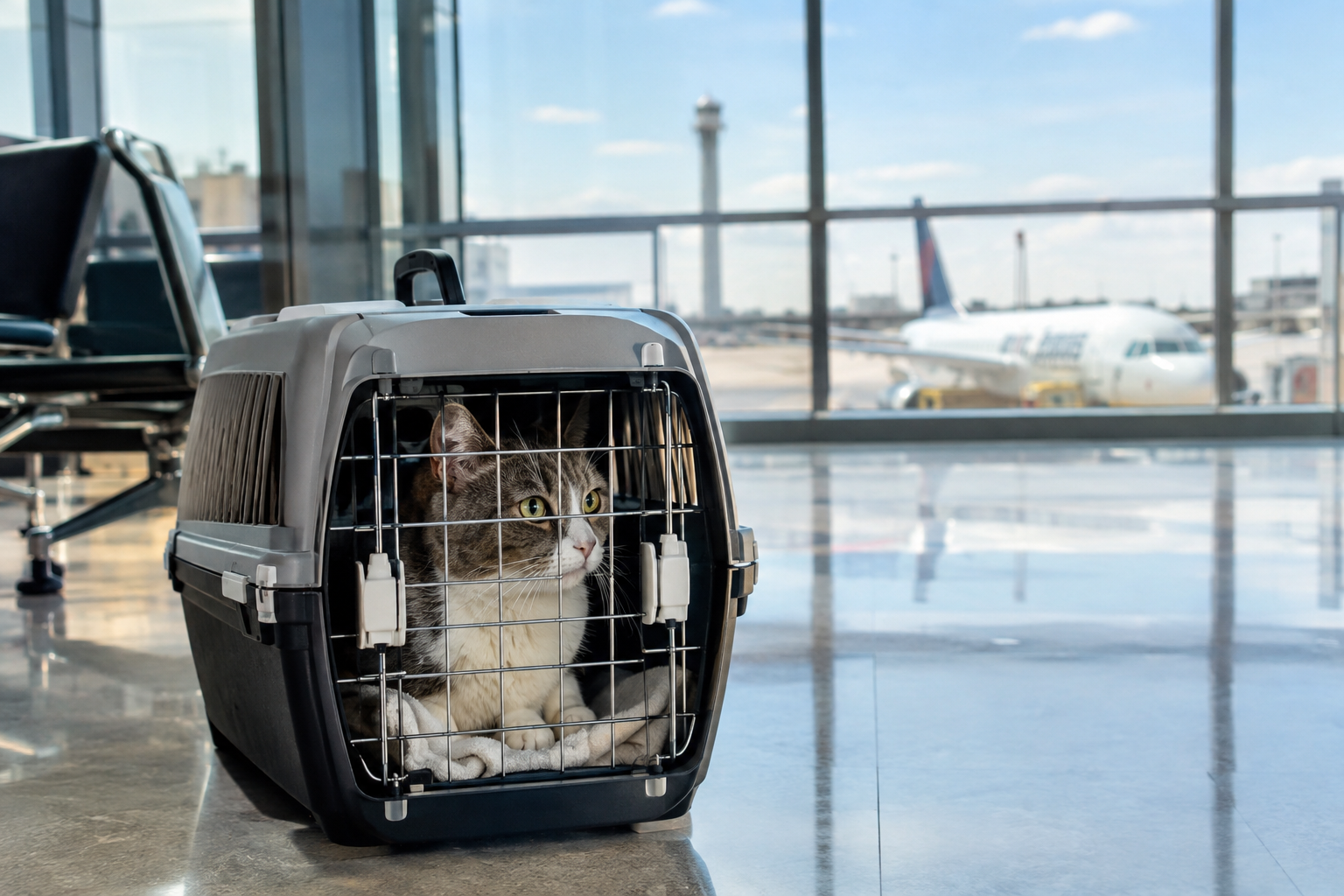
If you are researching steps for flying with a cat internationally, you probably feel excited and nervous at once. International pet travel can seem overwhelming, however the process becomes manageable when you break it into clear stages. This guide shows you what to prepare, how to avoid common mistakes, and how to help your cat stay safe and as calm as possible.
What international cat travel really involves
International flights with cats usually require more planning than many owners expect. Different countries, airlines, and even airport routes can affect your timeline, paperwork, and cat carrier choice.
Therefore, the best approach is to start early and treat each requirement as part of one plan. The goal is not only to reach your destination, but also to arrive with your cat healthy and compliant with entry rules.
Most trips involve four main parts: checking destination rules, visiting your vet, arranging the right travel crate or carrier, and booking the correct flight. Additionally, you should prepare for the day of travel itself, since airport procedures can be stressful for both of you.
steps for flying with a cat internationally: start with the destination
The first of the steps for flying with a cat internationally is confirming the pet rules for your destination country. Some places require specific vaccinations, microchipping, parasite treatment, or a waiting period before entry.
However, rules can change without much notice. Always verify the latest requirements with the destination authority, your airline, and your veterinarian before you buy tickets.
steps for flying with a cat internationally: build your timeline early
Next, create a travel timeline that works backward from your departure date. Some health certificates must be issued within a short window before travel, while other documents need much earlier action.
Consequently, a late start can create expensive changes or even delay the trip. A simple calendar with vet visits, document deadlines, and booking dates can prevent most last-minute problems.
Paperwork, vet visits, and travel approvals
International travel often depends on documents more than on flight time. Your vet may need to complete a health exam, update vaccines, implant or verify a microchip, and sign forms for export or import.
In addition, some countries ask for proof of rabies vaccination and a health certificate from an approved veterinarian. You may also need translation, endorsements, or government stamps depending on the route.
What to ask your vet before booking
Ask your vet which documents your cat needs for the exact destination and airline. Also ask whether your cat qualifies for cabin travel, checked cargo travel, or manifest cargo only.
Furthermore, request written instructions for food, medication, and motion sickness concerns. A clear vet plan helps you avoid guesswork on travel day.
Helpful documents to gather may include:
- Vaccination records
- Microchip information
- Health certificate
- Import permit, if required
- Airline booking confirmation for the cat
- Veterinary medication instructions
Keep both paper and digital copies of every document. Meanwhile, store them in one folder that you can reach quickly at check-in and customs.
Preparing your cat for the flight
The next part of the steps for flying with a cat internationally is preparing your cat for the carrier and the trip rhythm. A carrier should feel familiar, secure, and well ventilated.
Therefore, choose one that meets airline size rules and gives your cat enough room to stand, turn, and lie down comfortably. If your cat travels in cabin, the carrier must also fit under the seat.
Make the carrier part of daily life
Do not wait until departure day to introduce the carrier. Instead, place it in your home weeks ahead of time so your cat can explore it calmly.
Additionally, you can add a soft blanket or item that smells like home. Short practice sessions often reduce fear and help your cat enter the carrier without a struggle.
Train for real travel conditions
First, practice brief car rides with the carrier secured. Then, gradually increase the time your cat spends inside it during normal home routines.
As a result, your cat may handle noise, movement, and confinement better on the actual trip. If your cat shows severe stress, ask your vet for training advice well before departure.
Travel day: what to do at the airport
On travel day, keep your routine calm and simple. Cats react strongly to tension, so your pace and voice matter more than you may think.
However, avoid rushing the process. Arrive early, carry documents in easy reach, and follow the airline’s pet check-in instructions carefully.
Many airlines ask you to remove the cat from the carrier briefly during security screening. Use a harness or secure your cat before that moment, because a frightened cat can slip away quickly.
On the day of travel, remember to:
- Feed according to your vet’s advice
- Offer water before leaving home
- Check all documents twice
- Secure the carrier with comfortable bedding
- Attach identification to the carrier
- Arrive at the airport earlier than usual
Additionally, avoid giving any sedative unless your vet specifically approves it. Some calming medicines can create problems at altitude or make your cat unstable.
Comfort, safety, and costs to plan for
Comfort matters throughout the journey, not just during flight time. Keep your cat cool, secure, and as quiet as possible, and avoid overhandling at the airport.
Meanwhile, health and comfort usually matter more than convenience. A well-prepared trip can still feel tiring, so plan for rest once you arrive.
steps for flying with a cat internationally and avoiding common mistakes
One of the smartest steps for flying with a cat internationally is avoiding preventable errors. Many problems come from assumptions about airline rules, timing, or destination paperwork.
For example, some owners book a flight before confirming pet space on the plane. Others forget that entry rules may differ from airline rules. Consequently, a ticket alone does not guarantee your cat can travel.
Best Cat Carriers For International Flights
Common mistakes to avoid include:
- Booking before confirming pet approval
- Waiting too long to start paperwork
- Using a carrier that does not meet airline rules
- Skipping carrier training at home
- Assuming every country follows the same entry process
- Ignoring your vet’s advice about food and medication
Costs can also vary widely, so plan for several layers of expense. You may pay for vet visits, vaccines, certificates, airline pet fees, carrier upgrades, and possible government processing.
Therefore, build a flexible budget instead of expecting one fixed price. Confirm all charges with your airline, vet, and destination authority before you commit.
A simple checklist before departure
A short checklist can make the final week much easier. Use it to confirm every detail before you leave for the airport.
Final flight checklist:
- Confirm destination entry rules
- Verify airline pet policy and booking space
- Complete the vet exam and required vaccines
- Collect health papers and copies
- Test the carrier at home
- Pack water, food, wipes, and a leash or harness
- Review airport and arrival procedures
Finally, check your cat’s behavior in the days before departure. If your cat seems unwell, contact your vet quickly, because travel should never come before health.
Final thoughts
International cat travel becomes much less stressful when you follow a clear plan. Start early, verify rules often, prepare the carrier carefully, and keep your cat’s health at the center of every decision.
With patient preparation, you can handle the process confidently and give your cat a safer journey. If you keep the steps for flying with a cat internationally organized, the trip becomes far more manageable for both of you.

1 Comment
Pingback: Flying With A Cat Cabin Requirements Essential Guide -