

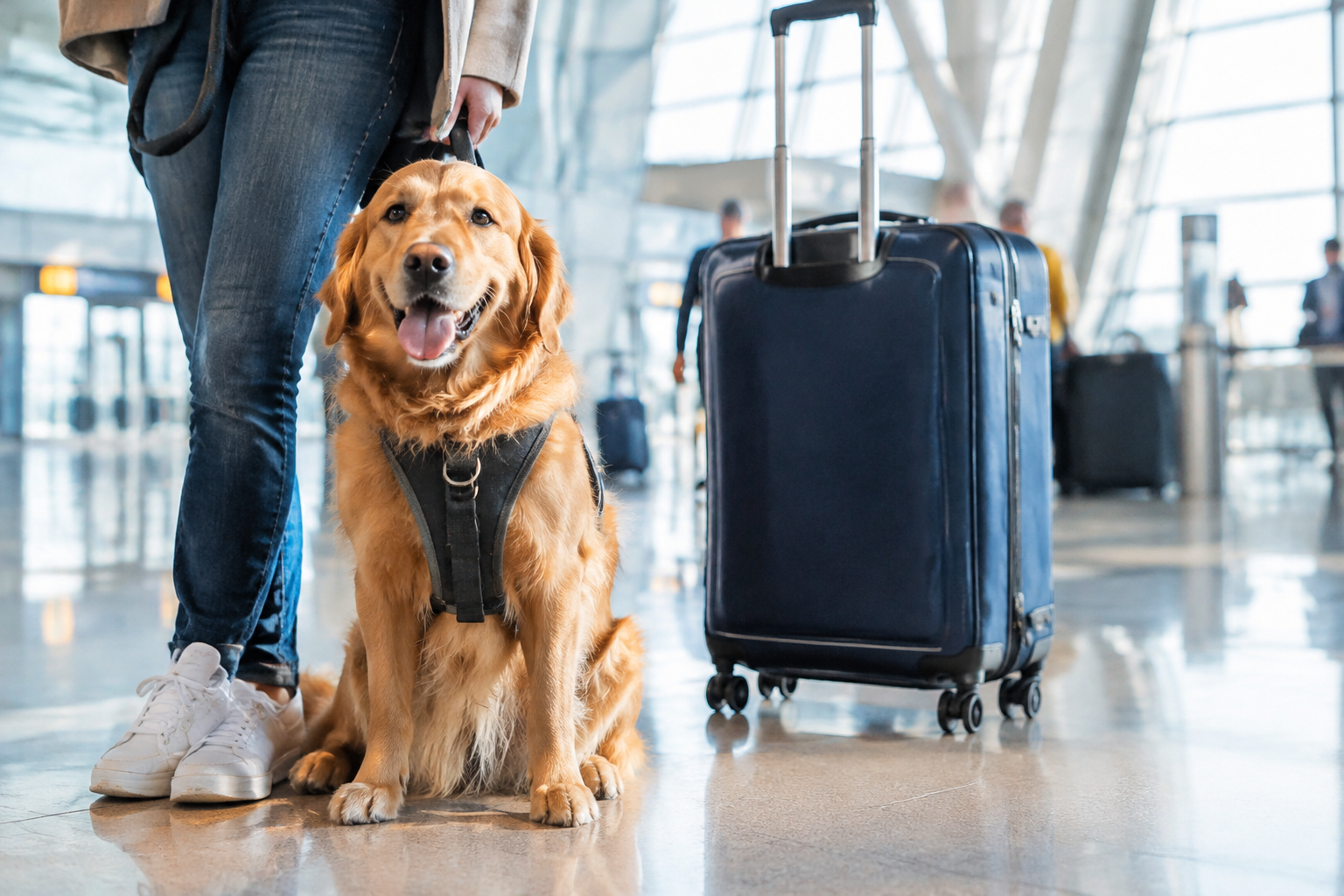
If you are wondering how to prepare dogs for long flights, you are already thinking like a careful pet parent. Long-haul air travel can feel stressful, yet the right planning makes a big difference for safety, comfort, and calm.
How to prepare dogs for long flights without last-minute stress
Start early, because a smooth trip rarely happens by chance. Airlines, veterinarians, and destination rules can all affect your timeline, so give yourself room to prepare.
First, think about your dog’s temperament, size, age, and health. A confident adult dog usually handles travel better than a very young puppy, a senior dog, or a pet with medical concerns.
Next, decide whether your dog will fly in the cabin or in the cargo hold. Cabin travel can feel easier for small dogs, while larger dogs often need a travel crate in the hold, depending on airline policy.
Additionally, book your trip only after you confirm the airline’s pet rules. These rules can change, and they may include weight limits, crate dimensions, breed restrictions, and seasonal limits.
When you begin early, you can also speak with your vet. That visit helps you confirm fitness to fly and gives you time to handle vaccines, parasite prevention, or required paperwork.
How to prepare dogs for long flights with the right paperwork
Paperwork can feel tedious, but it protects your dog and your travel plans. For many trips, especially international ones, you may need health certificates, proof of vaccinations, and entry forms.
Therefore, make a simple folder with every document in one place. Include your booking details, your vet’s contact information, and any airline or destination forms you must present.
- Updated vaccination records
- Health certificate or travel fitness form
- Microchip information, if required
- Airline pet reservation confirmation
- Destination entry rules and quarantine notes
However, do not assume one country’s rules match another’s. Always confirm the latest requirements with your airline, your vet, and the official destination authority before departure.
In addition, check expiration dates on every document. Some papers only stay valid for a short window, so timing matters as much as the form itself.
Train your dog for the crate and the airport routine
Your dog should see the travel crate as a safe den, not a punishment. Start crate training weeks before the flight, and keep each session short and positive.
First, place the crate in your home with the door open. Then add familiar bedding and a favorite toy, so your dog explores it freely.
Next, feed your dog near the crate, then inside the crate. As a result, your dog links the space with comfort and routine.
After that, practice longer stays with the door closed for a few minutes at a time. Gradually build up to the length of time your dog may spend in transit.
Meanwhile, practice calm airport-like routines. Walk through doors, wait near busy areas, and reward relaxed behavior, because these small rehearsals reduce surprises later.
If your dog will travel in an airline-approved crate, make sure it fits properly. Your dog should be able to stand, turn around, and lie down comfortably.
Additionally, label the crate clearly with your contact details. You can also add “Live Animal” markings if the airline requires them.
How to prepare dogs for long flights by managing food, water, and exercise
Feeding plans matter, especially on long travel days. A full stomach can increase nausea, while an empty stomach can leave your dog uncomfortable and restless.
Therefore, ask your vet about the best feeding window for your dog. Many pets do well with a lighter meal several hours before departure, but your vet can guide you.
Water matters too, so keep your dog hydrated before check-in. However, avoid overloading the bowl right before travel, since that can create spills and unnecessary bathroom urgency.
Exercise also helps. Take a long walk or a play session before you leave, because physical activity often supports calmer behavior during the flight.
In addition, give your dog a final toilet break as close to departure as possible. For a long journey, that small routine can make a huge difference.
Do not use sedatives unless your vet specifically recommends them. Some medications can affect breathing, balance, or temperature control during flight.
Keep your dog comfortable and safe in the air
Comfort starts before the plane takes off. Choose a crate with secure latches, good ventilation, and absorbent bedding that suits the airline’s rules.
However, avoid adding bulky items that can shift during turbulence. Keep the setup simple, stable, and familiar.
For nervous dogs, familiar scents help. A blanket or shirt that smells like home can offer reassurance without taking up much space.
Additionally, consider your dog’s temperature needs. Airlines and airports can be hot or cold, so plan for weather at both departure and arrival points.
If your dog travels in the cabin, place the carrier under the seat as instructed. Keep your movements calm, because dogs often mirror their owner’s energy.
For baggage or cargo travel, arrive early so staff can handle check-in properly. That extra time reduces rushed handling and lets you confirm every detail.
Meanwhile, keep your phone available and your destination address ready. If delays happen, you can respond faster and communicate with the right people.
Costs, rules, and mistakes that can complicate travel
Budgeting matters when you plan long-distance pet travel. Airline pet fees, carrier purchases, vet visits, and document costs can add up quickly.
Therefore, build a flexible budget instead of guessing. Some trips only need a few basics, while others involve more vet steps or destination paperwork.
Also, remember that rules can differ by airline and route. Some carriers limit pet numbers per flight, restrict certain breeds, or require advance approval.
One of the biggest mistakes is booking first and checking rules later. Another common problem is waiting too long for veterinary paperwork.
In addition, many pet parents underestimate crate training time. A dog that has never practiced can feel frightened during a long journey.
Here are a few other mistakes to avoid:
- Packing the crate too tightly
- Skipping a pre-travel vet check
- Using unapproved medication
- Forgetting destination entry rules
- Arriving at the airport without extra time
Finally, never assume your dog will be accepted at the destination without confirming local rules. Hotels, rentals, and even ground transport may have pet limits.
A simple travel checklist for pet parents
A short checklist keeps the process manageable. When you know what to confirm, you are less likely to miss a critical detail.
- Confirm airline pet policy and availability
- Schedule the vet visit early
- Prepare health and vaccination records
- Choose and test the travel crate
- Practice crate time at home
- Plan food, water, and bathroom timing
- Pack labels, leash, wipes, and documents
- Confirm destination rules before departure
Additionally, keep this checklist on your phone and on paper. That way, you can check items off at home and at the airport.
Final thoughts before takeoff
Long flights can feel overwhelming at first, but preparation changes everything. When you focus on health, paperwork, crate training, and comfort, you give your dog a much better travel experience.
Most of all, stay calm and plan early. If you remember the basics of how to prepare dogs for long flights, you can travel with more confidence and help your dog arrive safer, steadier, and less stressed.

1 Comment
Pingback: How to Fly Internationally With a Cat Complete Guide -