

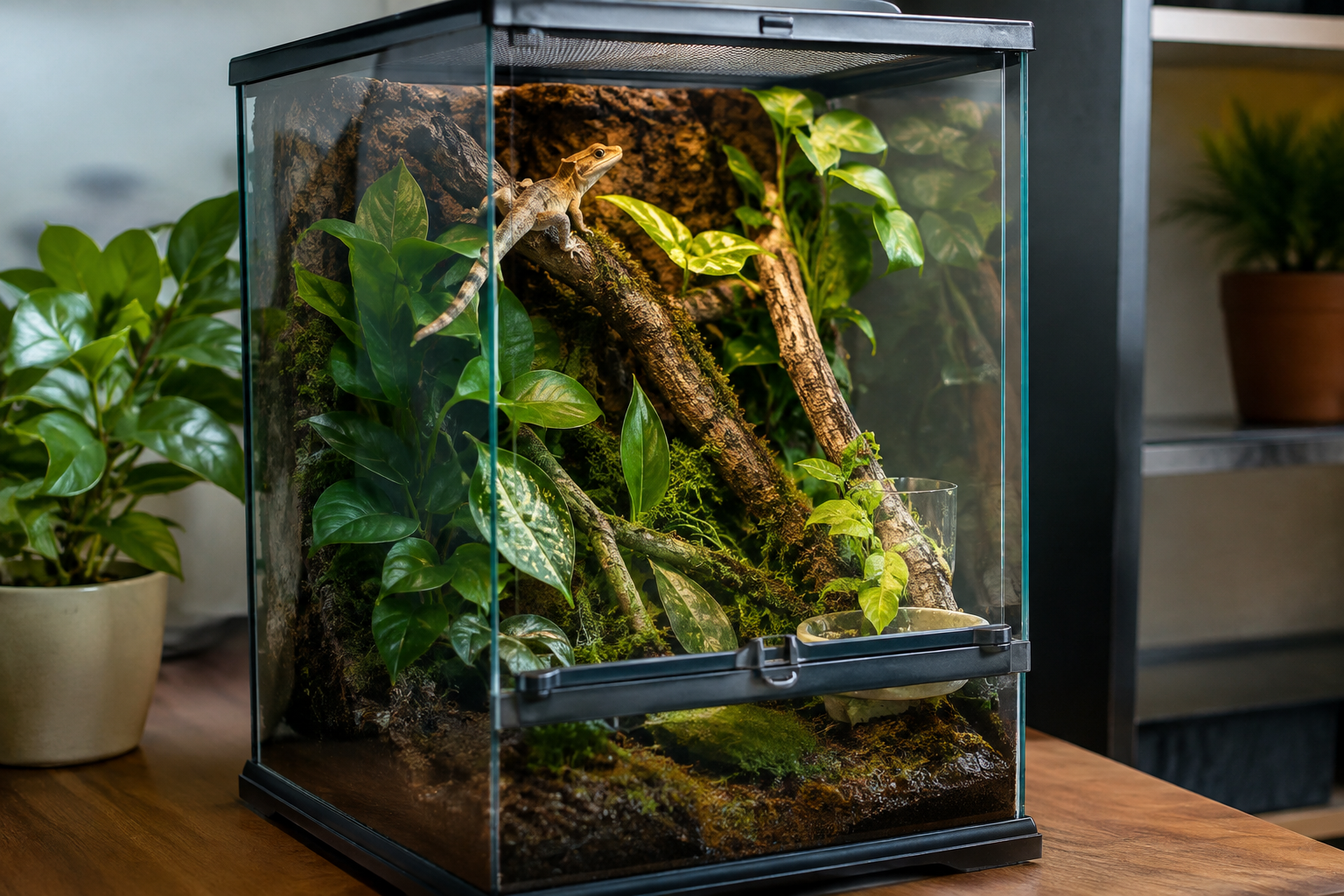
Crested gecko enclosure setup guide for beginners starts with one simple idea: build a calm, safe home first. Because these geckos are easygoing, beginners often assume any small tank will do, but the enclosure must support climbing, hiding, and stable humidity.
Species Basics Before You Set Up
Crested geckos are arboreal lizards, which means they live higher up than they do on the ground. Therefore, they need vertical space, sturdy branches, and ledges more than wide floor space.
They are nocturnal and mostly active at night. So, a beginner should expect quiet daytime resting and more movement after dark.
In addition, this species does well with moderate warmth and strong airflow. That balance matters because stagnant, overly wet enclosures can create stress and health problems.
Crested Gecko Enclosure Setup Guide for Beginners: Size and Shape
A juvenile can start in a smaller enclosure, but adults need more height than length. As a general rule, an adult benefits from a tall enclosure with enough room to climb, explore, and choose different microclimates.
For that reason, many keepers prioritize vertical tanks over low tanks. However, stability matters too, because a wobbly setup can frighten a shy gecko.
Natural Behavior Drives the Design
Because they climb and hide often, crested geckos need multiple resting spots. Also, they feel safer when the enclosure has visual barriers created by plants, cork, and branches.
In the wild, they use leaves and bark for cover. So, a bare enclosure rarely feels secure enough, especially for a new animal.
Building the Habitat and Environment
The enclosure should include a secure lid, good ventilation, and a layout that holds humidity without becoming soggy. In other words, the goal is a moist environment with airflow, not a wet box.
Substrate, or the material on the floor, should be safe and easy to clean. Many beginners choose moisture-friendly options that help maintain humidity while reducing the risk of accidental swallowing.
Next, add branches, cork tubes, vines, and live or artificial plants. These items create climbing routes and hiding places, and they also help the gecko feel less exposed.
Crested geckos usually do well with daytime temperatures around the low to mid 70s Fahrenheit. However, they can become stressed if the enclosure gets too hot, so avoid placing the habitat near sunlight or heat sources.
Humidity should rise and fall during the day rather than remain constant. Therefore, many keepers mist lightly in the evening and allow the enclosure to dry somewhat before the next misting.
Crested Gecko Enclosure Setup Guide for Beginners: Lighting, Humidity, and Airflow
UVB, which is ultraviolet light that helps reptiles process calcium, can be beneficial when used correctly. Although crested geckos can live without strong UVB in some setups, many keepers provide a low level for added support.
Just as important, ventilation prevents stale air and mold. So, combine moisture retention with enough airflow to keep surfaces from staying damp all day.
Because humidity and airflow work together, you should monitor both with simple gauges. That way, you can adjust misting, decoration density, or enclosure placement as needed.
Step-by-Step Care After Setup
After the enclosure is ready, give the gecko time to settle in. Therefore, limit handling during the first days unless you must check health or safety.
Feed a balanced diet made for crested geckos, and follow the product instructions carefully. In addition, many keepers offer live insects occasionally, which can add variety and enrichment when done responsibly.
Calcium support matters because reptiles need proper mineral balance for strong bones. If calcium balance fails over time, metabolic bone disease can develop, which weakens bones and movement.
Also, fresh water should always be available in a clean bowl or through regular misting. Because crested geckos often drink droplets, consistent moisture access helps them stay hydrated.
Spot-clean waste quickly, and replace soiled areas before odor builds up. Then, do deeper substrate and decor cleaning on a regular schedule to maintain hygiene.
Crested Gecko Enclosure Setup Guide for Beginners: Feeding and Observation
Watch feeding response, droppings, skin condition, and overall activity. Therefore, you can catch small problems early before they become serious.
If the gecko stops eating, loses weight, or becomes unusually weak, contact an exotic vet. Also, avoid guessing at causes, because reptiles hide illness well.
Shedding usually happens quietly in healthy geckos, and many new owners never notice it. However, retained shed around toes or eyes can signal a humidity or husbandry issue that needs prompt attention.
Health, Safety, and Handling
Handling should always be slow, gentle, and brief at first. Because crested geckos jump suddenly, hold them over a soft surface or low area during early sessions.
Never grab the tail, since crested geckos can drop it when stressed. Although tail loss is not usually life-threatening, it still causes stress and leaves the animal more vulnerable.
Also, wash your hands before and after contact to protect both you and the gecko. This step reduces contamination and helps keep the enclosure cleaner.
Brumation, a winter slowdown seen in some reptiles, is less dramatic in this species than in many others. Nonetheless, appetite and activity may shift slightly with seasonal changes, so watch the animal rather than forcing a pattern.
If the gecko shows wheezing, open-mouth breathing, swelling, or ongoing lethargy, seek an exotic vet quickly. In addition, any injury, stuck shed, or missed appetite for several days deserves attention.
Costs, Lifespan, and Practical Planning
A proper setup costs more than a basic tank and a few decorations. However, good equipment often saves money later by reducing stress and frequent corrections.
Expect spending on the enclosure, lights, thermostat or timers if needed, decor, substrate, food, and recurring cleaning supplies. Therefore, plan the full monthly and startup budget before you bring the gecko home.
Crested geckos can live for many years with proper care, so this is a long commitment. Consequently, beginners should think about future housing, travel needs, and regular upkeep before buying.
Also, check local laws and permit requirements before acquiring any exotic pet. Because regulations vary, legal ownership rules may change by city, state, or country.
Common Beginner Mistakes to Avoid
One common mistake is choosing the wrong enclosure shape. Since this species climbs, a short tank limits natural movement and reduces comfort.
Another mistake is creating a damp enclosure with poor airflow. As a result, mold and respiratory stress can develop more easily.
Beginners also overhandle too soon. However, patience helps the gecko settle and makes future handling smoother.
In addition, many owners misjudge food and calcium support. So, follow species-appropriate feeding plans and avoid improvising with random reptile products.
Finally, do not buy equipment only after the gecko arrives. Instead, complete the habitat first, test temperature and humidity, and then bring the animal home.
Quick Setup Checklist
- Secure vertical enclosure with a ventilated lid
- Safe substrate that supports humidity
- Branches, vines, cork, and several hides
- Stable temperature range and no overheating
- Humid periods with drying time between mistings
- Clean water access and proper diet supplies
- Plan for regular cleaning and exotic vet care
Final Thoughts for New Keepers
When you build the habitat around the gecko’s natural behavior, the rest becomes easier. Therefore, focus on vertical space, moderate humidity, safe décor, and a calm routine.
If you want a reliable start, use this crested gecko enclosure setup guide for beginners as your checklist, not as a shortcut. With steady care, patience, and responsible planning, you can create a healthy home that supports your gecko for years.
