

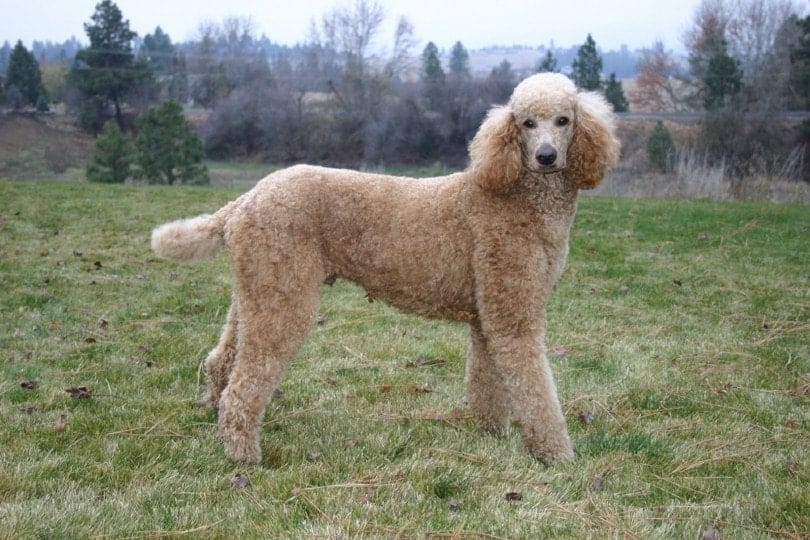
Poodles are one of the most popular types of dogs in America, consistently falling into the top ten breeds. When you consider how common poodle crosses and designer mixes are, they’re even more common! If you own a poodle or a poodle mix, it’s worth brushing up on health issues that strike poodles more frequently.
Luckily for owners, they are usually a fairly healthy breed. However, that doesn’t mean that they’re guaranteed good health. Here are a few of the most common health conditions that affect poodles.
The 5 Typical Poodle Health Concerns
1. Progressive Retinal Atrophy
Progressive Retinal Atrophy, or PRA, is an eye disease that causes vision loss over time. PRA is believed to have a genetic cause. It is especially common in some miniature and toy poodle lines. Dogs affected by PRA might have an “early onset” form of the disease that appears during puppyhood or it might appear as your dog ages. In either form of the disease, loss of vision will be gradual, but eventually PRA will lead to total blindness. In some dogs, night vision is lost first.
Prevention and Treatment
Progressive Retinal Atrophy is a genetic disease that doesn’t have any known prevention or treatment options. However, proper accommodations may help dogs with failing vision to have a full, happy life despite blindness.
2. Legg Perthes Disease
Legg Perthes disease is another health condition that is more common in miniature and toy poodles than standard poodles. This disease is rare but serious. It is a genetic condition that usually manifests when a puppy is a few months old. At the onset, blood supply dwindles near the top of the femur, leading to a total breakdown of the femur joint. Dogs with this disease are struck with sudden and worsening lameness.
Prevention and Treatment
Right now, there is no known way to prevent Legg Perthes Disease. In most cases, invasive surgery is required to reconstruct the hip. Sometimes, a total hip replacement is the best course of action. Although there isn’t a DNA test that can identify carriers, responsible breeders should avoid breeding with lines where Legg Perthes Disease has occurred.
3. Sebaceous Adenitis
Poodles are prone to a type of skin disease called sebaceous adenitis. This disease can cause alopecia, flaking or scaly skin, increased risk of skin infections, itching, and dull or brittle hair. In advanced cases, this can eventually cause serious skin lesions and irritated bald patches.
Prevention and Treatment
Although Sebaceous Adenitis is believed to be genetic, good hair hygiene will help manage symptoms and lessen the severity of the disease. Your vet may prescribe medication or medicated shampoo to help combat the disease. Topical oils and lotions may also help soothe the skin and get rid of scales.

4. Gastric Torsion (Bloat)
Gastric torsion, more commonly called bloat, can occur in Standard Poodles. Gastric torsion occurs when gasses or food put pressure on the stomach, causing it to twist and become closed off from the intestinal system. This can cause severe pain, difficulty breathing, attempts to vomit, a swollen abdomen, and collapse. If left untreated, this disease can be fatal.
Prevention and Treatment
Gastric torsion is generally caused by poor eating habits, such as eating too quickly, overeating, or eating from a food bowl that is too high. Using feeders that will slow down your dog’s eating if needed and splitting dog food into smaller meals throughout the day will reduce the risk of bloat.
If your dog does experience bloat, treatment depends on the severity of the disease. In some cases, a stomach pump can relieve pressure without invasive surgery, saving your dog’s life. In more severe cases, emergency stomach surgery is required.
5. Addison’s Disease
Standard poodles experience higher rates of Addison’s Disease, which causes malfunctioning adrenal glands. The adrenal glands help your pup react to and cope with stressful situations. Dogs with this disease may exhibit heightened anxiety symptoms or no symptoms at all until a combination of stress and crippled glands causes a crisis collapse.
During an Addisonian crisis, your dog will often collapse. They may have lowered heart rate, abnormal heartbeat, or dangerously low blood sugar. Addison’s Disease might be diagnosed before a crisis if bloodwork gives abnormal results such as electrolyte or potassium imbalances.
Prevention and Treatment
In an Addisonian crisis, the immediate symptoms are treated through IV fluids, steroids, and medications to stabilize your dog. Recovery rates are quite high with vet treatment. Once your dog has been stabilized (or if diagnosis comes before a crisis) Addison’s disease can be managed with daily oral medication or a monthly shot.
Final Thoughts
Poodles are known as a healthy breed, but no dogs will be perfectly healthy all the time, and there are still several genetic diseases that can affect poodles. These are a few health issues that are particularly prevalent in poodles, but the list isn’t comprehensive. Whatever breed of dog you own, you’ll want to keep up on regular vet visits and watch for any signs of disease to make sure that your pet is as healthy and happy as possible.
Featured Image Courtesy: Shutterstock
