

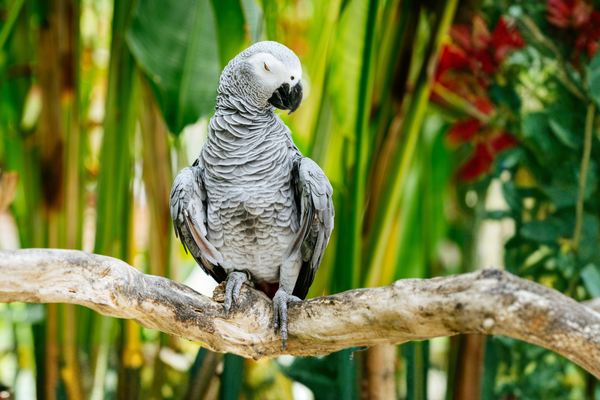
Feather Destructive Behaviour (FDB) / Feather Plucking: The most serious and prevalent welfare issue in captive African Greys, almost always rooted in psychological stress, boredom, insufficient social interaction or inadequate enrichment. It can become a deeply ingrained habit. Prevention is through excellent husbandry, enrichment and daily engagement — treatment once established requires a specialist avian behaviourist and vet.
Psittacine Beak and Feather Disease (PBFD): A viral disease causing progressive feather and beak abnormalities; incurable — source birds from tested, reputable breeders.
Calcium deficiency: African Greys have a well-documented predisposition to hypocalcaemia (low blood calcium), which causes neurological signs including tremors and seizures. Prevent with cuttlebone, calcium supplementation and a pellet-based diet.
Psittacosis (Chlamydiosis): A bacterial lung infection transmissible to humans — annual vet checks and good hygiene are key preventative measures. Respiratory infections and bacterial infections are also common, often linked to vitamin A deficiency — pellet-based diets significantly reduce this risk.
Airborne toxins: The avian respiratory system is acutely sensitive to airborne chemicals — substances a human barely notices can kill a parrot within minutes. The following must never be used in any room housing an African Grey: non-stick cookware fumes (overheated PTFE/Teflon is the most common cause of sudden unexplained parrot death in Australian homes), burning incense, scented candles, essential oil diffusers, aerosol sprays, perfumes and colognes, air fresheners, cigarette and vaping smoke, cleaning chemicals, and paints, solvents or adhesives. If it has a strong smell, produces smoke or vapour, or comes from a spray can, keep it well away from your bird.
