

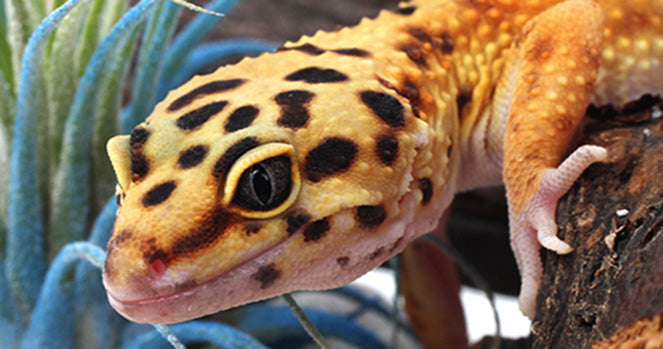
From beginning pet owners to experienced reptile keepers, geckos make great companions. They’re friendly, docile creatures that are small in size and relatively easy to care for. That said, they do have specific needs keepers should meet to provide the highest quality of life for their gecko.
To learn more about these needs and get further advice on gecko care, we chatted with Dr. Kemba Marshall, Director of Veterinary Services for Land O’Lakes. Here are her top recommendations for gecko owners.
1. Provide a suitable environment.
Within its habitat, make sure your gecko has these five key elements:
- Hiding spot: Typically a small cave, this element allows space for the gecko to hide away.
- Heat spot: This area should be kept at about 90-95 degrees.
- Cooling spot: This area should be kept at about 65-70 degrees.
- Soaking spot: This can be a simple water dish. Your gecko will both soak in it and drink from it so its important to clean it once or twice a day.
- Furniture: Geckos especially love terraced rocks and items they can move up and down on.
“It’s important to keep in mind that geckos don’t naturally live in a completely arid desert environment. I have seen many pet owners keeping their terrariums way too warm but geckos do best with a temperature range across their habitat,” explained Dr. Marshall.
That’s why having both a heating spot and cooling spot is so important. This way, the gecko can regulate their temperature and move about their environment to keep comfortable.
“Geckos shed about every 4-6 weeks and even more often as they’re growing,” shared Dr. Marshall. “Nutrition, hydration, temperature and humidity all factor into whether or not the gecko is able to shed properly.”
If a gecko’s environment is too dry, it can lead to shedding issues, such as dysecdysis, which can be caused by lack of humidity. Having a soaking spot is a great step to keep enough moisture in the environment. It’s also a good idea to wet down sphagnum moss and put it in their cool spot or hiding spot.
Geckos are nocturnal by nature so they’re going to be more active at night than during the day, but you should still see them out and about during the day. Check on your pet daily as you are offering fresh food and water in the habitat.
2. Offer optimal nutrition.
The nutritional requirements for your gecko depend on its species. Some geckos, like crested geckos and day geckos, are frugivorous, meaning they eat primarily fruit. Most pet geckos, however, are naturally insectivorous, such as leopard geckos and house geckos. A typical diet for them is gut-loaded crickets, emphasis on the gut-loaded.
“The most common nutrition challenge geckos face in veterinary care is a nutritionally deficient diet due to owners feeding crickets as-is, which may be low in a variety of nutrients, but especially calcium. Calcium deficiency can lead to bone issues, permanent malformation and even early death,” added Dr. Troy Tollefson, Mazuri® nutritionist.
Feeding crickets alone isn’t enough. They need to be gut-loaded before being fed to your gecko. Mazuri Better Bug® Gut-Loading Diet is formulated to optimize the nutritional content of crickets and other feeder insects for these situations. The high level of calcium helps balance the calcium to phosphorous ratio. Plus, sources of omega-3 fatty acids and vitamin A further enrich the nutrients of the bug.
When you have gut-loaded crickets ready, make sure you put enough in the habitat but not too many. Know how many your gecko will likely eat and avoid overcrowding the environment with insects they won’t consume. It’s also important to make sure you’re matching the size of the insect to the size of the gecko. For example, small geckos may refuse jumbo-sized geckos.
3. Schedule regular veterinary care.
Sometimes, finding a veterinarian for exotic pets like geckos can be a challenge. Not all practices are comfortable with or equipped to see reptiles but it’s important to establish a veterinary relationship early. You don’t want to end up in an emergency situation where you are scrambling to find help at the last minute. The Association of Reptile and Amphibian Veterinarians is a great resource for finding a local veterinarian with reptile expertise.
In terms of regular care and checkups, Dr. Marshall recommends at least once a year.
“At minimum, your gecko should be seen by a veterinarian once a year. They will check things like weight, body condition, alertness, appearance, eating behavior, fecal dropping consistency, indicators of shed and more,” she explained.
If you ever notice your animal seems ill, depressed, lethargic or is not eating, contact your veterinarian as soon as possible. Since geckos are such small creatures, you don’t have a lot of time to wait things out. If there’s an issue, they will need care quickly.
4. Handle with care.
Bringing a new pet home is very exciting, but for geckos, they need some time to themselves first.
“I recommend giving them 2-3 days of quiet time in their habitat to adjust,” recommended Dr. Marshall. “Wait to get them out and play with them until they’ve had time to adapt.”
When handling geckos, remain calm and be gentle. They can be a bit fragile. In fact, one of their natural defenses is to drop their tails if a predator grips it so never, ever grab them by the tail.
If you ever notice your gecko has not completely shed, especially skin around the fingers and eyes, never attempt to “help them out” by picking away at it. You can lightly mist the pet with water or offer a larger soaking dish to encourage normal skin sheds.
Caring for a gecko is fun and rewarding. With a typical lifespan of 10+ years, they can provide long-term companionship and joy. Following these tips will help ensure a high quality of life for your gecko and a strong partnership for both of you. Find more reptile care and nutrition tips to further your keeping skills and be sure to follow Mazuri on Facebook and Instagram for additional insights and resources.
