

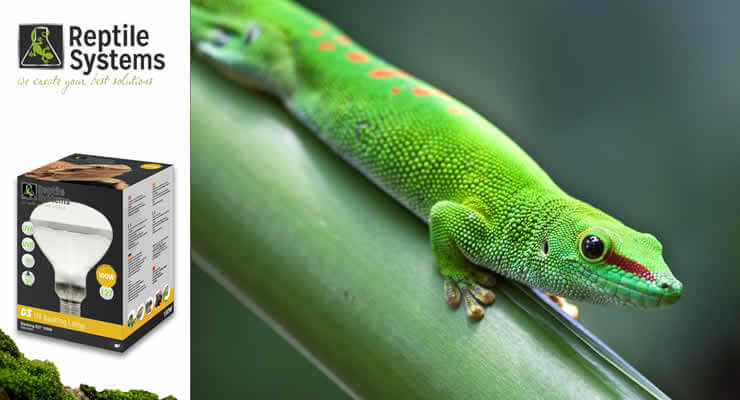
Mercury vapour lamps have been around for many years, originally used in the automotive industry where the UV was used to dry certain types of paint efficiently. These lamps were first brought into the reptile world after a reptile rescue centre realised how poor the UV lamps were that were previously on offer and developed the grandfather of all the mercury vapour lamps that we use today.
Self-Ballasted Mercury Vapour: Heat, Light & UV
Mercury vapour self-ballasted combination lamps sound very complicated, so let’s break that down to help explain. The Self Ballast means that each lamp has it’s own starter unit build inside, so you don’t need to buy any more hardware to make this lamp work. The combination part means the lamp will give you heat, light and UV and when we say UV, we mean UVA and UVB.
Originally designed for large enclosures for high UV demanding animals such as iguana, bearded dragons and tortoises, for example, they’re now commonly used over tortoise tables throughout the industry. Mercury vapour lamps are favoured by zoos and breeders due to the high UV output and large spread. A mercury vapour lamp can be cost-effective considering you get three products in one for heat, light and UV.
Reptile Systems have made a full range of sizes for small, medium and large enclosures. These include the D3 UV Basking Lamp 70w, D3 UV Basking Lamp 80w, D3 UV Basking Lamp 100w and D3 UV Basking Lamp 160. The MegaRay brand that we also support produces a 275w mercury vapour lamp! However, this is obviously designed for very large enclosures and favoured by zoos.
Reptile Systems’ Mercury Vapour Lamps

Not all brands of mercury vapour lamps are equal in terms of build quality and UV output. All Reptile Systems mercury vapour lamps are triple checked. Firstly, at the manufacturing stage, each lamp is plugged in to make sure they’re working and the UVI output is checked. This is to ensure the output fits the guidelines that Reptile Systems set for their products.
The product is then shipped to their German partners where it is switched on and the is UVI checked again. Once checked and passed the product is etched and boxed before it is sent to France which is where Reptile Systems headquarters are based. A box from each batch is sent to the UK testing facility to make sure the lamp is working and the UVI checked again! Once passed for the 3rd time, the lamps then go on sale.
All the lamps are tested in Reptile Systems’ large UK testing centre where they have over 200 lamps on test at any one time. Lamps are checked to meet multiple parameters making sure that they meet the high standards.
Reptile Systems: Triple-Checked, Welfare-First UVB
Reptile Systems produce high quality, reliable mercury vapour lamps. In terms of UVI output, the 80w lamp is equivalent to most manufacturers 100w lamp and the 100w lamp is equivalent to most manufacturers 160w lamp. Reptile Systems even produce a 160 lamp which uses only 125 watts, which has been re-designed by experts in combination with Reptile Systems to provide the correct heat, light and UV but by using less wattage.
Their 70w mercury vapour is based on the same design as the rest of the range but in a smaller lamp. Its aim is for use in smaller enclosures but please note the 70w is more of a ‘spot’ than the other three sizes.
Reptile Systems mercury vapours provide UVA and UVB for reptiles, aiding vision as well as the production of vitamin D3, which is essential in synthesises calcium for healthy bones, thus reducing the risk of Metabolic Bone Disease (MBD). Their mercury vapour lamps are still working with good UVI levels, even after twelve months.
They go to these extreme measures of quality and reliability as animal welfare is their top priority. Check out their Facebook, YouTube and website for more information.
How to Use a Mercury Vapour Lamp

When installing your mercury vapour lamp into a ceramic lamp holder, you must make sure that your lamp is installed in the vertical position. They must not be fitted horizontally, or even at an angle, as this damages the filaments inside and greatly reduces the lifespan of the lamp. It will also invalidate any warranty.
Mercury vapour lamps cannot be used with a thermostat, however they can run on a simple plug-in timer. One of our frequently asked questions is “Why doesn’t my lamp work?” There is a good reason for this! Safety features built into the lamp protect it against wide voltage fluctuations and overheating.
Quick Tips
If your lamp doesn’t switch on after a power cut or if you have turned it off, we recommend allowing it to cool for 20 minutes before turning the lamp back on again. This is a common occurrence with the technology in mercury vapour lamps. If you live in an area prone to voltage variations, your lamp may flicker. We always recommend surge protectors to be used with all electrical products.
Another question we often get asked is “What lamp do I need?”. There are several factors that can determine which size mercury vapour lamp you need: enclosure size, décor, basking distance you have for the animal and the UVI level you’re trying to achieve for that species. We’re always happy to help, so please contact us with any questions.
