

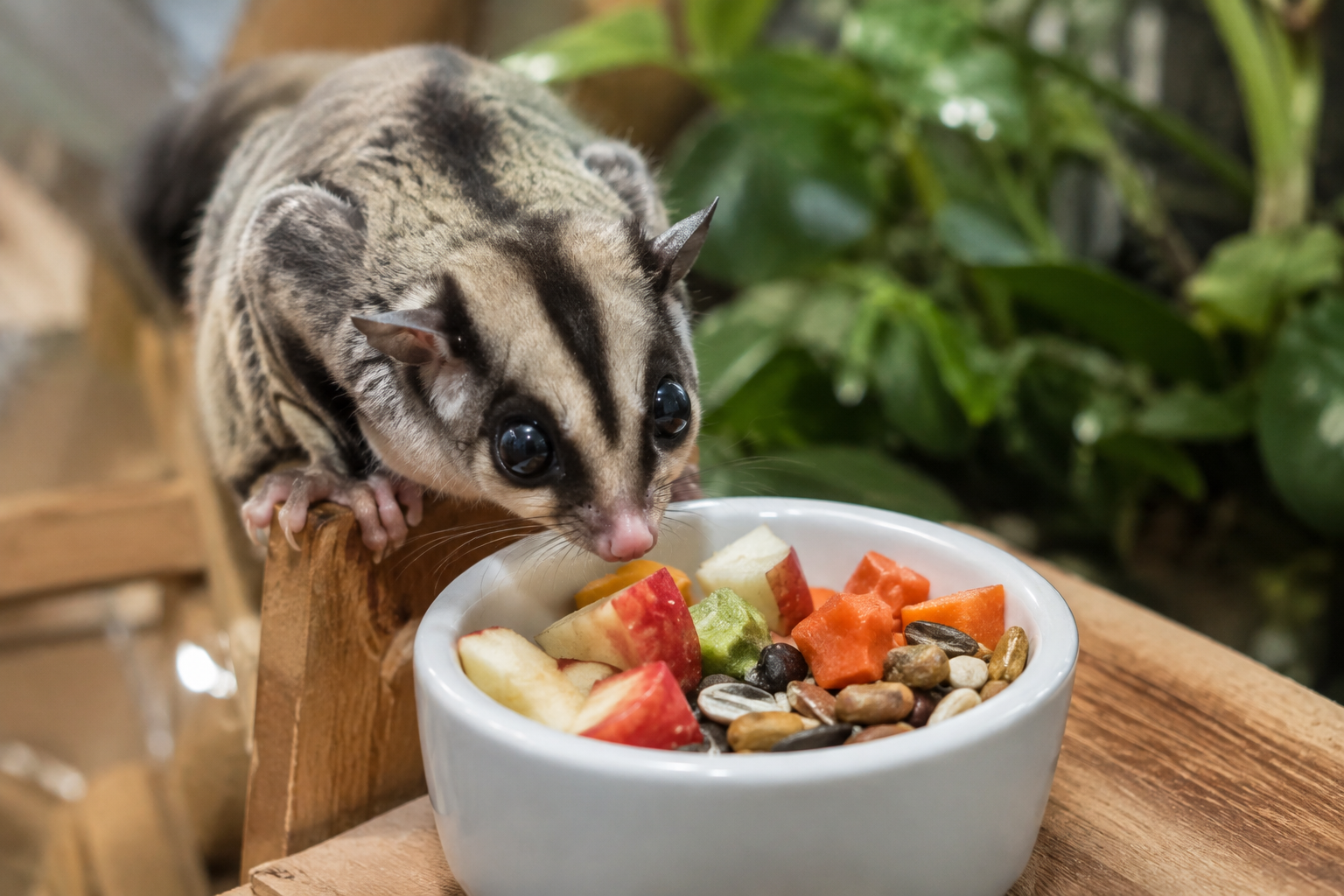
Sugar glider diet and feeding schedule tips matter because these small marsupials rely on steady nutrition, routine, and fresh food variety. However, healthy feeding goes beyond filling a bowl, since sugar gliders need a balanced plan that supports energy, bonding, and long-term wellness.
Understanding the Species and Its Feeding Needs
Sugar gliders are nocturnal, tree-dwelling marsupials with high activity levels at night. Therefore, they need regular evening meals and foods that match their natural foraging habits.
In the wild, they eat nectar, tree sap, insects, fruit, and plant material. As a result, captive diets should offer balance, variety, and consistency, not random treats.
Because they are small, even minor diet mistakes can affect health quickly. So, owners should plan meals carefully and monitor appetite, stool quality, and weight.
Sugar glider diet and feeding schedule tips for beginners
A good feeding schedule starts with one main evening meal and a small follow-up snack if needed. For instance, many owners feed after sunset, when gliders naturally become active.
Also, fresh water must stay available at all times. However, food should be removed before it spoils, especially in warm rooms.
Consistency helps reduce stress. Therefore, feed at roughly the same time each night so your glider learns the routine.
Creating the Right Enclosure and Feeding Environment
The enclosure should be tall, secure, and well-ventilated. Because sugar gliders climb, they need vertical space, branches, pouches, and safe shelves to explore.
Most keepers use a large wire cage with a tight bar spacing. However, the cage must also protect tiny feet, tails, and noses from injury.
Temperature should stay warm and stable, usually around 70 to 80°F. In addition, humidity should remain moderate, often around 50 to 70 percent, so the air stays comfortable.
Use fleece pouches, hammocks, and safe hides for rest. Meanwhile, keep food dishes elevated or secured, so meals stay clean and easy to reach.
How Sugar glider diet and feeding schedule tips fit into enclosure setup
Food placement matters because gliders prefer to climb while they eat. Therefore, offer dishes on shelves or attach them to the cage wall.
Also, separate sleeping areas from food areas when possible. This approach helps reduce mess and keeps uneaten food from soaking bedding.
Good ventilation is important, but drafts are not. So, place the cage away from windows, vents, and direct sun.
Building a Safe, Balanced Feeding Routine
Start with a species-appropriate staple diet from a trusted source or an exotic vet recommendation. Then, add safe fruits and vegetables in controlled amounts.
Protein matters too, since sugar gliders need insect-based or species-formulated protein support. However, avoid using random high-sugar treats as daily food.
Calcium balance is especially important for this species. Because poor mineral balance can contribute to metabolic bone disease, owners must avoid careless diet changes.
Metabolic bone disease means the bones weaken over time from improper nutrition. Therefore, calcium and phosphorus balance should stay on the owner’s radar.
Sugar glider diet and feeding schedule tips for portion control
Portion size should suit the individual glider, age, and activity level. For example, a healthy adult may leave only a small amount behind each morning.
Also, monitor what gets eaten versus what gets ignored. If one food disappears first every night, you may need more variety.
Introduce new foods slowly. In addition, rotate approved produce so your glider accepts different textures and nutrients.
Health, Safety, Comfort, and Handling
Watch for warning signs such as weight loss, loose stool, poor fur quality, or low energy. If these appear, contact an exotic vet promptly.
Never use home remedies for digestive trouble or sudden appetite loss. Instead, seek professional care, because small exotic pets can decline quickly.
Handling should stay gentle and calm. Therefore, let the glider wake fully before interaction, and avoid waking it just for fun.
Stress often shows up through crabbing, hiding, or refusing food. However, consistent routine, quiet handling, and a safe sleeping pouch can help.
Shedding and grooming happen naturally, but fur or skin problems need attention. Also, the enclosure should stay clean to reduce odor and bacterial buildup.
When feeding problems need expert help
If your glider stops eating, drinks excessively, or becomes weak, seek veterinary guidance. Likewise, persistent diarrhea or constipation needs a professional check.
Because this species hides illness well, early action matters. So, do not wait for obvious symptoms before asking for help.
Brumation, a seasonal slowdown seen in some reptiles, does not apply to sugar gliders. Even so, cooler temperatures or poor lighting can still reduce appetite and activity.
Costs, Legality, Lifespan, and Practical Ownership Considerations
Owning a sugar glider involves ongoing costs, not just the purchase price. Food, cage upgrades, bedding, enrichment, and vet care can add up monthly.
Exotic vet visits often cost more than standard pet care. Therefore, budget for wellness checks, emergency care, and diet supplies before bringing one home.
Lifespan can be long for a small pet, often well over a decade with good care. As a result, this should be a long-term commitment, not a novelty choice.
Also, check local laws before buying. Some areas restrict exotic pets or require permits, and rules can change by region.
Because sugar gliders are social, many owners keep them in pairs or compatible groups. However, introductions should be planned carefully to reduce stress and conflict.
Common Mistakes New Owners Should Avoid
One common mistake is feeding too much fruit and too little balance. Although fruit feels natural, it should not become the whole diet.
Another mistake is changing food repeatedly. Instead, choose a sound plan and follow it unless a vet recommends a change.
Some owners also underestimate cage size. However, cramped housing limits movement and can lead to boredom, stress, and poor muscle tone.
Cleaning mistakes matter too. Leftover food should not sit overnight for long periods, especially if the enclosure stays warm and humid.
Finally, avoid frequent rough handling. Because trust builds slowly, patience works better than chasing or forcing contact.
Quick checklist for daily care
- Offer the main meal after sunset.
- Keep fresh water available at all times.
- Remove spoiled food each morning.
- Check appetite, droppings, and energy daily.
- Maintain warm, stable temperatures and moderate humidity.
- Confirm the diet includes proper calcium balance.
- Schedule exotic vet care for any changes in health.
Conclusion
Healthy sugar glider care depends on routine, balance, and attention to detail. Therefore, the best results come from steady meals, a secure enclosure, and close observation.
If you stay consistent and keep learning, your pet can thrive for years. In short, sugar glider diet and feeding schedule tips are most effective when they support the whole animal, not just mealtime.
