

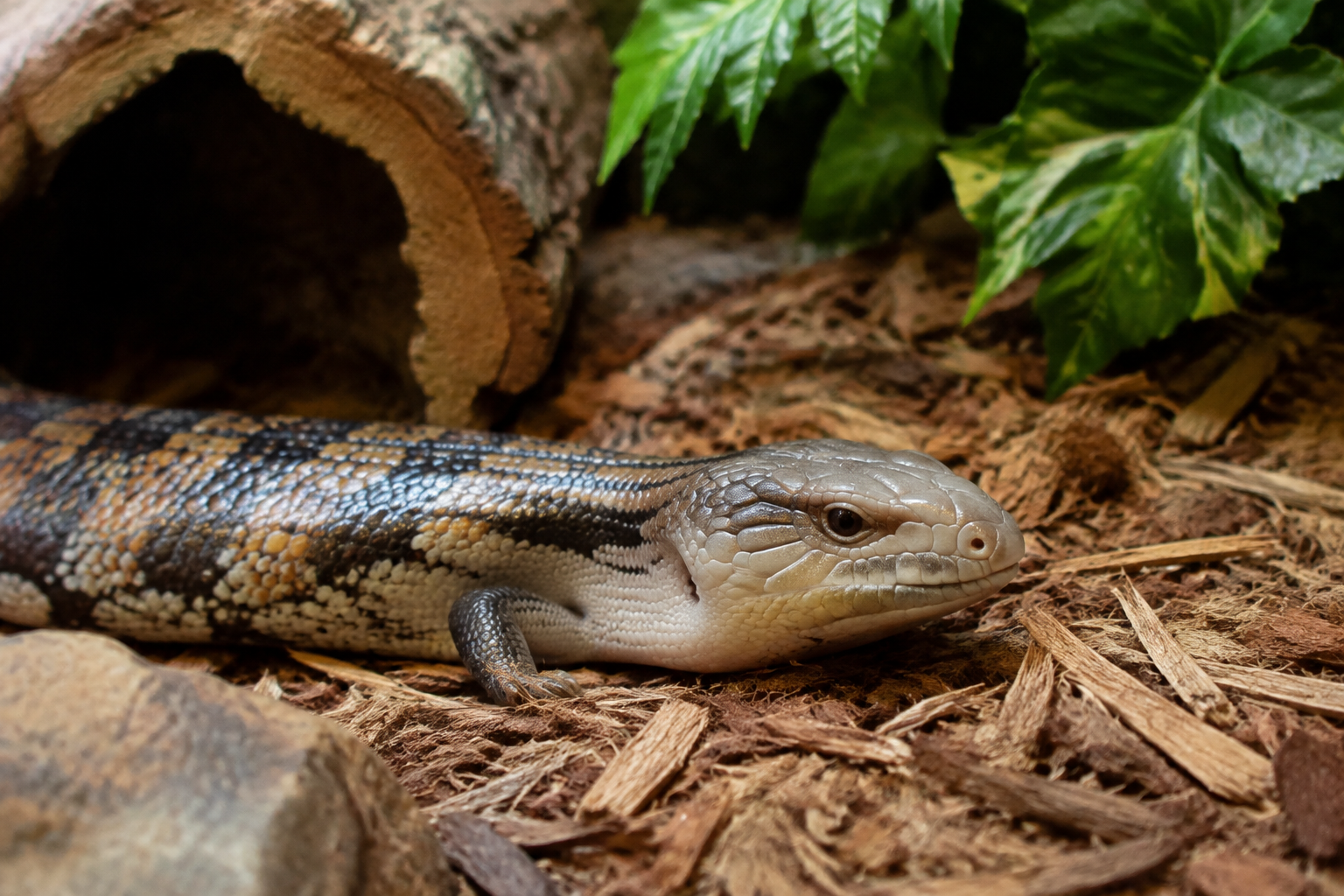
Blue tongue skink humidity and temperature setup is the foundation of safe, long-term care. However, many new keepers focus on looks first and comfort second, which can create stress fast.
Why this species needs a controlled climate
Blue tongue skinks are sturdy, but they still rely on their enclosure to regulate body temperature. In the wild, they move between warm and cooler areas, and that choice supports digestion, immune function, and daily activity.
Therefore, a proper setup should never feel uniform. You need a warm basking area, a cooler retreat, and humidity that supports healthy shedding without making the enclosure damp and stale.
Because these lizards are active ground dwellers, the habitat must be roomy and stable. In addition, they benefit from simple furnishings that help them feel secure without blocking airflow.
Blue tongue skink humidity and temperature setup basics
Blue tongue skink humidity and temperature setup should start with a clear gradient. For most commonly kept species, the basking surface should reach about 100 to 105°F, while the cool side can sit around 75 to 80°F.
At night, a slight drop is fine, and often healthy. However, temperatures should not fall too sharply, especially in cooler homes or during seasonal changes.
Building the right enclosure and environment
Size matters because this species grows large and moves a lot. So, many keepers choose a spacious enclosure with secure ventilation, a solid base, and enough floor space for walking, turning, and exploring.
Substrate should hold some moisture, but it must never stay soggy. A safe mix often includes soil-based materials, cypress mulch, or other reptile-safe substrates that allow burrowing and help maintain humidity.
Next, add at least two hides. One hide should sit on the warm side, and one should sit on the cool side, because skinks need choices throughout the day.
UVB lighting also matters. UVB means ultraviolet B light, which helps reptiles make vitamin D3 and use calcium properly, so it supports strong bones and normal growth.
Blue tongue skink humidity and temperature setup for enclosure planning
Blue tongue skink humidity and temperature setup works best when the enclosure supports both heat and airflow. As a result, you should balance moisture-retaining substrate with good screen or vent placement.
Most keepers aim for moderate humidity, often around 40% to 60%, with short periods a little higher during sheds. However, constant dampness can raise the risk of skin issues and respiratory stress.
Step-by-step care routine for consistent conditions
Start each day by checking temperatures with reliable digital thermometers and a heat gun for the basking spot. Then, confirm that the cool side still offers a real temperature drop.
Next, check humidity from more than one point in the enclosure. Because heat lamps can dry the air quickly, you may need light misting, a deeper substrate layer, or improved moisture retention.
Feed according to age and size, and always place food in a clean area. Since blue tongue skinks are omnivores, their diet usually includes vegetables, greens, and carefully chosen protein sources. For more details on feeding, you can refer to our Blue Tongue Skink Diet and Feeding Schedule Essential Guide.
After feeding, monitor the animal for normal behavior. If it hides constantly, avoids basking, or stops eating, the enclosure conditions may need adjustment.
Also, clean waste promptly. Regular spot cleaning reduces bacteria, while full substrate changes and enclosure wipes help keep the habitat safe and odor-free.
Blue tongue skink humidity and temperature setup during sheds
Blue tongue skink humidity and temperature setup becomes especially important during shed cycles. Therefore, keep the enclosure slightly more humid, but still well ventilated, so the skin can loosen without trapping moisture.
Do not pull stuck shed off by force. Instead, improve husbandry first, because rough handling can injure delicate skin and create more stress.
Health, safety, comfort, and handling
Correct temperatures protect digestion, and correct humidity helps the skin and respiratory system. However, poor conditions can lead to dehydration, repeated sheds, poor appetite, and other signs that the setup needs attention.
Watch for wheezing, swollen eyes, open-mouth breathing, or unusual lethargy. In addition, if you see soft jaw structure, weak movement, or abnormal posture, contact an exotic vet quickly.
Impaction means a blockage in the digestive tract, and it can happen when a reptile swallows substrate or eats inappropriate items. Therefore, use the right feeding surfaces and choose substrate wisely.
Metabolic bone disease, or MBD, is a serious calcium-related condition that weakens bones. So, provide proper UVB, balanced nutrition, and veterinary care when needed.
Handling should be calm and brief at first. Because these skinks can become stressed by sudden movement, support the body fully and let the animal walk between your hands when it feels ready.
Practical costs, legality, lifespan, and planning
Blue tongue skinks are not impulse pets, and their setup can be pricey. A strong enclosure, lighting, heaters, thermostats, substrate, and hides often cost more than beginners expect.
Monthly expenses also continue. You will spend on food, electricity, substrate top-ups, and occasional replacement bulbs or gear, so budget before you buy.
In addition, check local rules before acquiring one. Some areas restrict exotic reptiles, and permits may apply, especially if you live in a region with special wildlife laws.
These lizards can live for many years with good care. Therefore, plan for a long commitment, regular cleaning, and access to an experienced exotic veterinarian.
Common mistakes new keepers should avoid
One common mistake is using one temperature across the whole enclosure. Instead, the animal needs a clear gradient, because it must choose where to warm up and where to cool down.
Another mistake is over-misting without checking airflow. As a result, the enclosure can become stagnant, and stagnant air often causes more problems than slightly dry air.
People also choose tiny enclosures for convenience. However, cramped space limits movement, reduces enrichment, and makes it harder to create stable heat zones.
Some owners skip UVB because the skink seems active without it. Even so, UVB remains important for long-term bone health and overall welfare.
Finally, never guess when a health problem appears. If behavior changes persist, stop modifying the setup endlessly and contact a qualified exotic vet.
Quick checklist for daily success
Use this simple checklist to keep the enclosure on track. First, confirm basking heat, cool-side temperature, and humidity with reliable tools.
- Warm basking spot around 100 to 105°F
- Cool side around 75 to 80°F
- Humidity usually near 40% to 60%
- Secure hides on both warm and cool sides
- Proper UVB lighting and a thermostat
- Fresh water, clean substrate, and regular spot cleaning
- Balanced diet and careful observation after feeding
Also, review the enclosure weekly. That way, you can catch issues early, before small problems become stressful or expensive.
Final thoughts
Good husbandry makes blue tongue skink care far simpler and safer. Most problems start with unstable heat, poor ventilation, or humidity that is too low or too wet.
When you build around the animal’s needs, everything improves. Digestion works better, sheds come off more cleanly, and daily behavior becomes more predictable.
Above all, keep checking your measurements and adjusting slowly. With a careful blue tongue skink humidity and temperature setup, you create the stable environment this species needs for healthy, comfortable care.
