
Close Menu
GenzyPets

    Subscribe to Updates

    Get the latest creative news from FooBar about art, design and business.

    What's Hot

    Why Is My Chinchilla Chewing Everything? Understanding Their Need to Gnaw

    Abigail’s House Of Buns – Chapter 104 – Big Girl Ears

    Top Tunnels For Your Pet — Animal Hearted Apparel

    Facebook X (Twitter) Instagram
    Trending
    • Why Is My Chinchilla Chewing Everything? Understanding Their Need to Gnaw
    • Abigail’s House Of Buns – Chapter 104 – Big Girl Ears
    • Top Tunnels For Your Pet — Animal Hearted Apparel
    • Love is in the Air: Gizmo’s Valentine’s Treat Guide | Small Pet Select Blogs
    • Which Small Animal Species is Right For You? – Mazuri
    • February, 14, 2026: Top Cuties of the Week
    • Grief affects everyone differently. Here’s a rabbit and human perspective.
    • 4 Care Tips to Help Your Gecko Thrive – Mazuri
    Facebook X (Twitter) Instagram
    GenzyPets
    Wednesday, July 29
    • Home
    • Birds
      • Budgies
      • Canary Care
      • Cockatiels
      • Lovebirds
    • Chinchillas
      • Chinchilla Care
      • Chinchilla Food
      • Chinchilla Health
      • Chinchilla Cages
    • Ferrets
      • Ferret Behavior
      • Ferret Care
      • Ferret Food
      • Ferret Health
    • Fish & Aquatic Pets
      • Aquarium Care
      • Betta Fish
      • Goldfish
      • Shrimp Tanks
    • Guinea Pigs
      • Guinea Pig Breeds
      • Guinea Pig Care
      • Guinea Pig Diet
      • Guinea Pig Health
    • Hamsters
      • Dwarf Hamsters
      • Hamster Care
      • Hamster Food
      • Syrian Hamsters
    • Hedgehogs
      • Hedgehog Care
      • Hedgehog Diet
      • Hedgehog Habitat
      • Hedgehog Health
    • Mice & Rats
      • Mouse Care
      • Pet Mice
      • Pet Rats
      • Rat Care
    • Rabbits
      • Rabbit Breeds
      • Rabbit Care
      • Rabbit Nutrition
      • Rabbit Training
    • Reptiles
      • Bearded Dragons
      • Leopard Geckos
      • Small Snakes
      • Turtles
    GenzyPets
    You are at:Home»Reptiles»Turtles»Despite Limited Genetic Diversity, The Invasive Brown Treesnake Has Thrived On Guam
    Turtles

    Despite Limited Genetic Diversity, The Invasive Brown Treesnake Has Thrived On Guam

    PawvistaBy PawvistaJuly 29, 2026004 Mins Read
    Share Facebook Twitter Pinterest LinkedIn Tumblr Email
    Despite Limited Genetic Diversity, The Invasive Brown Treesnake Has Thrived On Guam
    Share
    Facebook Twitter LinkedIn Pinterest Email
    Despite Limited Genetic Diversity, The Invasive Brown Treesnake Has Thrived On Guam

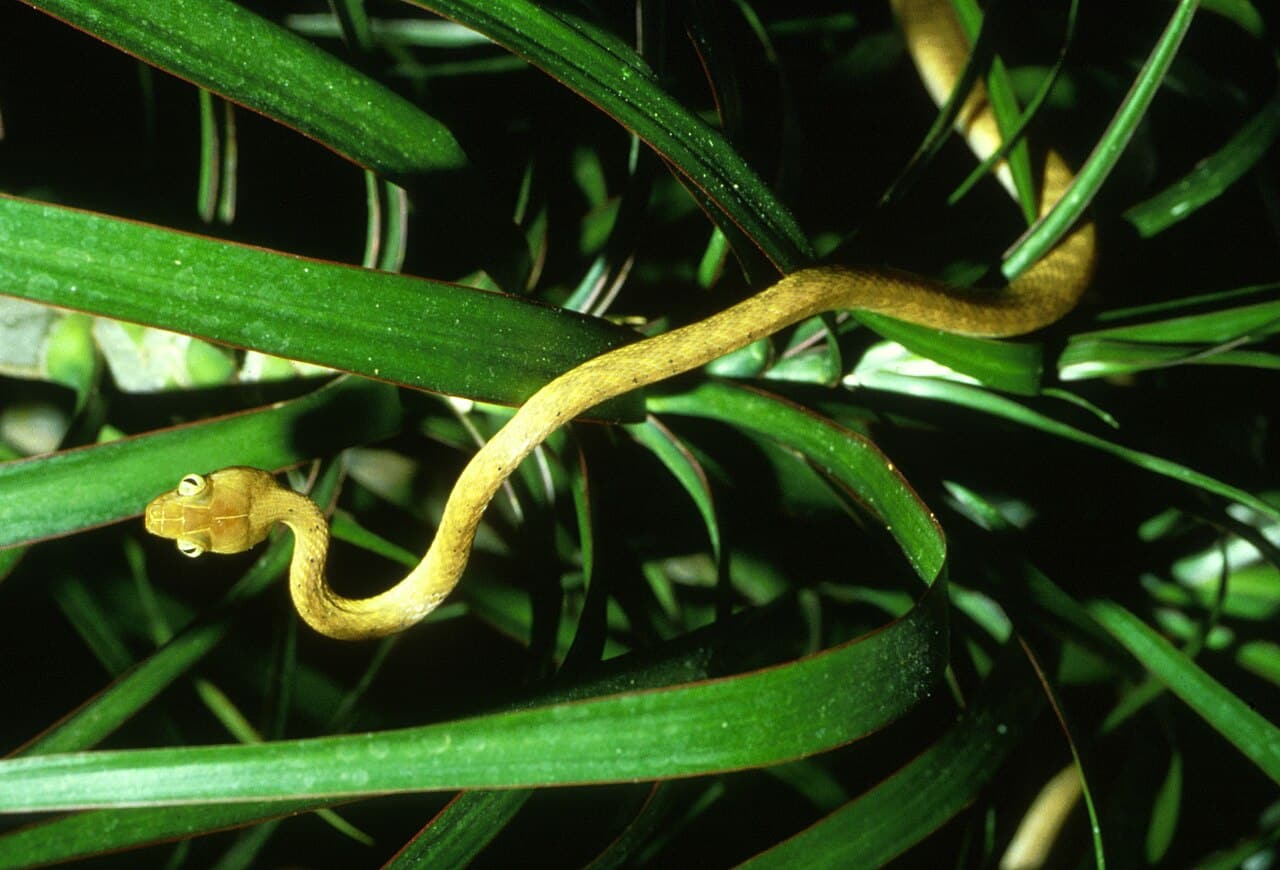
    The brown treesnake (Boiga irregularis), native to northern coastal Australia, eastern Indonesia, Papua New Guinea and islands in northwestern Melanesia, has been decimating native bird and reptile populations on the island of Guam since the 1940s where it is an invasive species.

    The rear-fanged, mildly venomous snake that grows to up to two meters in length, appears to have thrived on Guam despite only a handful of specimens making up the founding stock of this species. The snake, rather than succumbing to the lack of genetic diversity, has adapted quite well given its genetic limitations on the island, according to a study published in the journal Science Advances.

    The researchers determined that while the brown treesnake has endured an extreme bottleneck in its genetics, they found “extensive diversity in the form of nearly 19,000 genomic structural variants.” This is enough DNA, the researchers say to “provide material for “rescuing” the population from inbreeding-drive declines.”

    Invasive Brown Tree Snakes On Guam Killing Birds Too Large To Swallow

    This essentially means that despite the limited genetics of this species on the island in which they are invasive, they have found a way to thrive, “providing a mechanism for rapid evolution of gene-linked diversity,” in spite of the genetic bottleneck from the fact that the snake is on an island in which they are not native and there are no diverse populations of the species.

    This throws into question the notion that animals, or in this case, reptiles, lacking genetic diversity within a population, would cause reduced capability of that population to thrive in an environment in which they are not exposed to a wider array of genetics. Though there are documented cases in which populations that lack genetic diversity do not suffer any less than a population with a wider genetic variation and there are also documented instances in which highly inbred populations of fish and Tasmanian devils exhibit rapid and adaptive evolution.

    In reptiles, the lack of genetic diversity yet still offering a thriving population can be seen in the Brahminy blindsnake (Indotyphlops braminus), the Burmese python (Python bivittatus) in Florida, island reptiles such as the Seychelles giant tortoise (Aldabrachelys gigantea hololissa) and island bound skinks and geckos.

    The complete paper, “Genomic structural variation rescues a classic biological invader from a population bottleneck” can be read on the Science Advances website.

    Brown Tree Snake Information

    The brown tree snake has caused all sorts of problems on Guam. In addition to effectively changing that island’s ecology, the snake has caused power failures and efforts to eradicate it have cost millions of dollars. The snake is responsible for the extinction of nine native forest birds on Guam and three lizard species. Other bird species on the island have been significantly impacted by this snake and certain sea bird species no longer nest there. With these birds removed from the ecosystem, the island’s spider populations have gone largely unchecked, according to a study published in the journal PLoS One.

    Prior to the introduction of the brown tree snake on Guam, there were ten native birds that were known to eat insects: Bridled White-eye (Zosterops conspicillatus), Rufous Fantail (Rhipidura rufifrons), Micronesian Starling (Aplonis opaca), Mariana Swiftlet (Aerodramus bartschi), Cardinal Honeyeater (Myzomela rubratra), Nightingale Reed-Warbler (Acrocephalus luscinia), Mariana Crow (Corvus kubaryi), Micronesian Kingfisher (Todiramphus cinnamominus), Guam Flycatcher (Myiagra freycineti), and the Guam Rail (Gallirallus owstoni).

    The snake is a nocturnal, rear fanged venomous species of the family Colubridae. It is native to northern Australia, New Guinea, and the Solomon Islands. It averages two to four feet in length, with the largest specimen captured on Guam measuring 10 feet. It feeds on lizards, rats, birds, shrews, and other small animals.

    Brown Diversity Genetic Guam invasive Limited Thrived Treesnake
    Share. Facebook Twitter Pinterest LinkedIn Tumblr Email
    Previous ArticleCan Hamsters Eat Walnuts? Nutritional Insights for Pet Owners — Animal Hearted Apparel
    Next Article Rainbow Lorikeet Care Guide
    Pawvista
    • Website
    • Facebook
    • X (Twitter)
    • Pinterest
    • Instagram
    • LinkedIn

    Related Posts

    USFWS Public Hearing On Southern Hognose Snake Today

    July 28, 2026

    $5,000 Reward For Info Leading To Arrest And Conviction of Person Who Abandoned Ball Python Snakes

    July 28, 2026

    New Venomous Pit Viper Species From China Described

    July 28, 2026
    Add A Comment
    Leave A Reply Cancel Reply

    Top Posts

    The Pros and Cons to Owning an Alaskan Malamute – Fantastic Furries

    July 27, 20266 Views

    Read This BEFORE You Get a New Ferret – The Modern Ferret

    July 27, 20265 Views

    Rabbit Teeth Grinding: What Is It & Why Do They Do It

    July 27, 20263 Views
    Stay In Touch
    • Facebook
    • YouTube
    • TikTok
    • WhatsApp
    • Twitter
    • Instagram
    Latest Reviews

    Subscribe to Updates

    Get the latest tech news from FooBar about tech, design and biz.

    About us

    Welcome to GenzyPets.com, your trusted source for everything related to micro pets and small companion animals.

    At GenzyPets, we believe that every pet deserves the best care, whether it's a hamster, guinea pig, rabbit, hedgehog, chinchilla, ferret, bird, reptile, fish, or any other small pet. Our mission is to provide pet owners with reliable, easy-to-understand, and practical information to help them give their pets healthy and happy lives.

    Most Popular

    The Pros and Cons to Owning an Alaskan Malamute – Fantastic Furries

    July 27, 20266 Views

    Read This BEFORE You Get a New Ferret – The Modern Ferret

    July 27, 20265 Views

    Rabbit Teeth Grinding: What Is It & Why Do They Do It

    July 27, 20263 Views

    Subscribe to Updates

    Get the latest creative news from FooBar about art, design and business.

    © 2026 GenzyPets.com. All Rights Reserved.
    • Terms & Conditions
    • Privacy Policy
    • Contact Us
    • About Us

    Type above and press Enter to search. Press Esc to cancel.