

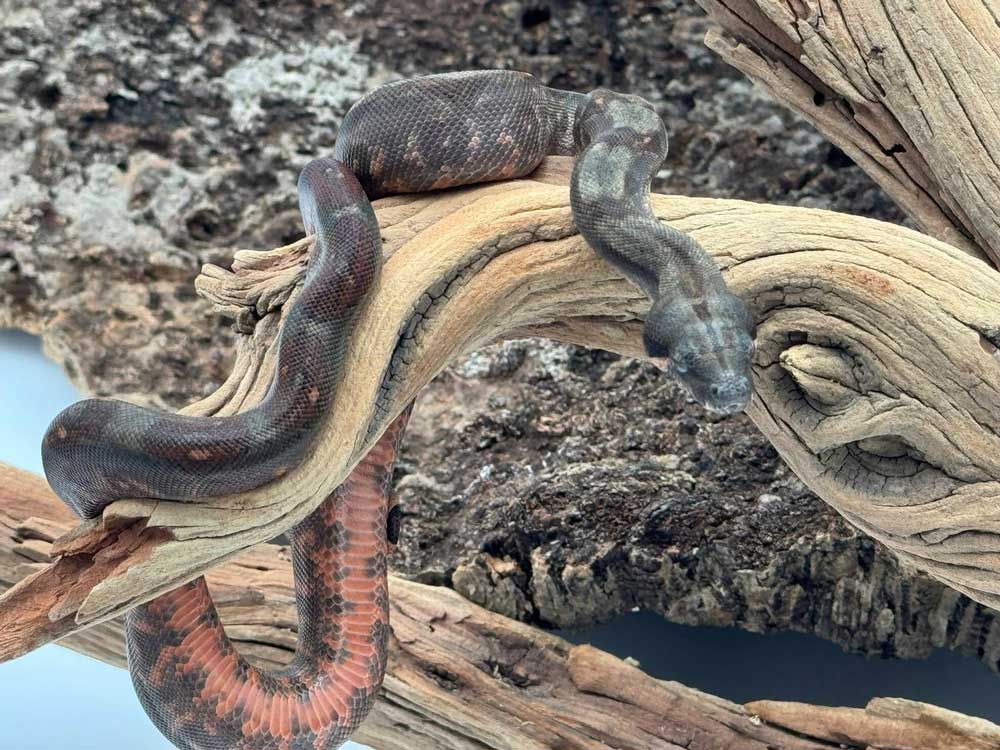
Corn Island off the coast of Nicaragua is home to a fascinating locality form of dwarf Boa constrictor imperator. They have an interesting color spectrum ranging from olive tans to olive greens to sea greens, and finally to blackish greens with coffee brown saddle markings. Their bellies and sides can have a striking red to reddish orange color which is striking when revealed.
Corn Island Boa Husbandry
Caring for these boas is fairly standard as far as husbandry is concerned. They do well with a 90 degrees Fahrenheit (32.2 degrees Celsius) hot spot and a few degrees night drop. Providing them with branches to climb gives them an outlet for their extra energy and curiosity. They do not require it, but I provide the adults and sub-adults with UVA/UVB lighting. Hide boxes or tree bark hides provide a secure resting place as well as an aid to shedding skin. I keep the humidity between 60 and 80 percent by using a humidifier in the snake room as well as an additional humidifier for the house. Adult females do very well in 4’x2’x2’ enclosures and the males in 3’x2’x2’s. They feed primarily on migrating birds in the wild. In captivity, they can be maintained on a combination of frozen thawed mice, rats, chickens, and quail.
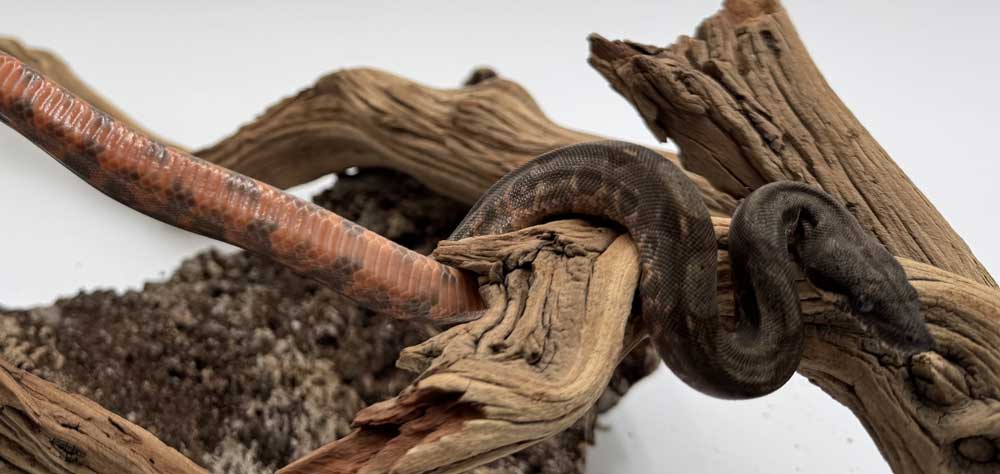
Branches are an integral part of the snake’s enrichment. Photo by James Tosetti
Corn Island Boa Temperament
These boas have very curious and active personalities with a mild temperament. They love to explore and climb branches and appreciate being handled to satisfy this curiosity. After these snakes are born they can be flighty when handled,continually gliding from one hand to the next in an effort to explore elsewhere or avoid the keeper. However, this behavior is soon forgotten with two or three handling sessions. I would describe them as being great snakes to handle as well as being easily tamed.
Starting the Project
Corn Island boas have always been scarce in the hobby, but the last decade has seen an almost complete absence of new litters or animals for sale. I had been searching for at least 10 years after deciding these were my favorite type of snake as a result of a couple years of studying different species and localities. However, I was not able to find any until October of 2024. An adult pair aged seven years became available on Morph Market, and I did not waste any time. I immediately messaged the seller and arranged to buy them. Within two weeks they had arrived and I could finally start my Corn Island boa project.
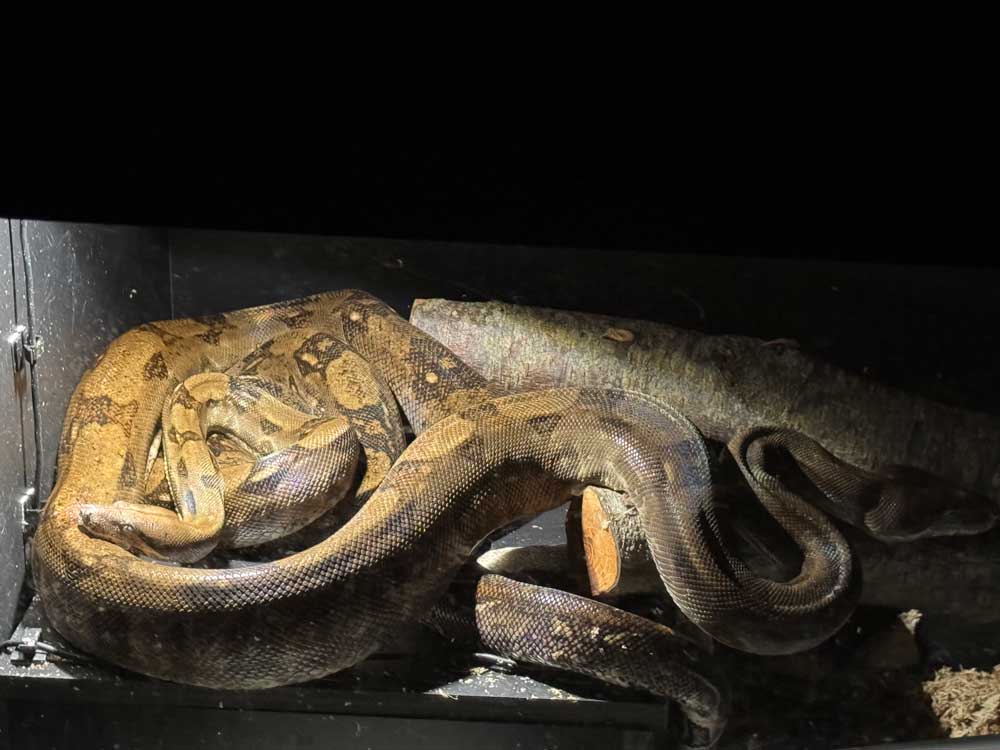
A pair locked up. Photo by James Tosetti
At this time there were only around two other people known to have breeding stock in the United States. One of them was a long-time owner with a decent sized group, but they had only produced once in the last decade. The other person was like me and had painstakingly tracked down young boas to raise up for breeding. Within three weeks of owning the adult pair I had formulated a breeding program and paired them up. Around this same time, I had discovered a pet store owner in the Netherlands that had been breeding them for a few years. I sent out a message and made a deal for four sub-adult males in hopes of establishing a relationship to buy future litters. With guidance from Dr. Warren Booth, I was able to arrange for them to be shipped to the United States. By June 2025 I was able to purchase the entire litter the European breeder produced and again, with Warren’s help, I was able to verify the lineage of these Corn Island boas to ensure they truly were Corn Island locality boa constrictors.
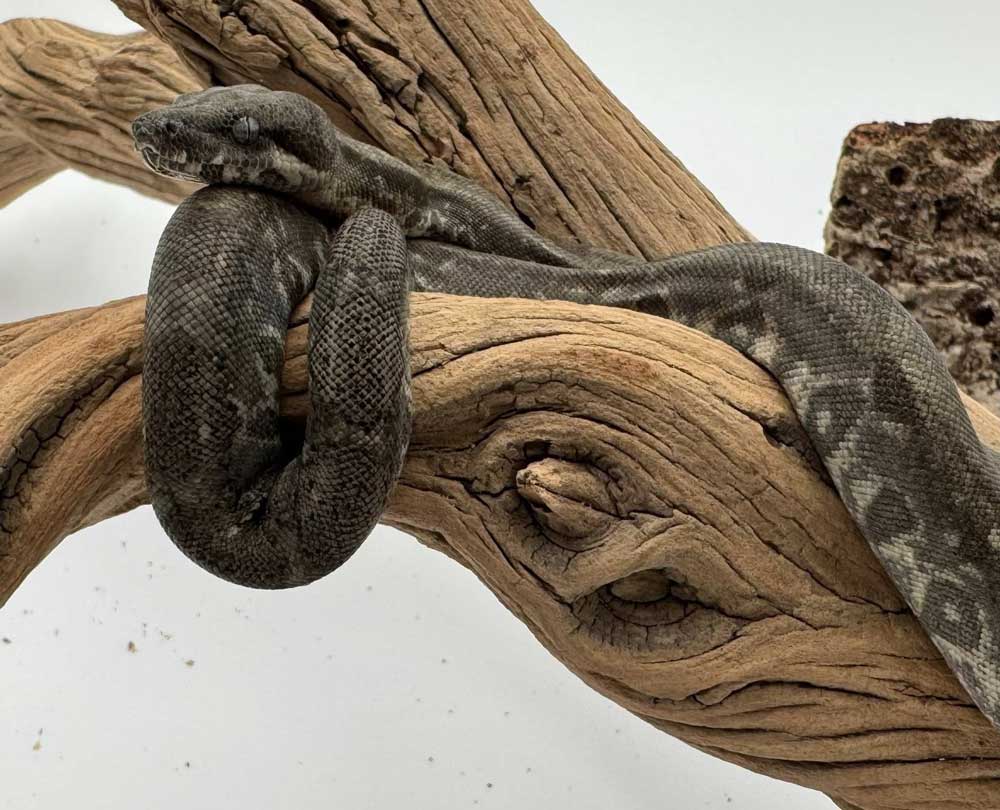
Corn island boa perched. Photo by James Tosetti
Fast forward about a year and the person with the long-term project had a fire at their facility and that group was lost. Had myself and the other person not decided to start our projects, the Corn Island locality may have been completely lost to American herpetoculture. This loss made the existing groups so much more important. My main goal with my project was to make them available in the United States again. I was fortunate to find a person with an adult female that I could sell one of the adult male European imports to. This person had messaged me on Morph Market and was a part of the Corn Island boa Facebook group that I created. To me, this was a small, but important win for my project. The next step would be successfully breeding my pair and placing the offspring with highly skilled boa breeders to ensure their future.
Corn Island Boa Breeding
My breeding project was and will probably always be one of my proudest achievements. I had heard this locality was more active than others and was difficult to breed. With this knowledge I decided to take it very seriously and analyze unsuccessful breeding attempts as well as past and present breeding standards. “The Reproductive Husbandry of Pythons and Boas” proved to be a valuable source of information as well as educational videos on boa breeding from successful breeders.
To start the breeding season, I began by temperature cycling and regulating their food intake. I fed them one time on October 17 then decided to drop the temperature 4 degrees every four days until it was 72 degrees Fahrenheit (22.2 degrees Celsius). I maintained the pair at this temperature for three weeks until I learned most people were only dropping the temperatures at night. The boas were both doing great and showing positive signs such as sitting together and sharing the same hide box, so I just adjusted the day-time temperature back to 90 degrees Fahrenheit (32.2 degrees Celsius).
I decided to not feed them for one month after being paired so that they would focus on each other rather than the next feeding. I personally think this is a great beneficial step. After one month I resumed feeding but started feeding a slightly smaller than usual item every three weeks. I decided to reach out to the breeder in the Netherlands to see what their feeding schedule was like during mating season and they recommended a medium rat every two weeks, so I changed to this method. In addition to a specific feeding schedule I changed the water every day to every other day. I believe fresh water is the most important part of breeding season.
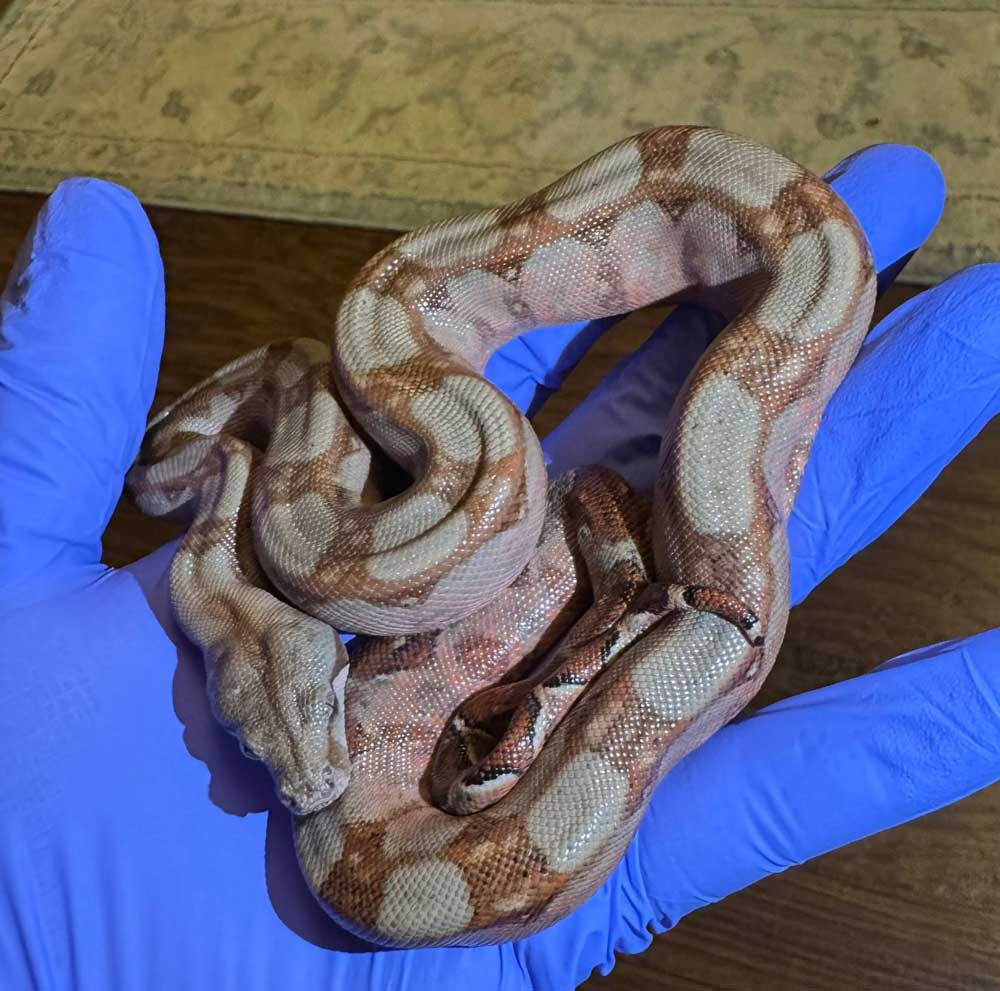
A baby corn island boa. Photo by James Tosetti
The program that I developed seemed to be working well. After a month, the I viewed the male was resting on top of the female and I witnessed the first lock on January 5. By February 26, the female had significant follicular development to the extent I believed she was ovulating. This proved incorrect as she had a second shed after what I believed was ovulation and ended up delivering her litter on August 1, 2025!
What the Future Holds
The birth of this litter was extremely exciting because it represented a new start for this locality. I immediately recognized some that I wanted to keep for my future breeding projects. Crossing the European line with the Rio Bravo line from America while selecting vibrant red bellies and sea green base coloration will be the main focus. The other side projects include connected saddles with holes or gaps in the saddles. I was also incredibly happy to see an anerythristic baby. I was not surprised because the parents were known to be heterozygous for anery since a parent was one of two previously produced by the original breeder. This anery female would be the third to be produced and may be the only one still alive.
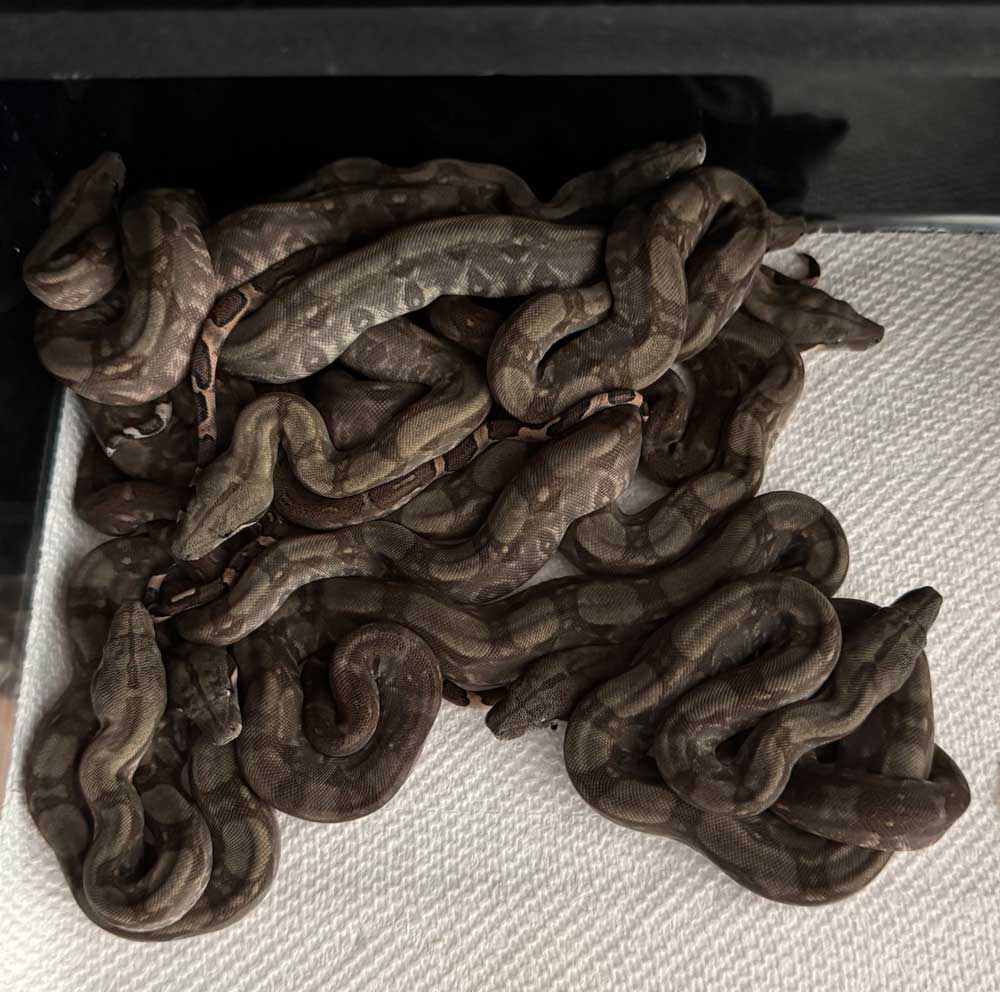
Corn island boa babies. Photo by James Tosetti
The litter was comprised of three males and six females. This was a great ratio because I agreed to buy a very male heavy litter from Europe with seven males and two females. I have several extra males, but that is rarely a bad thing. Once the grey and white birth colors started to change, I could see the bellies of the wild types were a very pink/orange to reddish tone. It is a very striking thing to see a green and brown camouflage snake display such a vibrant underside! The European line has a very sea green tone, and I cannot wait to cross these litters in future pairings and start circulating the offspring among qualified breeders.
Conclusion
After successfully breeding Corn Island boas and establishing their offspring, I was fortunate to find several respected and qualified breeders to work with the snakes I was willing to part with. Not only was the goal of the project to make this locality available again but at the same time to start several different breeding groups to ensure one mishap does not wipe them out. I have been able to place small breeding groups with several skilled breeders, so the project has been a remarkable success thus far and I am excited for what the future holds.
James Tosetti has over 30 years of experience keeping reptiles and has maintained a focus on rare pythons and boas since 2022 under the name Tosetti Pythons & Boas. Together with his wife Hamideh, reptile keeping has transitioned from a hobby to a profession with many exciting projects to come.
