

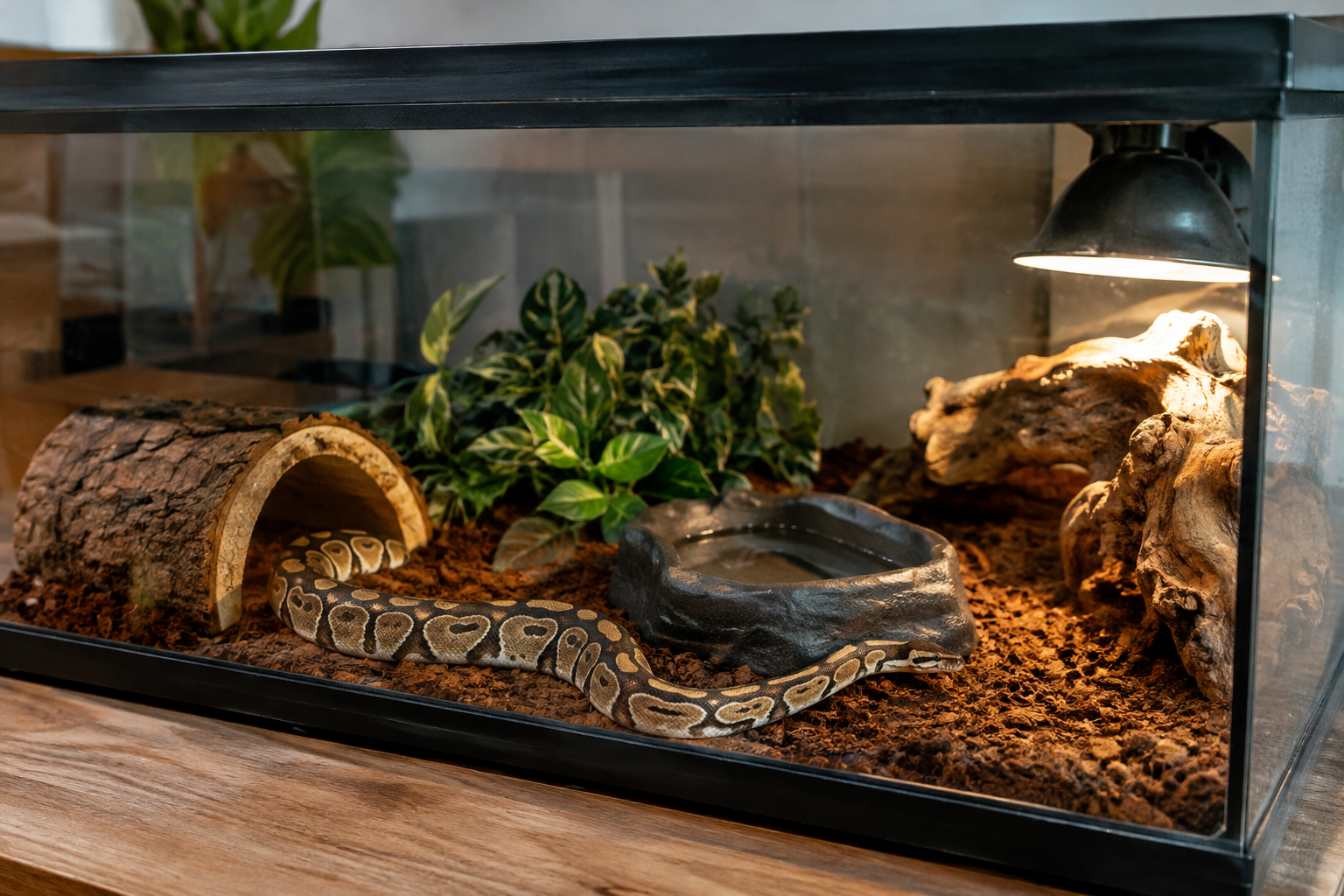
How to Set Up a Ball Python Enclosure starts with understanding the snake, not buying random supplies. A good enclosure supports calm behavior, steady feeding, and long-term health. Therefore, the goal is not just decoration; it is creating a safe, stable habitat.
Ball Python Basics for New Keepers
Ball pythons are generally calm, secretive snakes from West and Central Africa. They spend much of their time hiding, and they prefer secure spaces over open display. As a result, a proper enclosure should feel enclosed, warm, and low-stress.
They are popular exotic pets because they stay manageable in size and usually tolerate routine care well. However, that does not mean they are simple animals. In fact, success depends on consistent heat, humidity, and proper hides.
Before buying gear, check local laws and permit rules. Some areas regulate exotic pets, and you should confirm legality before bringing one home. In addition, choose a healthy captive-bred snake from a responsible source rather than rushing into a purchase.
How to Set Up a Ball Python Enclosure
How to Set Up a Ball Python Enclosure begins with choosing the right enclosure size and style. Juveniles can start smaller, but adults need enough floor space to move, thermoregulate, and hide. For most adults, a secure enclosure with front opening access works very well.
Next, build a temperature gradient. That means one side stays warmer, while the other side stays cooler. Therefore, the snake can move between zones and control its body temperature naturally.
Use a thermostat with all heating equipment. A thermostat regulates temperature and reduces the risk of burns or overheating. Also, keep the warm side around the proper species range, with the cool side slightly lower, and provide a safe nighttime drop only if it stays within healthy limits.
Humidity matters just as much. Ball pythons usually do best with moderate to high humidity, especially during shedding. However, the enclosure should still have ventilation, because stale air can create problems even when moisture looks adequate.
Substrate should hold moisture well without staying wet. Many keepers use cypress mulch, coconut-based bedding, or similar options that support humidity. However, avoid loose substrate that stays soggy, since that can raise hygiene issues.
Finally, provide at least two snug hides, one on each end of the enclosure. Because ball pythons feel safer when tightly enclosed, appropriately sized hides reduce stress far more than large decorative caves. Add a water bowl, simple decor, and enough cover to help the snake feel secure.
How to Set Up a Ball Python Enclosure: Heating and Humidity
How to Set Up a Ball Python Enclosure successfully depends on stable environmental control. Use a heat source that creates a gentle basking zone, then measure with reliable digital thermometers. In addition, place gauges at both ends, because one reading never tells the whole story.
Humidity should stay steady rather than swinging wildly. To improve retention, use a well-fitting lid or enclosure top and offer a larger water dish. Also, lightly mist only when needed, since constant soaking can make bedding too damp.
For shedding support, slightly higher humidity often helps the process go smoothly. A healthy shed should come off in one piece when conditions are right. However, if eye caps or patches remain stuck, you should consult an exotic vet for advice.
Daily Care and Routine Maintenance
After the enclosure is ready, set a simple care routine. First, check temperatures, humidity, and water every day. Then watch for normal behavior, such as resting in hides, exploring at night, and moving between warm and cool areas.
Feeding should match the snake’s size and age. Ball pythons commonly eat appropriately sized thawed rodents, and many keepers use frozen-thawed prey for safety and convenience. However, feeding habits vary, so avoid overfeeding and leave time between meals.
Cleaning should happen in layers. Remove waste quickly, refresh water often, and spot-clean soiled bedding as needed. In addition, do a deeper enclosure clean on a regular schedule to keep bacteria and odors under control.
Handling should stay brief and calm at first. Let the snake settle for a period after arrival, and avoid frequent disturbance during feeding or shedding. Therefore, a low-stress routine builds trust more effectively than repeated forced interaction.
How to Set Up a Ball Python Enclosure for Safe Handling
How to Set Up a Ball Python Enclosure for safe handling means thinking about security from the beginning. Use a lid or door that locks properly, because escapes are both stressful and dangerous. Also, keep decor arranged so the snake has cover when you open the enclosure.
When lifting the snake, move smoothly and support the body well. Never grab suddenly from above, because that can trigger defensive behavior. Instead, approach gently and let the snake realize you are not a threat.
Brumation is a seasonal slowdown in some reptiles, but ball pythons usually do not require it in normal pet care. Even so, any unexpected lethargy, refusal to eat, or weakness deserves attention. Therefore, unusual behavior should prompt a check with an exotic vet.
Costs, Lifespan, and Responsible Ownership
Ball python ownership involves more than the first setup cost. Enclosure, heating, thermostat, substrate, hides, water bowl, décor, and backup supplies all add up. In addition, monthly costs include food, bedding, electricity, and occasional replacement items.
Expect long-term commitment as well. Ball pythons can live for many years with proper care, so this is not a short-term pet. As a result, you should plan for housing, feeding, and veterinary care over the animal’s lifespan.
Health concerns do happen, and early warning signs matter. Watch for wheezing, bubbles around the nose, persistent open-mouth breathing, sustained refusal to eat, swelling, or difficulty shedding. Because reptiles hide illness well, prompt exotic-vet care is always the safest choice.
UVB, or ultraviolet B light, is not always required for ball pythons, but some keepers use low levels to support natural day-night cycles. If you choose UVB, use species-appropriate equipment and placement. However, incorrect lighting can cause stress, so research carefully before adding it.
Common Mistakes to Avoid
Many beginners underestimate security. Loose lids, poor latches, and weak ventilation screens invite escapes or unstable conditions. Therefore, always test the enclosure before bringing the snake home.
Another common mistake is using the wrong substrate or too much decor clutter. While enrichment matters, the snake still needs open paths, secure hides, and easy access to water. In addition, avoid rough branches or sharp items that can injure scales.
Overhandling also creates problems. A new ball python needs time to adjust, and too much interaction can slow feeding and increase stress. So, let the snake settle first, then build handling sessions slowly.
Finally, some keepers guess instead of measuring. Guessing humidity or temperature leads to preventable issues, including dehydration and impaction. Impaction means a blockage in the digestive tract, and poor husbandry can increase the risk.
Practical Setup Checklist
Before you bring the snake home, run through a short checklist. This keeps the process organized and reduces mistakes later.
- Choose an enclosure with secure locking access.
- Install a thermostat and reliable thermometers.
- Create warm and cool sides for a clear temperature gradient.
- Provide two snug hides and a clean water bowl.
- Select substrate that supports humidity without staying soaked.
- Confirm ventilation, lighting, and decor are safe and stable.
- Verify local legality, permits, and exotic-vet options.
Final Thoughts
When you learn how to set up the enclosure correctly, everything else becomes easier. The snake feels safer, feeding usually improves, and routine care becomes more predictable. Therefore, careful planning is one of the best gifts you can give this species.
How to Set Up a Ball Python Enclosure is really about balance: heat, humidity, security, and simplicity working together. If you focus on those basics, you create a habitat that supports health and reduces stress. In the end, that is the foundation of responsible ball python care.
