

Have You Heard About Lead Toxicity?
Exposure to lead and other heavy metals can affect multiple body systems in humans and non-human animals. Signs of exposure can include lack of coordination, lethargy, weight loss, regurgitation, and diarrhea. If left untreated, heavy metal toxicity can progress to anemia, and even death.
Some construction materials, especially those found in older homes, can contain lead. Exotic pets can be exposed by chewing on flooring, baseboards, and walls, or on other surfaces or objects containing lead such as weights, galvanized wire, or hardware. We most commonly see cases of lead or zinc toxicity in birds, but it can be found in any species. To protect your exotic pet, always provide supervision while they’re out free roaming. Make sure to provide them with a pet-proofed play area free of potential toxins, human health supplements, and metallic objects. Make it a habit to monitor and record any changes in your pet’s appetite, weight, and energy level so that you can identify problems early on.
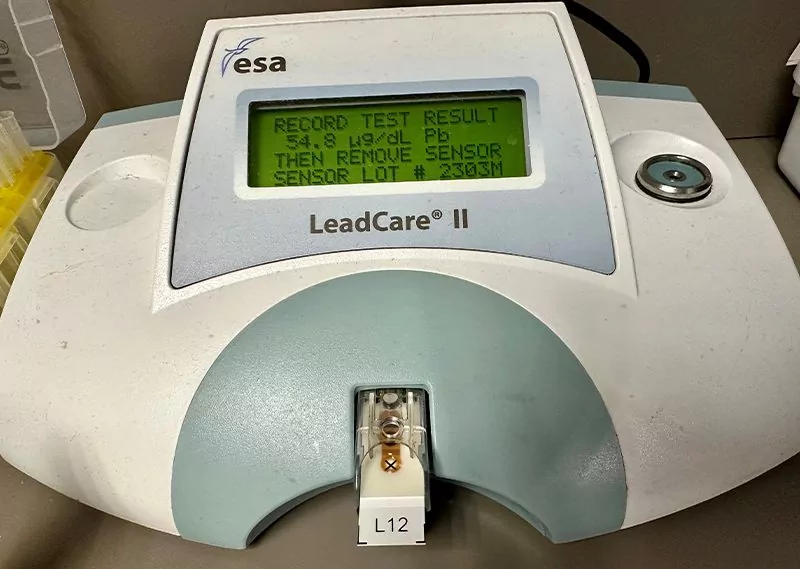
We, at The Veterinary Center for Birds and Exotics, are well-equipped to handle lead toxicity cases, including having a lead testing machine on site, and chelation treatment readily available. Combining history and clinical signs with radiographs and bloodwork allows us to reach a diagnosis and begin treatment immediately, preventing further absorption of the heavy metal into the body tissues.
Is your exotic pet showing signs of illness after getting into on something they shouldn’t? Reach out to us right away to schedule a consult by calling us or scheduling an appointment!
