

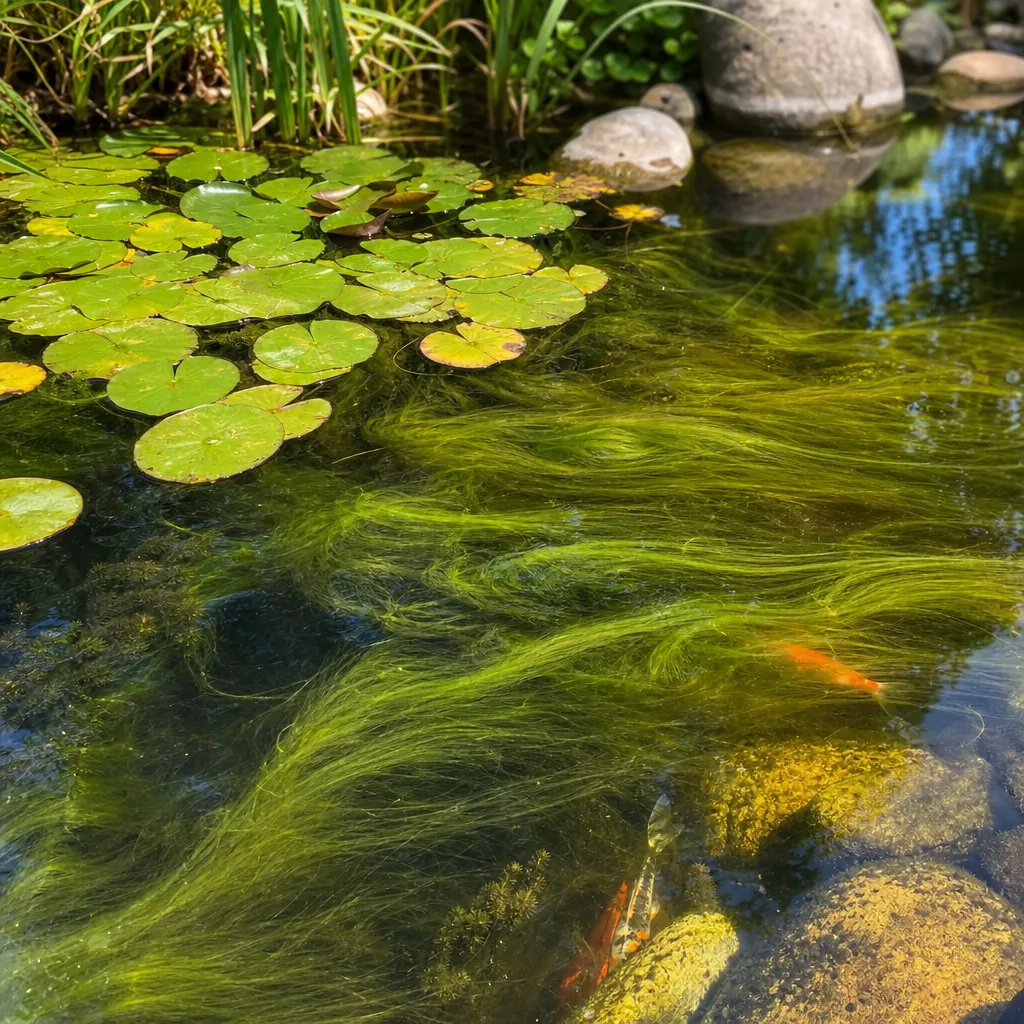
String algae is the long, hair-like green growth that clings to your rocks, waterfall, and pump intake and turns clear water into a tangled mess by early summer. Unlike the green-water algae that makes water cloudy, string algae attaches to surfaces and grows in mats you can grab by the handful. Removing it is easy; keeping it from coming back is the real work.
What String Algae Is and Why It Thrives
String algae, sometimes called filamentous algae or blanketweed, is a group of algae that grows in long strands anchored to rocks, plants, and hardscape. It loves exactly the conditions a lot of ponds provide: plenty of sunlight, warm water, and an abundance of dissolved nutrients, mainly nitrogen and phosphorus.
Those nutrients come from fish waste, uneaten food, decaying leaves, lawn fertilizer runoff, and general debris breaking down on the pond bottom. String algae is not a sign of a broken pond; it is a sign of a pond with more available nutrients and light than the desirable plants can use. Fix that imbalance and the algae loses its advantage.
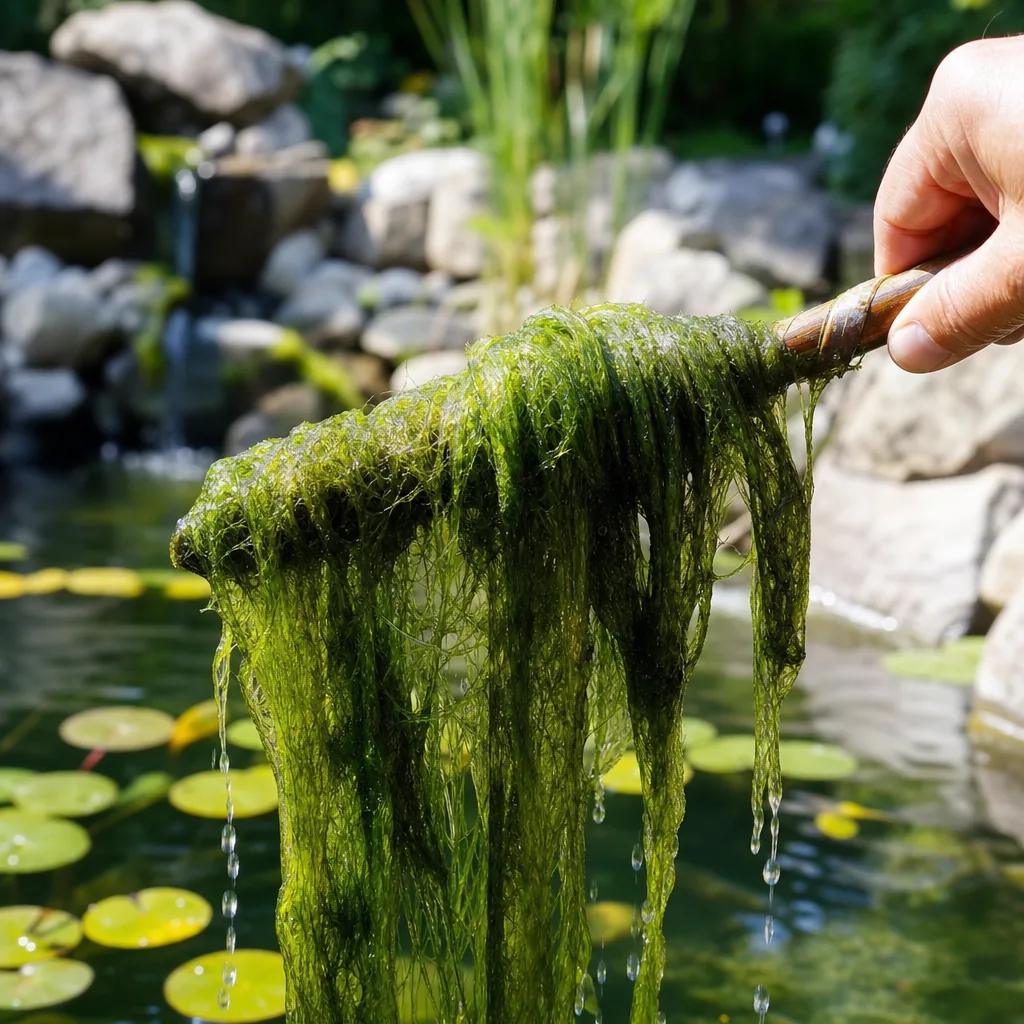
Step One: Physical Removal
Start by pulling out as much as you can by hand. String algae is one of the few algae types you can physically remove in bulk, so take advantage of it.
- Twist mats around a stick, a stiff brush, or a toilet brush and lift them out like winding spaghetti onto a fork.
- Rake or net floating strands off the surface.
- Clear algae off the pump and skimmer intake so flow is not choked.
Removing the physical mass does two things: it instantly improves the look, and it takes the nutrients locked up in that algae out of the pond for good. Toss the removed algae on the compost pile, not back near the water. Do not expect one cleanup to solve it, though, because the underlying nutrient supply is still there.
Step Two: Cut Off the Nutrients
This is the part that actually keeps string algae from returning. Every strategy comes down to reducing the nitrogen and phosphorus the algae feeds on.
- Do not overfeed fish. Uneaten food is a major nutrient source. Feed only what the fish finish quickly, and less in cool weather when they eat little.
- Reduce fish load if it is heavy. More fish means more waste. An overstocked pond fights algae constantly.
- Keep debris out. Net fallen leaves, use a pond net in autumn, and remove dead plant material before it decays and releases nutrients.
- Clean the bottom. Vacuum or remove the muck layer of decomposed sludge that acts as a slow-release nutrient bank.
- Watch runoff. Keep lawn fertilizer and grass clippings away from the pond, because that runoff is pure algae fuel.
For more on managing waste and water quality in outdoor water features, see our ponds guides.
Step Three: Out-Compete the Algae With Plants
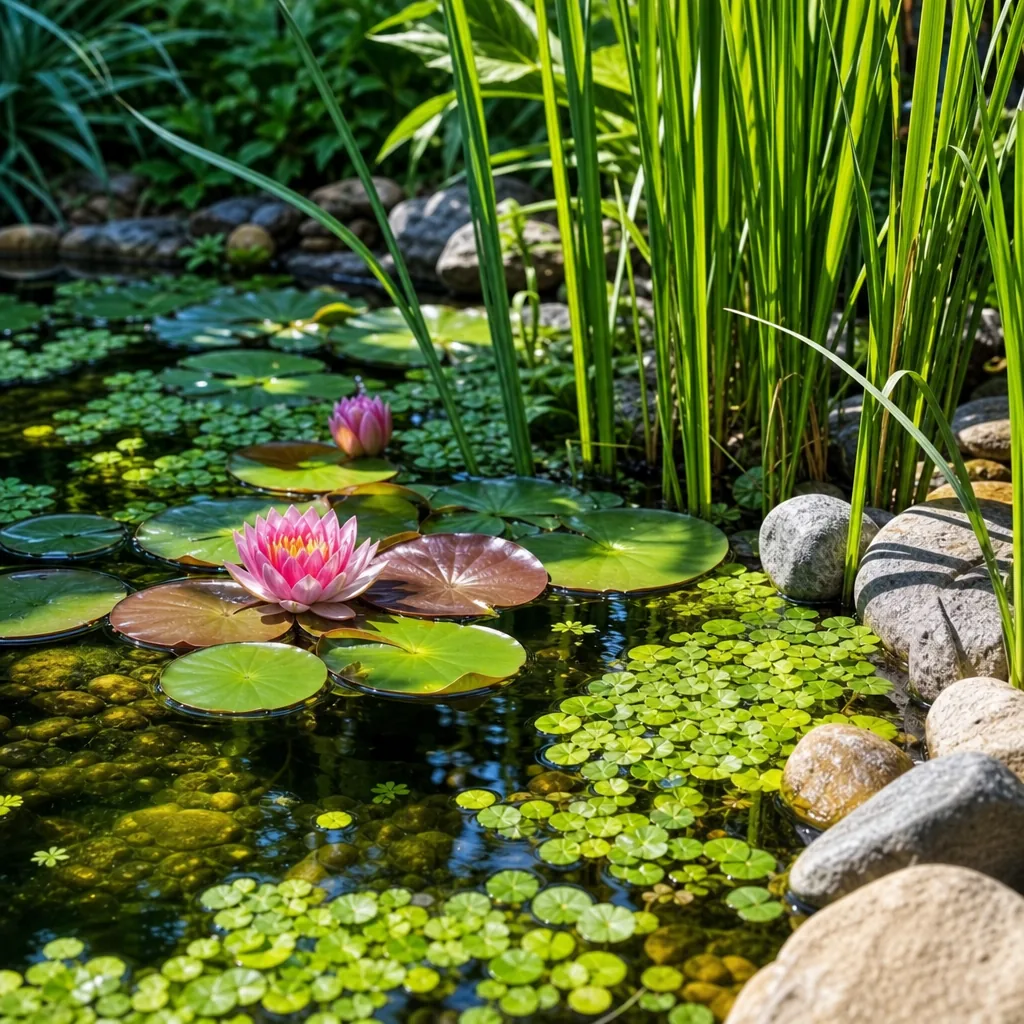
The single most effective long-term control is competition. String algae and your desirable plants both want the same nutrients, so a well-planted pond starves the algae by using up the food supply first.
- Floating plants such as water lilies and water lettuce shade the water and consume nutrients. Aim to cover a good share of the surface, which also lowers water temperature.
- Submerged oxygenating plants compete directly for the same dissolved nutrients throughout the water column.
- Marginal plants around the edges act as living filters, pulling nutrients from the water as they grow.
A pond that is generously planted has far fewer algae problems than a bare one, because the plants win the race for nutrients and the sunlight the algae would otherwise use.
Step Four: Shade, Filtration, and UV
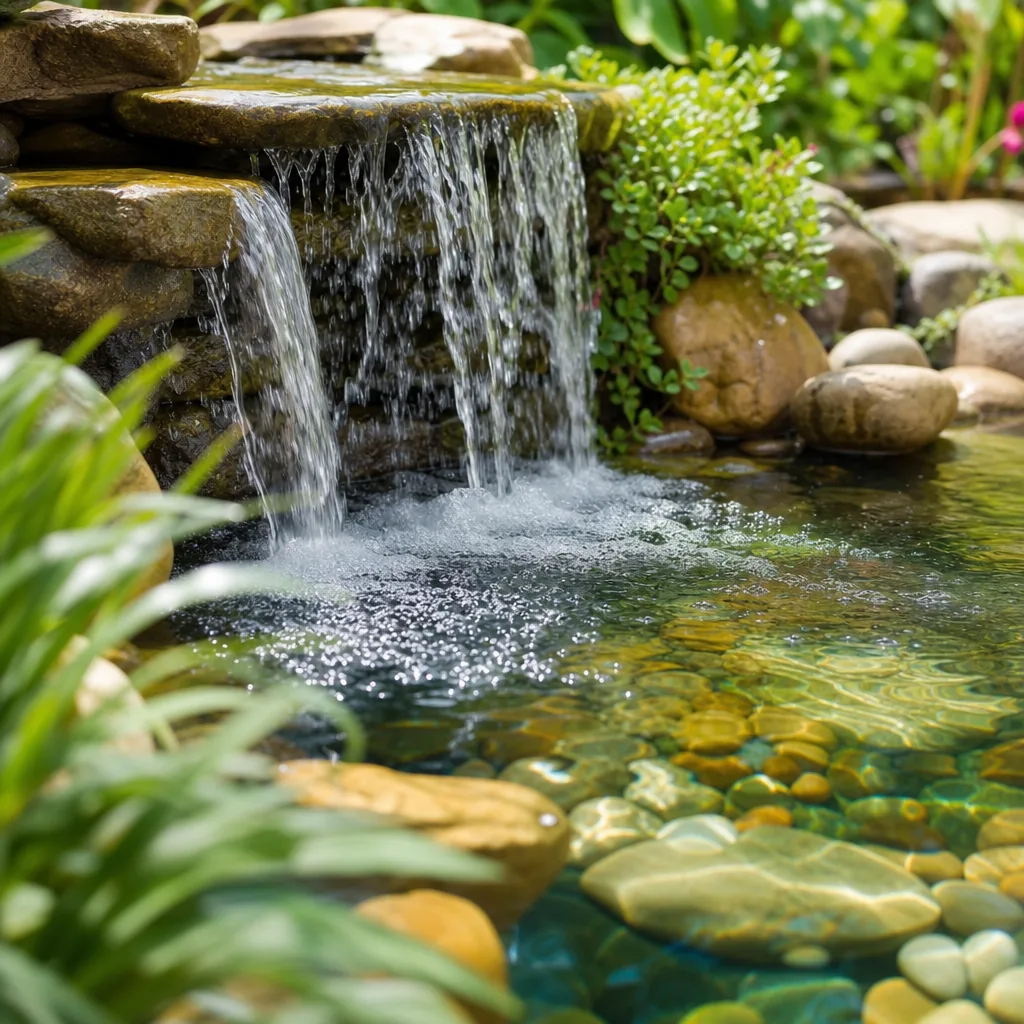
Beyond plants, a few equipment strategies help tip the balance. Reducing direct sunlight through surface plant coverage or partial shade slows algae growth, since string algae is a sun lover. A properly sized biological filter and adequate circulation keep the water processing waste efficiently rather than letting it accumulate.
A UV clarifier is worth understanding here: it excels at killing single-celled green-water algae as water passes through it, clearing pea-soup water. It is far less effective against string algae, because string algae is anchored to surfaces and does not flow through the unit. So a UV clarifier is a great tool for green water but not the answer for blanketweed. Beneficial bacteria treatments can also help by consuming excess nutrients and breaking down bottom muck. Browse pond pumps, filters, and treatments in the shop.
What About Algaecides?
Chemical algae treatments exist and can knock back a bad outbreak, but treat them as a short-term aid, not a solution. If you kill a large mass of string algae all at once, it decays and consumes oxygen as it breaks down, which can stress or harm fish, so remove as much as you can physically first and treat in stages. And because algaecides do nothing about the underlying nutrients, the algae returns unless you address feeding, stocking, debris, and planting. Use them sparingly and always follow label directions for a fish-safe pond.
Living With the Seasonal Cycle
Expect a flush of string algae in spring. As water warms and light increases, algae grows before your pond plants have fully woken up and started competing. This spring bloom is normal and usually fades once the plants take off and the pond’s balance re-establishes. The ponds that stay clear are the ones that are well planted, not overstocked, kept free of debris, and not overfed. Get those fundamentals right and string algae becomes a minor spring chore rather than a summer-long battle. Our ponds section covers seasonal pond care in more detail.
Frequently Asked Questions
What is the difference between string algae and green water?
String algae grows in long strands attached to rocks and hardscape and can be pulled out by hand. Green water is single-celled algae suspended in the water that turns it cloudy green. They need different controls.
Will a UV clarifier get rid of string algae?
Not really. UV clarifiers kill single-celled green-water algae as it passes through the unit, but string algae stays anchored to surfaces and never flows through, so UV does little against it. UV is the tool for green water, not blanketweed.
Why does my pond get string algae every spring?
In spring the water warms and light increases before your pond plants fully wake up and start competing for nutrients, so algae gets a head start. The bloom usually fades once the plants take off and balance returns.
What is the best long-term fix for string algae?
Reduce the nutrients it feeds on and add competing plants. Do not overfeed or overstock, keep debris and muck out, and plant floating, submerged, and marginal plants generously so they use up the nutrients first.
Are algaecides safe for my pond fish?
Used carefully and per label directions, they can be, but killing a large algae mass at once depletes oxygen as it decays and can harm fish. Remove as much algae physically first, treat in stages, and fix the underlying nutrient problem so it does not return.
