

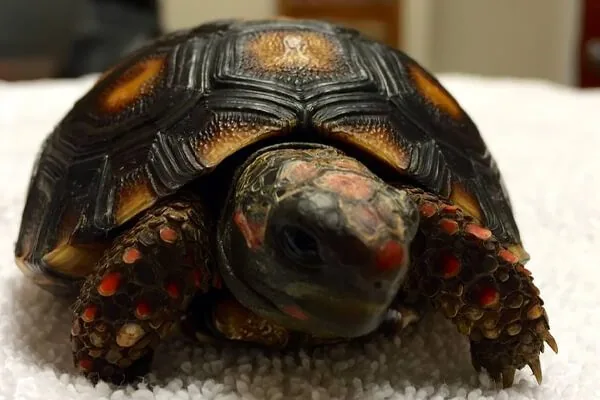
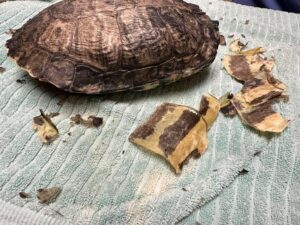
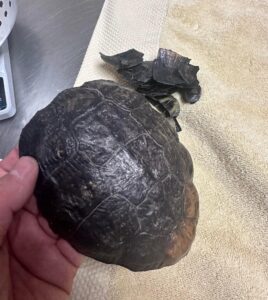
People are sometimes surprised by this question but, like other reptiles, turtles DO shed! While snakes regularly shed their entire skin in one piece, and lizards shed in large pieces, the shedding process looks a lot different in turtles given their unique anatomy. Turtle skin consists of small scales, which they do shed in small pieces, though not as regularly as other reptiles. Their shell consists of small plates called scutes, and these are also shed—more frequently for younger turtles as they are growing, and less frequently for adult turtles. If you ever notice a turtle rubbing against the sides of their enclosure or against rocks, they are usually attempting to remove the outer layer of their scutes!
To ensure that your turtle remains healthy and can shed properly, make sure to provide appropriate temperatures in the enclosure, good nutrition rich in vitamins A, D, and E, and a UVB lamp that is changed every 6 months for indoor turtles. Access to soaking water is a must even for terrestrial turtles, and good water filtration for aquatic ones. If your turtle is lethargic or not eating, or if their skin or shell has discoloration or an unpleasant smell, make sure to schedule a consult with a reptile veterinarian right away.
To get more information on turtles or other exotic pet needs give our team at Veterinary Center for Birds and Exotics a call today at (914) 864-1414.
