

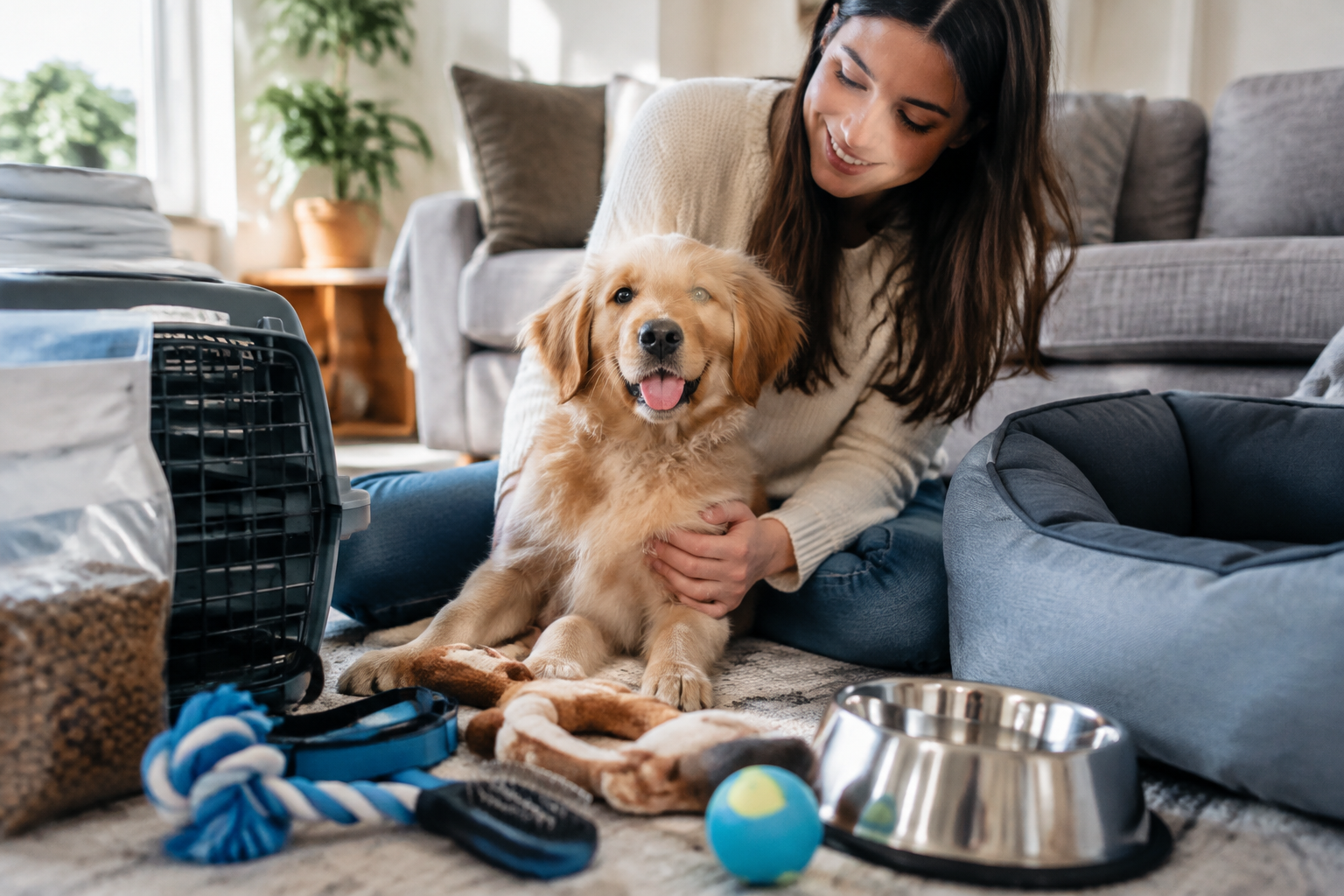
Bringing home a dog can feel exciting and overwhelming at the same time, and that is completely normal. A first-time dog owner essential supplies checklist can make the process feel much calmer, because it turns big emotions into simple next steps.
Most new pet parents worry about forgetting something important. However, a little preparation goes a long way, and your dog does not need a perfect home to feel safe and loved.
In the first days, your main goals are comfort, routine, and patience. Therefore, focus on the basics first, then build from there as you learn your dog’s needs.
What to Expect in the First Days and Weeks
The beginning often feels busy, because everything is new for both of you. Your dog may seem shy, curious, playful, or sleepy, and those reactions can change from hour to hour.
First, keep expectations simple. Your new dog needs time to adjust to sounds, smells, people, and routines, so early progress may look small.
During the first weeks, you will learn your dog’s bathroom schedule, food habits, favorite toys, and comfort cues. Also, you will start noticing what helps them settle, relax, and feel secure.
Try to keep your days predictable. Regular feeding, short training moments, gentle play, and quiet rest can help your dog feel at home faster.
First-Time Dog Owner Essential Supplies Checklist
Before your dog arrives, gather the basics so you are not rushing later. A first-time dog owner essential supplies checklist should cover feeding, safety, comfort, hygiene, and identification.
First-Time Dog Owner Essential Supplies Checklist for Day One
Start with food and water bowls, a leash, a collar or harness, and ID tags. Also, choose age-appropriate food, a comfortable bed, and a crate or safe enclosure if you plan to use one.
Next, stock up on cleaning supplies for accidents. Paper towels, pet-safe cleaning products, and extra waste bags can save you stress when little messes happen.
Add a few toys that suit your dog’s age and size. For example, soft toys, chew toys, or puzzle toys can help with boredom and comfort.
Finally, prepare a grooming kit. A brush, nail care tools made for pets, and gentle shampoo can help you stay on top of simple care.
First-Time Dog Owner Essential Supplies Checklist for a Safe Home
Creating a safe space matters as much as buying supplies. Therefore, set up one quiet area where your dog can rest without constant activity.
Choose a place away from heavy foot traffic, loud appliances, and breaking objects. Then add a bed, water, and one or two familiar toys.
Also, puppy-proof or dog-proof the home before arrival. Keep cords tucked away, move chemicals out of reach, and store shoes, trash, and small items safely.
If you have children or other pets, plan introductions slowly. Calm, supervised meetings help everyone feel safer and reduce stress.
The First Day and First Week, Step by Step
The first day should feel gentle, not packed with activity. Instead of introducing everything at once, let your dog explore one area at a time.
Start with a quiet arrival, a short potty break, and a calm walk around the home. Then let your dog rest in their safe space, since too much excitement can feel overwhelming.
During the first week, keep routines simple and consistent. Feed at the same times, use the same potty spot, and keep greetings calm.
Also, begin early bonding with soft voices, treats, and short play sessions. Positive experiences now can build trust and confidence later.
If your dog seems nervous, that does not mean something is wrong. New places can feel strange, and patience helps more than pressure.
Feeding, Health, and First Vet Essentials
Food routines should match your dog’s age and your vet’s advice. Puppies usually need more frequent meals than adult dogs, while adults often do well with fewer meals each day.
Ask your vet how much to feed and how often. Because every dog differs, general guides help, but your vet can adjust based on size, breed, and growth.
At home, follow the food label carefully and avoid sudden changes. If you need to switch foods, do it gradually so your dog’s stomach has time to adjust.
Book the first vet visit soon after bringing your dog home. That visit helps you set a care plan for vaccinations, deworming guidance, microchipping, and registration.
Vaccines and deworming schedules vary by age and risk, so always ask your vet what fits your dog. Likewise, discuss microchip details and local registration rules early.
Watch for signs that you should call a vet. These include not eating, repeated vomiting, diarrhea that continues, trouble breathing, extreme tiredness, or signs of pain.
Also, contact your vet if your dog cannot keep water down, seems weak, or suddenly changes behavior. When in doubt, it is always better to ask.
Simple Feeding and Care Routines That Help
Consistency makes feeding easier for everyone. Therefore, use the same bowls, the same spot, and the same feeding times each day.
Keep fresh water available at all times unless your vet tells you otherwise. Then monitor how much your dog drinks, especially during warm weather or active play.
Many new owners also feel unsure about treats. Treats can help with training, but they should stay small and light overall.
In addition, note any food sensitivities or tummy upsets. A simple journal can help your vet understand patterns if needed.
Training, Socialization, and Everyday Habits
Training works best when it feels calm and rewarding. Use praise, treats, and repetition, because dogs learn well when good choices lead to good results.
Potty training starts with routine. Take your dog out often, especially after sleeping, eating, and playing, and reward them right away when they go in the correct spot.
Crate training can also help when done gently. A crate should feel like a safe den, not a punishment, so introduce it slowly with comfort and rewards.
Socialization means helping your dog feel comfortable around everyday sights, sounds, people, and other animals. However, go slowly and keep each experience positive and controlled.
Grooming should begin early, too. Brushing, paw touching, and short handling sessions can make future care much easier.
Exercise and play matter every day, even for young or small dogs. Short walks, sniff time, and games help release energy and build connection.
Here again, a first-time dog owner essential supplies checklist should include tools that support learning. Treat pouches, puzzle toys, and chew toys can make training smoother and more fun.
Costs, Common Mistakes, and Your First-Month Plan
It helps to think about money before problems arise. The first year often includes food, vet visits, vaccinations, preventive care guidance, supplies, grooming, and replacement toys.
Pet insurance can be worth exploring for beginners. It may help reduce surprise costs, but review what it covers and speak with the provider carefully.
You may also wonder about spaying or neutering. Ask your vet when the timing makes sense for your dog, since the best choice can vary.
Common mistakes are usually simple to avoid. For example, avoid buying supplies too late, skipping routine, or expecting your dog to settle immediately.
Also, do not overwhelm your dog with visitors, noisy outings, or too many rules at once. A slower start often leads to better results.
For your first month, use a simple checklist. Feed on schedule, visit the vet, begin training, practice potty breaks, offer safe play, and keep notes on behavior and appetite.
That month is about learning, not perfection. If something feels confusing, ask your vet or a qualified trainer for help early.
In the end, your dog needs your care, consistency, and kindness more than anything else. With the right preparation, the first days become easier, and confidence grows little by little.
Use this first-time dog owner essential supplies checklist as your guide, then give yourself room to learn. You do not need to know everything today, because good pet parenting grows through small, steady steps.
