

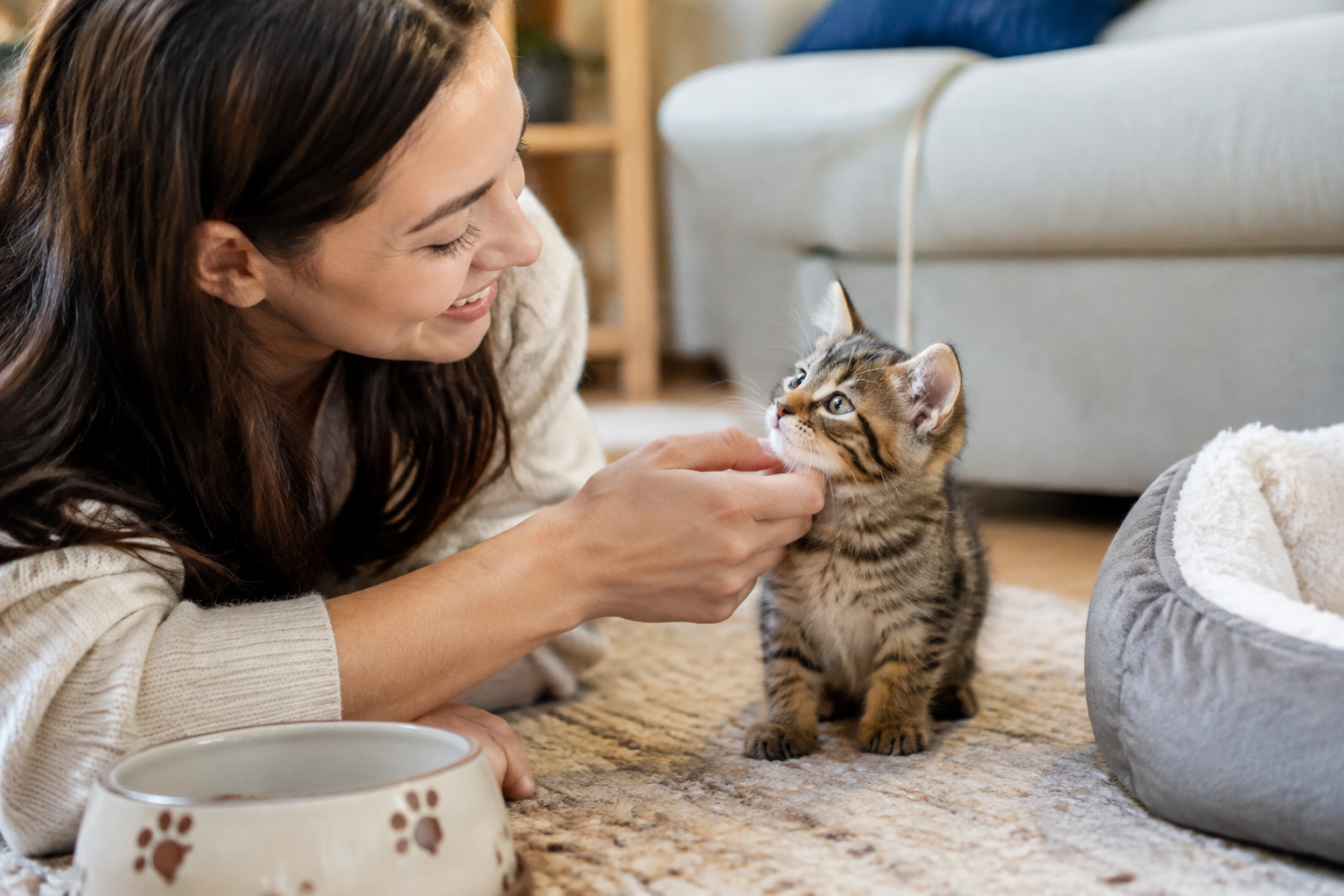
If you are wondering how to prepare for a new kitten at home, take a breath. You do not need to get everything perfect on day one. Instead, you need a calm plan, a few basics, and a gentle mindset.
Your kitten will bring joy, chaos, and a lot of learning. However, those first days can feel easier when you know what is coming. With simple preparation, you can help your kitten feel safe and help yourself feel confident.
What to expect in the first days and weeks
Bringing home a kitten often feels exciting and overwhelming at once. At first, your kitten may hide, watch quietly, or explore all night. That is normal, and it usually means your kitten is adjusting.
During the first week, focus on comfort rather than perfection. Therefore, keep the home calm, the routine predictable, and the expectations low. Your kitten needs time to learn where food, water, litter, and rest spots are located.
In the first few weeks, you will also notice small personality changes. One day your kitten may be bold, and the next day shy. That is part of early adjustment, so stay patient and observant.
How to prepare for a new kitten at home
Before your kitten arrives, gather the essentials first. You will need food, water bowls, a litter box, unscented litter, a bed, a carrier, scratching options, and a few toys. Also, set up a quiet room where your kitten can settle in safely.
That safe space should include food, water, a litter box, and a soft resting area. In addition, keep it away from loud noise and heavy foot traffic. A spare bathroom, laundry room, or bedroom often works well.
Next, kitten-proof the home by looking at everything from a small animal’s view. Cover loose cords, move toxic plants, secure cleaning products, and remove tiny objects. Even simple items, such as hair ties or plastic clips, can become dangerous.
Also, check windows, balconies, and cabinets. Kittens climb quickly, so secure screens and close off risky spaces. Because curiosity comes first with kittens, prevention works better than correction.
How to prepare for a new kitten at home with a safe setup
Think of the first room as your kitten’s base camp. Place the litter box far from food and water, because cats prefer that separation. Then add a cozy bed and a few toys for gentle exploration.
Try to avoid overwhelming the kitten with the full house right away. Instead, start small and expand access slowly. This approach helps your kitten build confidence and reduces stress.
Supplies that make the first week easier
Choose a carrier that opens securely and feels sturdy. You will also want a scratching post or pad, since scratching is a normal cat behavior. Moreover, having more than one toy helps you redirect energy in positive ways.
For food, use what your breeder, rescue, or shelter recommends at first if possible. A sudden food change can upset a kitten’s stomach. If you want to switch foods later, ask your vet how to do it gradually.
The first day and first week: a gentle step-by-step plan
When your kitten comes home, go straight to the safe room first. Open the carrier and let the kitten come out on their own. Then sit quietly nearby and speak in a soft voice.
During the first hours, avoid forcing cuddles or too much handling. Instead, let your kitten sniff, hide, and explore at their own pace. Keep guests, loud music, and rough play to a minimum.
Over the first week, build a simple routine. Feed at the same times each day, scoop the litter box often, and offer short play sessions. Routine helps kittens feel secure, and it also helps you notice changes faster.
If you have children or other pets, introduce them slowly. For children, explain that the kitten needs quiet voices and gentle hands. For other pets, use short, supervised meetings and separate spaces when needed.
How to prepare for a new kitten at home on day one
Day one should feel calm, not crowded. Prepare the room before the kitten arrives, and keep interactions short. Then let the kitten choose whether to investigate or rest.
Because stress can show up as hiding or low appetite, watch quietly for patterns. If your kitten seems uninterested in food or seems very unwell, contact your vet. Early guidance can make a big difference.
Feeding, portions, and simple routines
Kittens grow quickly, so they need food that matches their age. Young kittens usually need more frequent meals than adult cats. Therefore, many young kittens do best with several small meals across the day.
As kittens get older, meal frequency often decreases. However, portion size and feeding style should match the kitten’s growth stage and your vet’s advice. Follow the feeding guide on the package, and adjust based on your kitten’s age and body condition.
Fresh water should always be available. Also, keep food and water bowls clean and in a quiet place. Many kittens do better when mealtime feels peaceful and predictable.
Do not worry if your kitten eats very quickly at first or seems unsure about a new bowl. Small changes often take time. If appetite drops suddenly, call your vet for advice.
Health essentials: vet visit, vaccines, and safety basics
Schedule the first vet visit soon after your kitten comes home. That visit helps confirm your kitten’s general health and gives you a chance to ask beginner questions. You can also discuss vaccines, deworming, and overall wellness with your veterinarian.
Vaccination and deworming schedules vary by age, location, and health history. Therefore, your vet should guide you on what your kitten needs and when. Do not guess, because every kitten’s care plan can differ.
Ask about microchipping and registration at the same appointment. A microchip is a tiny identifier placed by a veterinarian. If your kitten ever gets lost, it can help bring them home.
Also ask about spaying or neutering, which means preventing future litters through surgery. Your vet can explain timing, benefits, and what fits your kitten’s age. That conversation helps you plan ahead without pressure.
Call a vet if your kitten seems very tired, will not eat, has repeated vomiting or diarrhea, has trouble breathing, or seems painful. Also reach out if your kitten hides more than usual and seems truly unwell. When in doubt, ask.
How to prepare for a new kitten at home and for the vet
Before the appointment, write down your questions. Bring any health records you received, plus a note about food and litter habits. That way, your vet gets a clearer picture of your kitten’s routine.
It also helps to use the carrier before the visit. Leave it open at home with a blanket inside, so it feels familiar. That small step can reduce stress later.
Training, socialization, and common mistakes to avoid
Training works best when it feels positive and simple. For litter habits, place the box in a quiet spot and keep it clean. For crate training, if you use a crate or carrier, make it a safe resting place, never a punishment.
Use treats, praise, and gentle repetition to reward good choices. Never punish a kitten for mistakes. Instead, guide behavior by offering better options, such as a scratching post or a toy.
Early socialization means helping your kitten get used to normal life slowly. Introduce new sounds, people, and gentle handling in small doses. However, keep each experience calm so your kitten stays confident.
Grooming should also start early and stay brief. Brush gently if needed, touch paws lightly, and check ears and coat without forcing anything. Short sessions help kittens accept care more easily later.
Play and exercise are essential for healthy development. Use wand toys, balls, and soft chase games to help your kitten burn energy. Also, end each play session with calm time, so your kitten can settle.
Common mistakes include buying too few supplies, introducing too many people at once, and changing everything on day one. Another common mistake is ignoring stress signals. Instead, move slowly and watch your kitten’s response.
- Set up the safe room before pickup.
- Prepare food, water bowls, litter, and a carrier.
- Secure cords, plants, and small objects.
- Schedule the first vet visit.
- Plan a simple feeding routine.
- Keep introductions slow and quiet.
- Use treats and praise for litter and play success.
- Ask your vet about vaccines, deworming, microchip, and registration.
If you are still learning how to prepare for a new kitten at home, remember this: steady care matters more than perfect preparation. Your kitten needs safety, patience, and consistency most of all.
With a calm setup, a good vet plan, and a little daily routine, you will build a strong foundation for a happy, healthy life together.
