

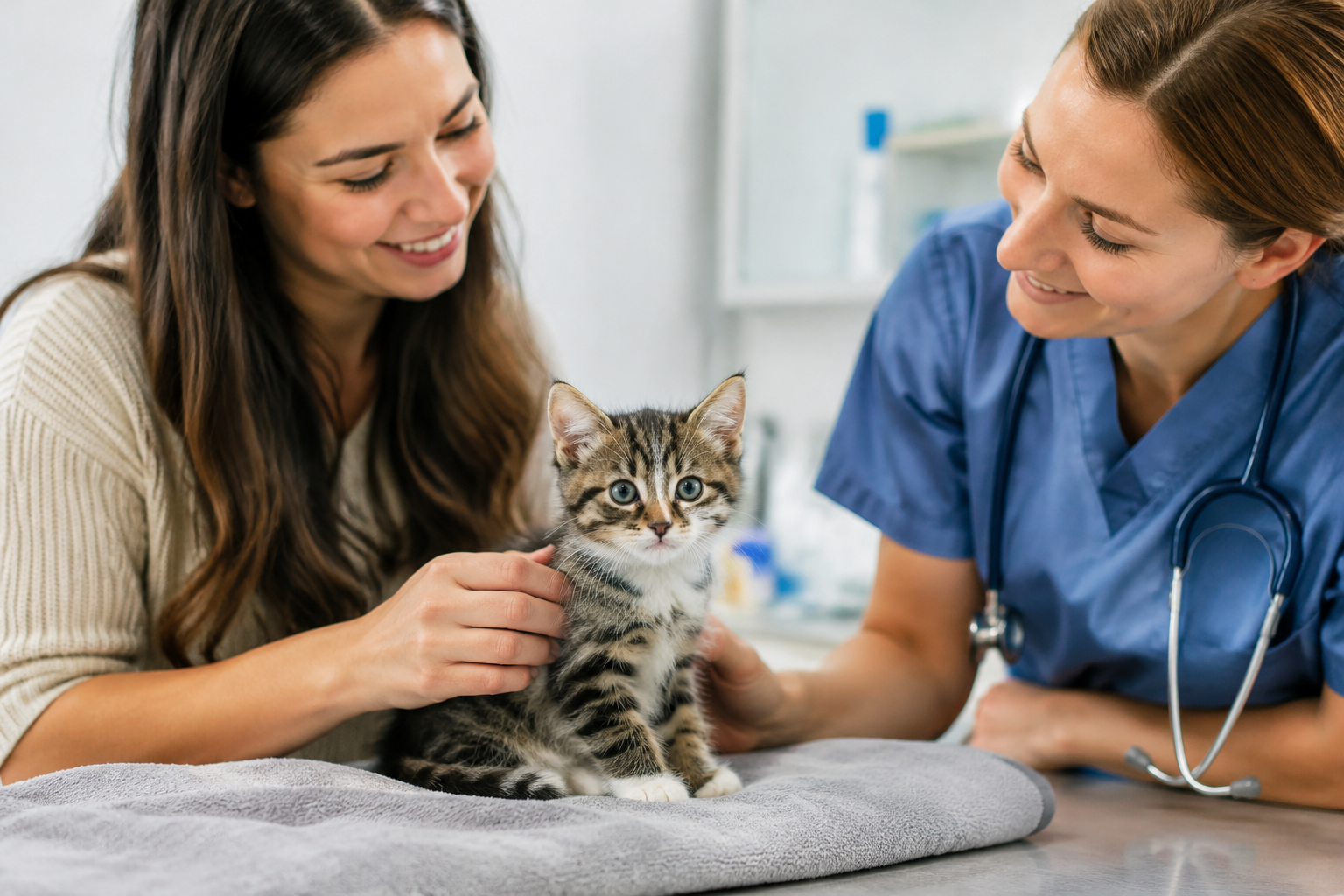
Bringing home a kitten feels exciting, but it can also feel overwhelming. If you are searching for a first vet visit schedule for new kitten, you are already starting well. A calm plan helps you feel prepared, and it helps your kitten settle safely.
Those early days matter, yet you do not need to get everything perfect. Instead, focus on comfort, safety, and simple routines. With a little planning, your kitten can begin life in your home with confidence.
What New Pet Parents Can Expect in the First Few Weeks
New kittens often sleep a lot, explore in bursts, and need frequent meals. At first, your kitten may hide, meow, or follow you everywhere. That is normal, because everything feels new.
However, the first days also set the tone for future habits. So, keep the home quiet, the schedule steady, and your expectations gentle. Your kitten needs time to learn where food, water, and the litter box live.
During these first weeks, you will notice small changes each day. The kitten may become more playful, more confident, and more interested in people. Even so, patience matters more than speed.
How the first vet visit schedule for new kitten fits into the first week
Most new kitten plans begin with a vet appointment soon after arrival. Your vet can check overall health, discuss vaccines, and guide the next steps. Therefore, make that appointment early, even if your kitten seems healthy.
A good early visit also gives you a chance to ask simple questions. For example, you can ask about feeding, litter habits, grooming, and socialization. That support can ease many beginner worries.
Before Your Kitten Comes Home: Set Up for Success
Preparation makes the first days smoother for everyone. Before your kitten arrives, gather the basics: food, water bowls, litter box, litter, a carrier, bedding, toys, and a scratching post. Also, choose a quiet room for the first few days.
Next, kitten-proof your home. Hide cords, remove toxic houseplants, secure trash, and store small objects out of reach. Since kittens are curious, they will investigate everything.
Then, create a safe space with easy access to food, water, bed, and litter. Keep the area simple and calm. As a result, your kitten can rest without becoming overwhelmed.
It also helps to think ahead about family members and other pets. Introduce them gradually and under supervision. That approach lowers stress and protects everyone.
Preparing for the first vet visit schedule for new kitten before arrival
Before the appointment, collect any records from the breeder, shelter, or previous caregiver. Bring these documents to the vet if you have them. In addition, note any questions about behavior, appetite, or litter habits.
Plan to use a secure carrier for transport. Line it with a soft towel, and keep the ride calm and quiet. This simple step helps your kitten feel safer from the start.
The First Day and First Week: A Gentle Routine
The first day should feel quiet and predictable. Bring your kitten home, show the litter box and food area, and then let them explore slowly. Instead of introducing the whole house right away, start small.
For the first 24 hours, keep visitors limited. Also, avoid loud music, rough handling, and too many changes. A calm environment helps your kitten settle more quickly.
Over the first week, build a simple routine. Feed at similar times each day, offer brief play sessions, and clean the litter box often. Consistency gives kittens a sense of security.
If you have children, teach gentle touch and quiet voices. If you have other pets, make the introduction gradual. Meanwhile, let your kitten decide when to approach.
Feeding, Growth, and Daily Care Basics
Young kittens need more frequent meals than adult cats. In general, very young kittens eat several small meals a day, while older kittens can move toward fewer meals. Your vet can help you choose the right food and schedule.
Portion size depends on age, body size, and the food itself. Therefore, follow the package guidance as a starting point, then ask your vet for confirmation. Also, provide fresh water at all times.
Use a consistent feeding area and watch your kitten’s appetite. A healthy kitten usually shows interest in food and grows steadily. However, sudden changes in eating or drinking deserve attention.
Keep in mind that treats should stay modest. Use tiny rewards for good behavior, not big snacks. That way, you protect both appetite and growth.
Questions to ask during first vet visit schedule for new kitten
Your first visit is the perfect time to ask practical questions. For example, ask when your kitten should return for vaccines, deworming, and routine checks. Also ask when to discuss microchipping and registration.
You can also ask about normal kitten behavior. What is playful, and what is concerning? What litter habits should you expect, and when should you call for help? A good vet will welcome these questions.
Health Essentials: Vet Care, Vaccines, and Warning Signs
The first vet visit usually includes a basic exam and a discussion of your kitten’s health plan. Your vet may recommend a vaccine schedule and parasite prevention based on age and risk. Because every kitten is different, follow your vet’s advice.
Deworming often comes up early, especially for young kittens. Your vet will decide what is appropriate based on your kitten’s history and current needs. Therefore, avoid guessing or using random products without guidance.
Microchipping is also worth discussing early. A microchip is a tiny identification device placed by a vet, and it can help reunite lost pets with families. Registration matters too, because the chip needs current contact details.
Watch for signs that need a vet call, such as not eating, repeated vomiting, trouble breathing, severe diarrhea, unusual weakness, or hiding more than usual. In general, trust your instincts if something feels off. Quick advice from your vet is always better than waiting.
How the first vet visit schedule for new kitten supports long-term health
Early vet care builds a health record for your kitten. That record helps your vet track growth, vaccines, and future concerns. As a result, future visits often feel easier and more familiar.
It also gives you practical guidance for the months ahead. You will know what is normal, what needs attention, and when to return. That clarity can reduce stress for new pet parents.
Training, Socialization, and Gentle Household Habits
Training a kitten works best with kindness and consistency. For litter habits, keep the box clean and easy to reach. For crate training, make the carrier a positive place with soft bedding and occasional treats.
Never use punishment. Instead, reward the behavior you want with treats, praise, and calm repetition. Kittens learn best when they feel safe.
Socialization also matters during the first months. Let your kitten meet new sounds, gentle handling, and different people at a comfortable pace. Short, positive experiences work better than long, stressful ones.
Grooming should stay simple at first. Brush gently if your kitten likes it, touch paws softly, and inspect ears and coat during calm moments. Meanwhile, short play sessions help burn energy and build trust.
Exercise does not need to be intense. A wand toy, a rolling ball, or a soft chase game can be enough. Regular play helps your kitten grow, bond, and sleep better.
Costs, Planning, and a Helpful First-Month Checklist
New kitten care includes some upfront costs. Food, litter, supplies, the first vet visit, and follow-up care can add up quickly. So, it helps to plan a simple budget from the beginning.
Pet insurance may also be worth exploring for beginners. It can help you prepare for unexpected costs later, although plans differ widely. Take time to compare coverage, waiting periods, and exclusions before enrolling.
Spaying or neutering is another topic to discuss with your vet. The right timing can depend on age, health, and your vet’s recommendation. Therefore, ask early and plan ahead.
Common mistakes include rushing introductions, skipping the vet visit, changing food too often, and ignoring early health changes. Avoid those traps, and keep the first month steady. Small, calm steps usually work best.
- Buy food, bowls, litter box, litter, carrier, bedding, toys, and scratching items.
- Set up a quiet safe room before the kitten arrives.
- Schedule the first vet visit soon after bringing your kitten home.
- Ask your vet about vaccines, deworming, microchip, and registration.
- Feed small meals at consistent times each day.
- Keep the litter box clean and easy to access.
- Begin gentle handling, brushing, and short play sessions.
- Introduce family members and other pets gradually.
