

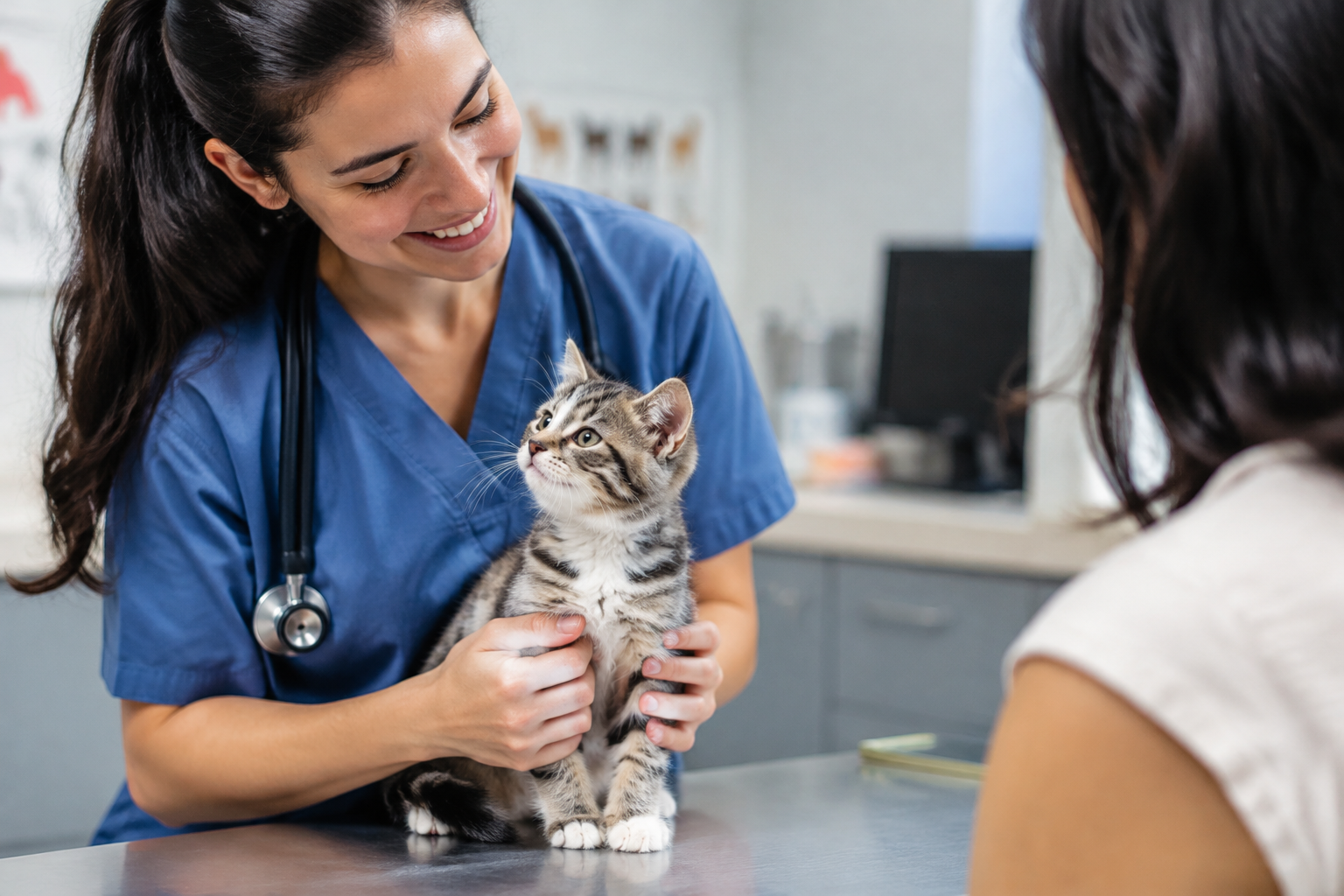
Welcoming a kitten is exciting, and the first vet visit vaccination schedule for kittens can feel overwhelming at first. However, you do not need to know everything on day one.
Your job is to offer safety, comfort, and consistency. Your kitten’s job is to explore, nap, play, and slowly trust the new world around them.
Below, you will find a calm, practical guide for the earliest days. In addition, you will learn what matters most before the first vet visit, during the first week, and throughout the first month.
What to Expect in the First Days and Weeks
The first few days often bring big feelings for both of you. Your kitten may hide, sleep a lot, or act extra bold and curious.
That mix is normal. So, try to keep the home quiet, predictable, and gentle while your kitten settles in.
During this stage, your main goals are simple. You want your kitten to eat, drink, use the litter box, and learn where the safe spots are.
Also, keep expectations small. A kitten does not need a perfect routine immediately, but they do need consistency and patience.
first vet visit vaccination schedule for kittens: when to plan it
Try to book the first vet visit soon after your kitten comes home. If your kitten is very young, your vet may want to see them quickly to check overall health and set a plan.
At that visit, the vet usually reviews age, weight, parasite prevention, and vaccination timing. Because every kitten is different, your vet will tailor the first vet visit vaccination schedule for kittens to your pet’s needs.
In general, vaccinations and deworming happen across several visits, not all at once. Therefore, follow the schedule your vet provides and keep every appointment on time.
Preparing Your Home Before Kitten Day
A little preparation makes the transition much easier. First, gather the basics before your kitten arrives so you can focus on comfort instead of shopping.
You will likely need food, water bowls, a litter box, litter, a carrier, bedding, toys, and a scratching post. In addition, choose a quiet room where your kitten can begin safely.
Next, think like a curious kitten. Put away cords, small objects, toxic plants, and loose items that could be chewed or swallowed.
Also, close off unsafe spaces like certain balconies, open windows, and rooms with hazards. This kind of kitten-proofing helps prevent accidents and gives you peace of mind.
Safe space setup for the first week
A safe space should feel calm, not crowded. Place the litter box, water, food, and bed in one quiet area at first.
Then, let your kitten explore that room before opening up the whole house. This gradual approach helps them feel secure and less overwhelmed.
Keep handling gentle and brief at the start. As a result, your kitten learns that people bring comfort, food, and safety.
The First Day and First Week, Step by Step
On the first day, keep things slow. Bring your kitten home, place the carrier in the safe room, and open the door calmly.
Let them come out in their own time. However, if they stay inside the carrier for a while, that is okay too.
After they explore a little, show them the litter box and water. Then, offer a small meal if your vet or breeder has recommended one.
During the first week, repeat the same routine each day. Feed at similar times, use the same litter area, and keep noise low when possible.
Also, introduce family members one at a time. Short, calm visits work better than a busy crowd.
If you have children or other pets, take introductions slowly. Supervision matters, and so does giving the kitten the choice to move away.
first vet visit vaccination schedule for kittens: what the appointment covers
The first vet visit is about more than shots. It also gives you a chance to ask questions about feeding, litter habits, behavior, and safe home care.
Your vet may discuss parasite prevention, deworming, microchipping, and registration. In addition, they can explain what signs mean you should call for help.
Bring any records you have, including adoption papers or previous medical notes. That way, your vet can build the healthiest plan possible.
Feeding Your Kitten With Confidence
Kittens grow quickly, so they need more frequent meals than adult cats. Generally, young kittens eat several small meals per day, and older kittens slowly move toward fewer meals.
Because age and body size matter, ask your vet what portion size fits your kitten. Also, use the food your vet recommends for your kitten’s life stage.
At first, keep feeding simple and consistent. Sudden food changes can upset a kitten’s stomach, so any transition should happen gradually.
Fresh water should always be available. Moreover, watch for healthy eating patterns, because changes in appetite can signal stress or illness.
If your kitten seems too hungry, too sleepy, or stops eating, contact your vet. Early advice is always better than waiting.
Health Essentials: Vet Care, Vaccines, and When to Call
Health care in kittenhood builds a strong foundation. That includes wellness exams, vaccinations, deworming, and a plan for future visits.
The first vet visit vaccination schedule for kittens usually starts early and continues over time. Since schedules vary, your vet will tell you when to return and what comes next.
Deworming may also be discussed, especially for kittens with unknown backgrounds. Likewise, your vet can advise on flea prevention and other parasite concerns.
Microchipping is another helpful step. A microchip is a tiny ID that a vet or shelter can scan if your kitten gets lost.
Registration supports that chip, so keep your contact details current. In addition, ask your vet about licensing rules or local registration requirements.
Call a vet quickly if your kitten seems very weak, cannot keep food or water down, breathes oddly, or has severe diarrhea. Also call if you notice a swollen belly, repeated hiding, or sudden behavior changes.
first vet visit vaccination schedule for kittens and your questions list
Bring questions so you leave with a clear plan. For example, ask when the next vaccines are due, when to repeat deworming, and how to monitor your kitten at home.
You can also ask about spaying or neutering timing. Your vet will help you understand the best age and the benefits for your kitten.
Since every kitten is unique, your notes matter. Therefore, keep a simple folder for vaccine dates, weight checks, and follow-up appointments.
Training, Play, and Early Socialization
Training should feel positive and easy. Use rewards like treats, praise, or play when your kitten uses the litter box, scratches the right post, or comes when called.
Never punish accidents. Instead, clean them calmly and guide your kitten toward the right behavior next time.
Potty training usually improves when the litter box is easy to find and kept clean. Similarly, crate training works best when the carrier feels safe, cozy, and rewarding.
Place treats or a soft blanket near the carrier so your kitten chooses it willingly. That way, the carrier becomes a normal part of life, not something scary.
Early socialization also matters. Brief, positive exposure to different sights, sounds, gentle handling, and calm people helps your kitten grow more confident.
Play is part of learning too. Use wand toys, soft balls, and short play sessions to support exercise and healthy development.
Grooming can begin early as well. Start with gentle brushing, quick paw touches, and short handling sessions so your kitten learns that care is safe.
Costs, Common Mistakes, and Your First-Month Checklist
New kitten costs add up quickly, so planning helps. You may spend on food, litter, supplies, vet visits, vaccines, parasite prevention, and possibly microchipping.
Pet insurance can be helpful for beginners. It may not cover everything, but it can reduce stress if an unexpected illness or injury appears later.
Many owners also ask about spaying or neutering. Your vet can explain timing, recovery expectations, and what fits your kitten’s age and health.
Common mistakes include skipping the first vet visit, changing food too fast, and allowing too much freedom too soon. Also, avoid noisy introductions to children or pets before your kitten feels secure.
Another common error is expecting instant confidence. However, most kittens need time, repetition, and gentle routines to settle in.
Use this simple first-month checklist to stay organized:
- Book and attend the first vet appointment
- Follow your vet’s vaccination and deworming plan
- Set up a safe room and kitten-proof the home
- Offer age-appropriate food and fresh water
- Keep the litter box
