

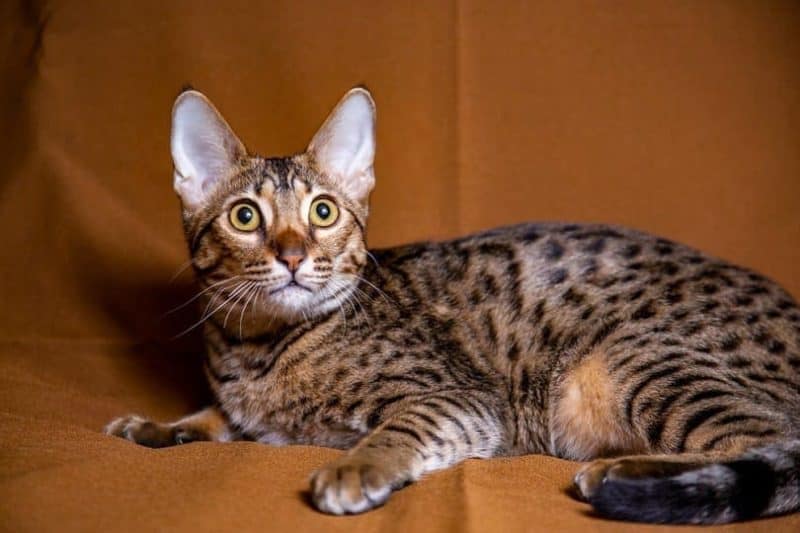
The Savannah cat is a very popular breed that is best known for its striking exotic features and for behaving more like a dog than a cat. This is a hybrid breed between the Serval, an African wild cat, and the domesticated cat and those exotic roots leave many wondering if these cats actually make good pets.
Despite their wild ancestry, the Savannah cat has the potential to make an excellent pet, but they aren’t going to be your typical housecat. For those that are prepared to meet the needs of these athletic, intelligent, high-energy cats, bringing one into the family can result in a loving, lifelong bond.
The Savannah Cat – At a Glance
| Height: | 14 – 17 inches |
| Weight: | 12–25 pounds |
| Lifespan: | 12 – 20 years |
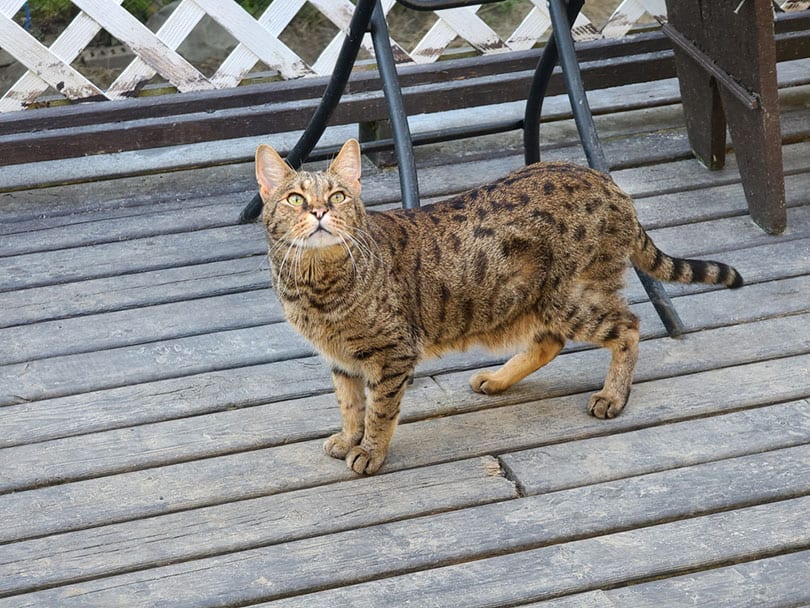
| Colors: | Brown Spotted Tabby, Silver Spotted Tabby, Black, Smoke |
| Suitable for: | Families, individuals |
| Temperament: | Active, playful, affectionate, bold, energetic |
Temperament & Intelligence of the Savannah Cat
The Savannah cat is often referred to as being more dog-like than cat-like. They are highly intelligent, inquisitive, and loyal. They are also much more social than your average domestic cat and are very devoted to their human companions.
Savannahs will thrive on human interaction and are well known for showing affection and even greeting their owners at the door when they arrive home. These cats are a bit needier than most cats because they require lots of mental stimulation, exercise, and more social interaction when compared to other cats.
Are These Cats Good for Families?
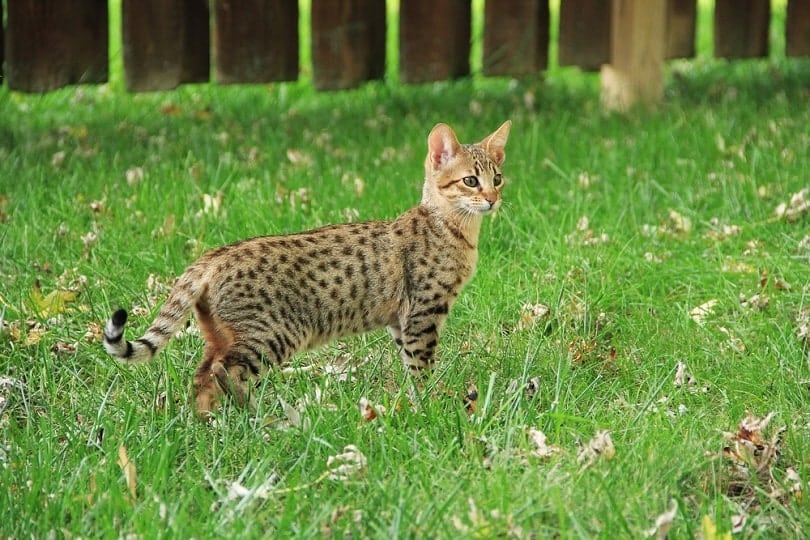
Savannah cats have the potential to be excellent family pets. They often do very well with children, especially when raised with them from a young age. We do recommend caution around small children because these cats are quite active and rambunctious, which could lead to little ones being knocked over.
While there are plenty of other cat breeds that are very social and great with families, Savannahs are especially outgoing and interactive. They will love nothing more than enjoying some good old-fashioned playtime with the whole family. Keep in mind that each cat is an individual and will have their own personality traits that are unique to them.
Do They Get Along with Other Pets?
Not only are Savannah cats typically great with children, but also with other pets. Since they are so social, they will do best having another animal in the home, especially if their humans spend significant amounts of time out of the house.
They will often do well with other cats and even dogs. They may even be more compatible with the pet dog, providing it is well socialized with cats, because of their intense playfulness. You may even notice this cat breed being able to exhaust and outlast the dog during playtime.
As with any pet, it is highly recommended that they be well-socialized from kittenhood and exposed to a variety of people, pets, and situations. They are still cats with a natural prey drive, so you must use extreme caution around small, caged pets like birds, rodents, or reptiles.
https://www.instagram.com/p/CnQLaf6vs8H/
Things to Know Before Bringing Home a Savannah Cat:
Food & Diet Requirements 🐡
All cats are obligate carnivores, meaning they get all of their nutritional needs directly from meat. They are avid hunters that naturally consume whole prey in the wild, so their diet is meant to be high in protein with moderate amounts of fat, and minimal carbohydrates.
Savannah cats should be provided with a high-quality diet that best mimics their natural dietary needs. Even though they are hybrids, they do not have any special dietary requirements unless otherwise advised by their veterinarian for specific health needs. They should be fed high-quality cat food that is high in protein to meet their energy needs. You should also look for food that contains the right amount of fat and has minimal carbohydrates.
There are different types of cat food on the market including dry kibble, canned wet food, and fresh food varieties. Cats get the majority of their hydration through their prey in the wild and supplement by drinking fresh water. Regardless of whether you feed a cat food rich in moisture or not, they should always have access to fresh, clean water.
Exercise 🐈
Savannah cats are extremely active and will need ample amounts of exercise each day. They will most certainly exercise themselves, but they will also enjoy playing with their owners. These cats are incredibly athletic and can jump up to 8 feet high from a standing position. It’s a good idea to provide them with lots of vertical space within the home because they will enjoy jumping up onto various surfaces.
Savannah cats should be provided plenty of toys so they can burn their energy and get some much-needed mental stimulation. Make sure to give them variety and include interactive toys, puzzle toys, and toys that can satisfy their natural hunting instincts.
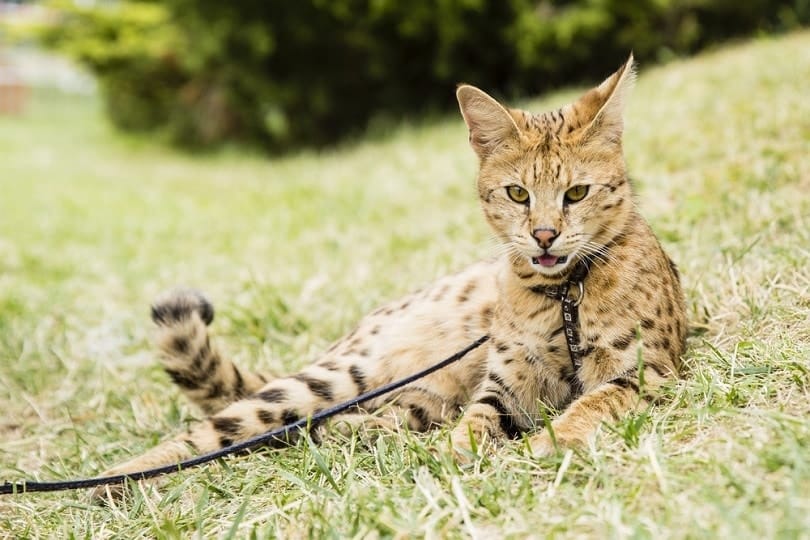
If properly trained, Savannah cats can even be taught to walk on a leash and harness, which is another great way for them to get in some physical activity and allow them to explore life outside the home. Those interested in bringing this breed into the family should be prepared to set aside time for their cat’s need for play and social interaction.
Training 🧶
Because this breed is so incredibly intelligent, they are often very trainable. In fact, Savannahs get their dog-like reputation for being so easy to train. They can be taught simple tricks and commands and have even been known to play fetch.
As mentioned above, many owners choose to train them to be walked with a harness and leash so they can go for adventures outside the home. It’s important to have a harness made especially for their body type to ensure their safety. They are built differently than dogs and will naturally be more fragile on a leash.
Training sessions should be limited to about 15 to 20 minutes each day to prevent them from becoming bored. Always use patience and train using positive reinforcement techniques for the best results.
Grooming ✂️
Savannahs have a short, soft coat that requires minimal grooming. They will keep up with regular self-grooming and a weekly brushing to remove any loose fur will typically suffice. Since the breed loves attention, they may want to be brushed more often than necessary.
Their claws should be trimmed as needed. Make sure you get them used to these nail trims from a young age to avoid any issues as they get older. Check their ears regularly for dirt, debris, or any signs of infection.
Health and Conditions
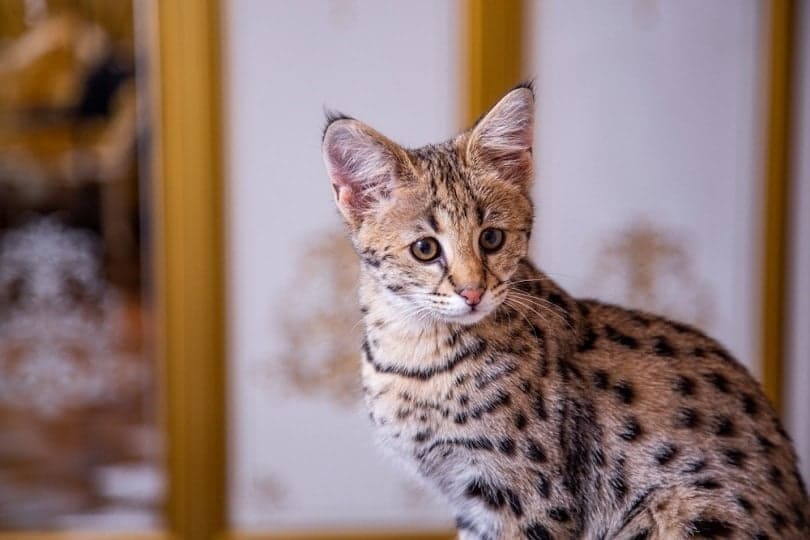
While most breeds typically come with certain genetic health conditions they are predisposed to, the Savannah is a very hardy and healthy cat. It is recommended they be screened for Pyruvate Kinase Deficiency and Progressive Retinal Atrophy.
The Savannah’s longevity typically ranges anywhere from 14 to 20 years. Nutrition and proper exercise are vital for their overall health and wellness. It’s also very important to keep up with regular health examinations from a licensed veterinarian.
Legalities
Owners may end up running into legal issues surrounding the ownership of these stunning hybrid cats. Because they are so closely related to the exotic Serval, they may fall under exotic animal laws that are in place in certain areas.
Before committing to a Savannah cat, you should check your state and local laws to determine whether you can legally own the breed. While they are legal to own in a lot of places, certain cities or states may require special permits or may even ban ownership entirely.
Little-Known Facts About Savannah Cats
1. Savannah Cats Love Water
Another reason why this breed has a reputation for being more like dogs than cats is their love for the water. Savannah cats generally love swimming and playing in the water. They will often try to join their owners in the shower or the bath, too. Your average house cat may avoid the swimming pool at all costs, but expect your Savannah cat to jump right in.
2. They Were First Developed in the 1980s
The very first Savannah kitten was born in 1986 after breeder Judee Frank bred a female Siamese cat with a male African Serval owned by Suzi Woods. The kitten was a female that was named Savannah, which is where the breed got its name.
3. They Are Only Recognized by TICA
Breeding of the Savannah cat took off during the 1990s, soon after the first successful pairing. In 1996, cat breeders Patrick Kelley and Joyce Sroufe wrote and presented the Savannah cat’s breed standard to the TICA board. In 2001, the board accepted the breed for registration, and they received championship status in 2012.
The International Cat Association is the only cat registry that currently recognizes the breed. This is largely due to the controversies of breeding non-domestic cats. To be registered by TICA, a Savannah cat must be at least four generations removed from the Serval. They are not registered by filial generation, however, but by SBT status.
Conclusion
The Savannah cat can make an excellent pet for families that can ensure their physical and social needs are met. Unlike your average housecat, this breed is highly active and social. Their reputation for behaving more like dogs is well-earned. They are incredibly intelligent and trainable, and form very strong bonds with their human companions.
Featured Image Credit: kuban_girl, Shutterstock
