
Close Menu
GenzyPets

    Subscribe to Updates

    Get the latest creative news from FooBar about art, design and business.

    What's Hot

    In a hidey box? In a hay box? Some rabbits can snooze wherever.

    How to Set Up the Perfect Reptile Terrarium: Beginner’s Guide to Habitat, Heat & Lighting

    An Inside Look at the Program Protecting the Critically Endangered Ane – Mazuri

    Facebook X (Twitter) Instagram
    Trending
    • In a hidey box? In a hay box? Some rabbits can snooze wherever.
    • How to Set Up the Perfect Reptile Terrarium: Beginner’s Guide to Habitat, Heat & Lighting
    • An Inside Look at the Program Protecting the Critically Endangered Ane – Mazuri
    • Abigail’s House Of Buns – Chapter 100 – Trouble in Paradise
    • New Year, New Wheeks: Gizmo’s Top Guinea Pig Resolutions for 2026 | Small Pet Select Blogs
    • December 17th 2025: Top Cuties of the Week
    • Belinda continues her sleep research with a “touchy” question
    • 3 Tips for Bearded Dragon Owners – Mazuri
    Facebook X (Twitter) Instagram
    GenzyPets
    Thursday, July 30
    • Home
    • Birds
      • Budgies
      • Canary Care
      • Cockatiels
      • Lovebirds
    • Chinchillas
      • Chinchilla Care
      • Chinchilla Food
      • Chinchilla Health
      • Chinchilla Cages
    • Ferrets
      • Ferret Behavior
      • Ferret Care
      • Ferret Food
      • Ferret Health
    • Fish & Aquatic Pets
      • Aquarium Care
      • Betta Fish
      • Goldfish
      • Shrimp Tanks
    • Guinea Pigs
      • Guinea Pig Breeds
      • Guinea Pig Care
      • Guinea Pig Diet
      • Guinea Pig Health
    • Hamsters
      • Dwarf Hamsters
      • Hamster Care
      • Hamster Food
      • Syrian Hamsters
    • Hedgehogs
      • Hedgehog Care
      • Hedgehog Diet
      • Hedgehog Habitat
      • Hedgehog Health
    • Mice & Rats
      • Mouse Care
      • Pet Mice
      • Pet Rats
      • Rat Care
    • Rabbits
      • Rabbit Breeds
      • Rabbit Care
      • Rabbit Nutrition
      • Rabbit Training
    • Reptiles
      • Bearded Dragons
      • Leopard Geckos
      • Small Snakes
      • Turtles
    GenzyPets
    You are at:Home»Fish & Aquatic Pets»Shrimp Tanks»Brown Diatoms in a New Tank: Why and How to Fix It
    Shrimp Tanks

    Brown Diatoms in a New Tank: Why and How to Fix It

    PawvistaBy PawvistaJuly 27, 2026005 Mins Read
    Share Facebook Twitter Pinterest LinkedIn Tumblr Email
    Brown Diatoms in a New Tank: Why and How to Fix It
    Share
    Facebook Twitter LinkedIn Pinterest Email
    Brown Diatoms in a New Tank: Why and How to Fix It

    If your new tank has developed a brown, dusty film over the glass, gravel, and decor within the first few weeks, do not panic. This is a diatom bloom, and it is one of the most predictable stages of a young aquarium. Almost every new setup goes through it, and in most cases it clears on its own once the tank matures. Understanding why it happens takes the worry out of it and helps you speed it along.

    Shop our recommended freshwater gear on Amazon.Shop on AmazonAs an Amazon Associate we earn from qualifying purchases.

    What Brown Diatoms Actually Are

    Diatoms are single-celled algae with silica-based shells. Unlike green algae, they show up as a soft brown coating that looks almost like dust or dirt smeared across surfaces. You can usually wipe it off the glass easily, only to watch it return a day or two later. That wipe-and-return cycle is the signature of a diatom bloom rather than a tougher algae type.

    They are harmless to fish and plants. They are unsightly, but they are not a sign that you did something wrong.
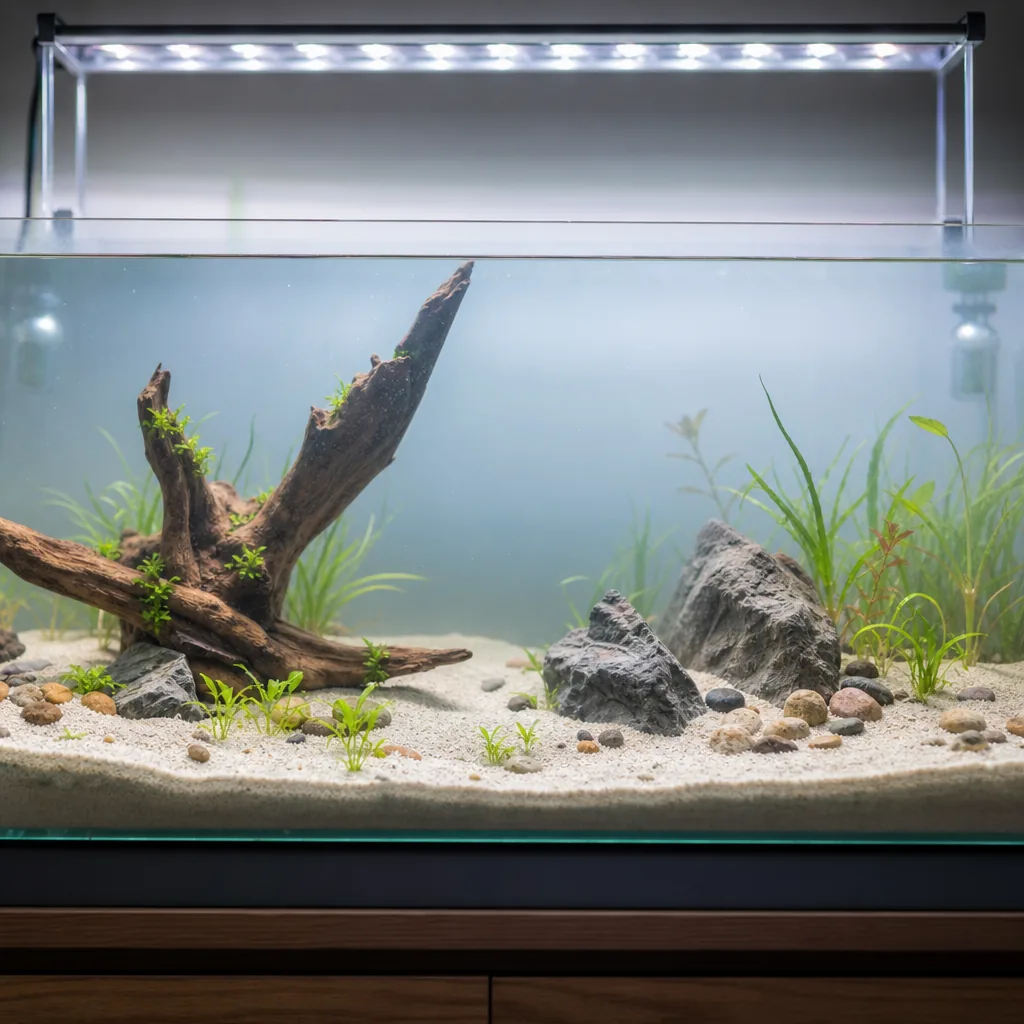
    Fresh cycling aquarium with new substrate and hardscape

    Why New Tanks Get Them

    Diatoms bloom because a brand-new tank offers them a perfect, temporary environment. Several conditions line up in the first weeks:

    • Excess silica: new substrate, decor, and sometimes source water release silica, which diatoms feed on directly.
    • Available nutrients: an immature tank has not yet developed the balance to consume nutrients efficiently.
    • An unestablished ecosystem: the bacteria and plants that will eventually compete for resources are still developing.

    In short, the tank has plenty of food and no established community to use it up, so diatoms move in first. As the tank matures, that window closes.

    The Good News: It Is Usually Self-Limiting

    The most important thing to understand is that a diatom bloom typically resolves itself. As the available silica gets used up and the tank’s biological balance establishes, the diatoms lose their advantage and fade, often as quickly as they appeared. For most new tanks this happens within a few weeks to a couple of months.

    That means the number one strategy is patience. If you are still early in setting up, our new tank guide covers what a normal maturing timeline looks like.
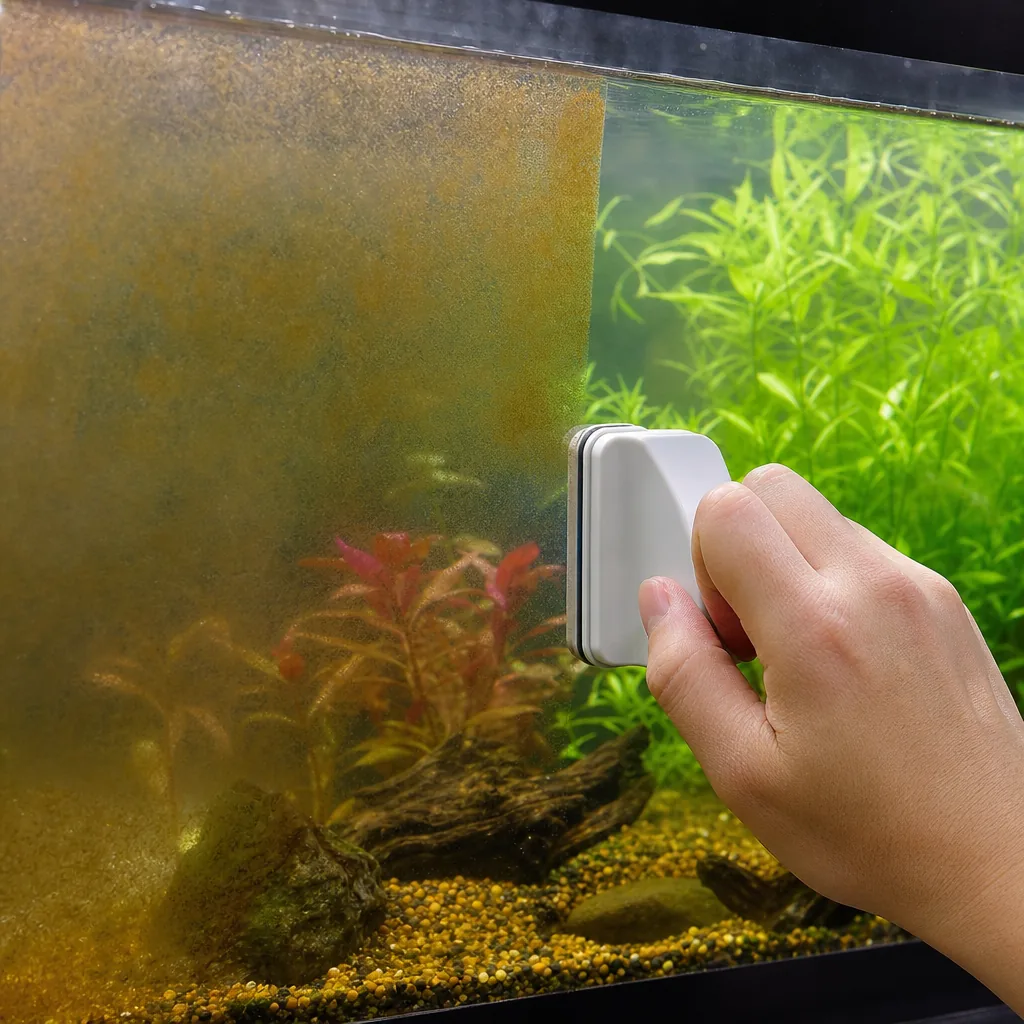
    Hand wiping brown film off aquarium glass with magnet

    How to Help It Clear Faster

    While patience does most of the work, a few habits shorten the phase and keep it under control:

    • Wipe surfaces regularly: clean the glass and siphon brown film off the substrate during water changes to physically export it.
    • Keep up water changes: regular changes remove nutrients and, if your tap water is high in silica, dilute it.
    • Do not overfeed: excess food adds nutrients that feed the bloom.
    • Give plants a head start: healthy plants compete for nutrients and help the tank mature faster.

    Avoid the temptation to attack it with chemicals. Diatoms are a normal phase, and a maturing tank will handle it better than any additive.
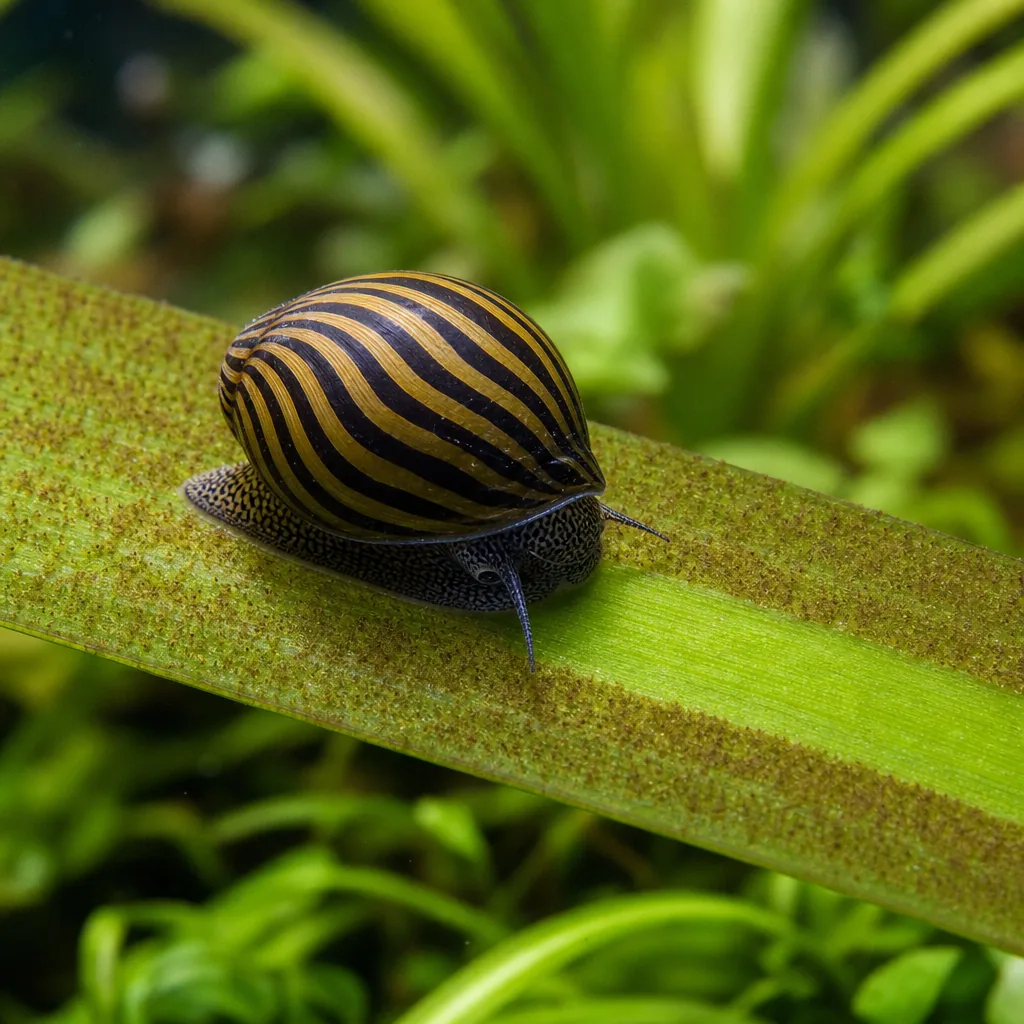
    Nerite snail grazing brown diatoms off a leaf

    A Cleanup Crew That Loves Diatoms

    Some tank inhabitants genuinely enjoy grazing on diatoms and can keep surfaces clean during the bloom:

    • Nerite snails are excellent at scraping diatoms off glass and hardscape.
    • Otocinclus catfish graze soft brown film readily, though they should go into an established tank, not a brand-new one.
    • Various snails will help clear substrate and decor.

    Add grazers once the tank is a little more settled rather than the day you set it up, so they have a stable environment to move into.

    When to Be Concerned

    Brown film in a new tank is normal. But if a mature, established tank suddenly develops a persistent diatom problem months down the line, that is worth investigating. In that case, look at your source water silica, nutrient levels, and lighting, because something has shifted the balance. For a fresh setup, though, the brown dust is just part of the process.

    Ride it out, keep up your maintenance, and the tank will clear. For test kits, cleanup crew, and maintenance tools, see our gear picks, and browse the blog for more new-tank guidance.

    Ready to set up your tank? Shop Freshwater gear on Amazon.Shop on AmazonAs an Amazon Associate we earn from qualifying purchases.

    Frequently Asked Questions

    What is the brown dust in my new aquarium?

    It is a diatom bloom, a type of algae with silica shells that appears as a soft brown film on glass, substrate, and decor. It is harmless to fish and plants and is a normal stage in a maturing tank.

    Why do new tanks get brown diatoms?

    New tanks release silica from substrate and decor, have nutrients that nothing is efficiently using yet, and lack an established ecosystem. Diatoms exploit that temporary window before the tank matures.

    Will brown diatoms go away on their own?

    Usually yes. As the silica gets used up and the tank’s biology establishes, diatoms lose their advantage and fade, typically within a few weeks to a couple of months. Patience is the main strategy.

    How can I make diatoms clear faster?

    Wipe surfaces and siphon the film during regular water changes, avoid overfeeding, and grow healthy plants to compete for nutrients. Nerite snails and otocinclus in an established tank also graze diatoms readily.

    Should I worry if diatoms appear in an old tank?

    A sudden diatom problem in a mature tank is worth investigating. Check your source water silica, nutrient levels, and lighting, since something has shifted the balance. In a new tank, though, it is completely normal.

    Brown Diatoms Fix Tank
    Share. Facebook Twitter Pinterest LinkedIn Tumblr Email
    Previous ArticleCleaning Up the Cleaner Wrasses: Two New Species and a Massive Genus Shake-Up! | Reef Builders
    Next Article Goldfish Water Conditioner: Benefits & Proper Use
    Pawvista
    • Website
    • Facebook
    • X (Twitter)
    • Pinterest
    • Instagram
    • LinkedIn

    Related Posts

    Despite Limited Genetic Diversity, The Invasive Brown Treesnake Has Thrived On Guam

    July 29, 2026

    Your Guinea Pig Cage Might Need a Makeover! Here’s How to Fix It

    July 29, 2026

    Nerite Snails: The Best Algae-Eating Snail Explained

    July 29, 2026
    Add A Comment
    Leave A Reply Cancel Reply

    Top Posts

    The Pros and Cons to Owning an Alaskan Malamute – Fantastic Furries

    July 27, 20266 Views

    Read This BEFORE You Get a New Ferret – The Modern Ferret

    July 27, 20265 Views

    Rabbit Teeth Grinding: What Is It & Why Do They Do It

    July 27, 20263 Views
    Stay In Touch
    • Facebook
    • YouTube
    • TikTok
    • WhatsApp
    • Twitter
    • Instagram
    Latest Reviews

    Subscribe to Updates

    Get the latest tech news from FooBar about tech, design and biz.

    About us

    Welcome to GenzyPets.com, your trusted source for everything related to micro pets and small companion animals.

    At GenzyPets, we believe that every pet deserves the best care, whether it's a hamster, guinea pig, rabbit, hedgehog, chinchilla, ferret, bird, reptile, fish, or any other small pet. Our mission is to provide pet owners with reliable, easy-to-understand, and practical information to help them give their pets healthy and happy lives.

    Most Popular

    The Pros and Cons to Owning an Alaskan Malamute – Fantastic Furries

    July 27, 20266 Views

    Read This BEFORE You Get a New Ferret – The Modern Ferret

    July 27, 20265 Views

    Rabbit Teeth Grinding: What Is It & Why Do They Do It

    July 27, 20263 Views

    Subscribe to Updates

    Get the latest creative news from FooBar about art, design and business.

    © 2026 GenzyPets.com. All Rights Reserved.
    • Terms & Conditions
    • Privacy Policy
    • Contact Us
    • About Us

    Type above and press Enter to search. Press Esc to cancel.