

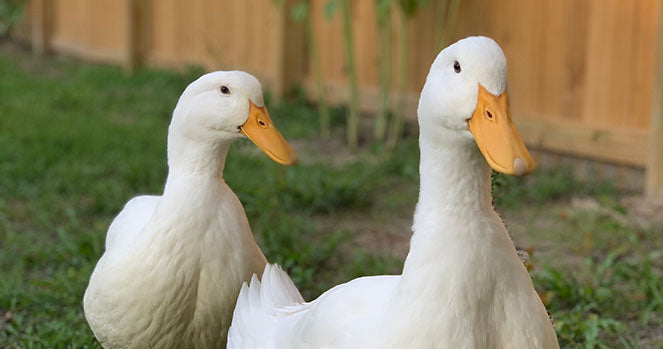
Ducks and geese make excellent companions. With constant energy and entertainment, they’re sure to waddle their way into your heart. The best way to share the love? Provide a happy, healthy home for your waterfowl with these four key care tips.
1. Start Young Waterfowl Off on the Right (Webbed) Foot.
As you likely know, ducks and geese are water-loving creatures. Ducklings and goslings are no different in their love for water, but they must learn to swim first. If you’re starting with little ones, limit their access to water features that could be dangerous or contain a strong current or deep water.
Adult ducks and geese produce waterproofing oil that protects their inner feathers as they swim and play. Young waterfowl will not have this water repellency right away, so it is important that they be provided with enough room to dry out and stay warm. Wet ducklings and goslings also need frequent changing of bedding to keep a clean and healthy habitat.
2. Maintain a Clean and Comfortable Environment.
Cleanliness and comfort make a huge difference in anyone’s health and happiness. Ducks and geese are no exception. As a responsible pet owner, it’s important to provide your waterfowl with the proper habitat. There are five key elements they require in an environment:
1. Space. Especially if ducks and geese are cohabiting, it’s important to provide ample space to spread out. A small, but not crowded, brooder for shelter and sleeping is acceptable if your birds can spend most of their time wandering around a larger, fenced-in area outdoors. Depending on the size of your waterfowl, be sure to provide 4-8 square feet per bird.
2. Shelter. A safe and secure shelter or brooder is best for your geese and ducks’ happiness and safety. Protection from weather, predators and other elements is advisable, especially at night. Consider a box with a wire mesh floor to allow droppings to pass through. Bonus points for complementary compost and fertilizer.
3. Bedding. Warm, dry bedding material is sure to keep your birds clean and happy. Pine shavings or straw are two good options for waterfowl. Again, make sure to change it regularly, as it will get wet.
4. Water. Ducks and geese love to splash around in water, so a water feature is non-negotiable for optimal happiness. A natural pond is great, but a children’s wading pool works just fine, provided it’s kept clean and is easily accessible to even your smallest swimmers.
5. More Water! Like all animals, your waterfowl need convenient access to clean drinking water. A fresh water source should be deep enough for ducks and geese to clean their nostrils and beaks as they drink, separated from the water feature they swim and play in and should be replaced daily.
3. Prepare for All Seasons.
Many people associate ducks and geese with warmer weather, but they can handle cold winter weather well, too. They may just need a little help to stay happy and healthy year-round.
If you live in a climate where temperatures dip below freezing, the first order of business is to provide your feathered friends with accessible drinking water that won’t freeze over. Water is nonnegotiable, as it hydrates, assists with digestion and clears waterfowl’s sinuses and eyes to keep them healthy. Keeping water available despite freezing temperatures can be accomplished when kept inside a warm shelter that is consistently accessible to your birds or in a heated water bowl.
Your waterfowl flock doesn’t need swimming water in frigid winter temperatures. Although they love to play, ducks and geese can survive without their splash sessions. On the rare sunny and “warm” winter days, though, they’re sure to appreciate a fun pool day.
Overall, ducks and geese handle all seasons well. They are hardy birds, well-suited for most climates with an extra layer of fat that keeps them from minding cold and snow. On hot summer days, they know how to keep cool by splashing in a pond or laying in the shade.
4. Provide a Complete Diet.
Last but certainly not least, a key component for any happy and healthy pet is proper nutrition. For ducks and geese, it’s important to provide a nutritionally complete and balanced diet formulated specifically for waterfowl.
For newly hatched ducklings, goslings and adolescent birds, appropriate nutrition for rapid growth requirements can be met by Mazuri® Waterfowl Starter. It is best to provide a starter feed as your young waterfowl grow and later switch to a nutrition program better suited to meet the needs of an adult flock.
Mazuri® Waterfowl Maintenance Diet is trusted by zoo professionals and pet owners alike to support fully grown duck and goose health with quality nutrition. As with all Mazuri diets, Ph.D. nutritionists formulated the maintenance diet to contain a complete nutritional profile, consisting of all the vitamins and minerals waterfowl need with no need for supplementation.
For those breeding ducklings and goslings, Mazuri® Waterfowl Breeder Diet is formulated to optimize duck and goose breeding performance, egg numbers, fertility and even duckling and gosling survival rates.
It is best to choose feed that will support your pets’ health and well-being without need for additional supplements. Floating diets are preferred, so your ducks and geese can eat on the water in a way that closely imitates their natural habitat and minimizes water contamination and waste. Plus, your birds have taste buds! Choose a food they will not only benefit from but enjoy at mealtime.
Ducks and geese are unique companions with just a few unique needs. As long as those needs are met, you’re sure to have a long-lasting friendship to look forward to with your feathered friends.
For more tips on raising waterfowl and a fun, pet-loving community, follow Mazuri on Facebook and Instagram. Still have questions? Ask a Mazuri waterfowl expert.
