

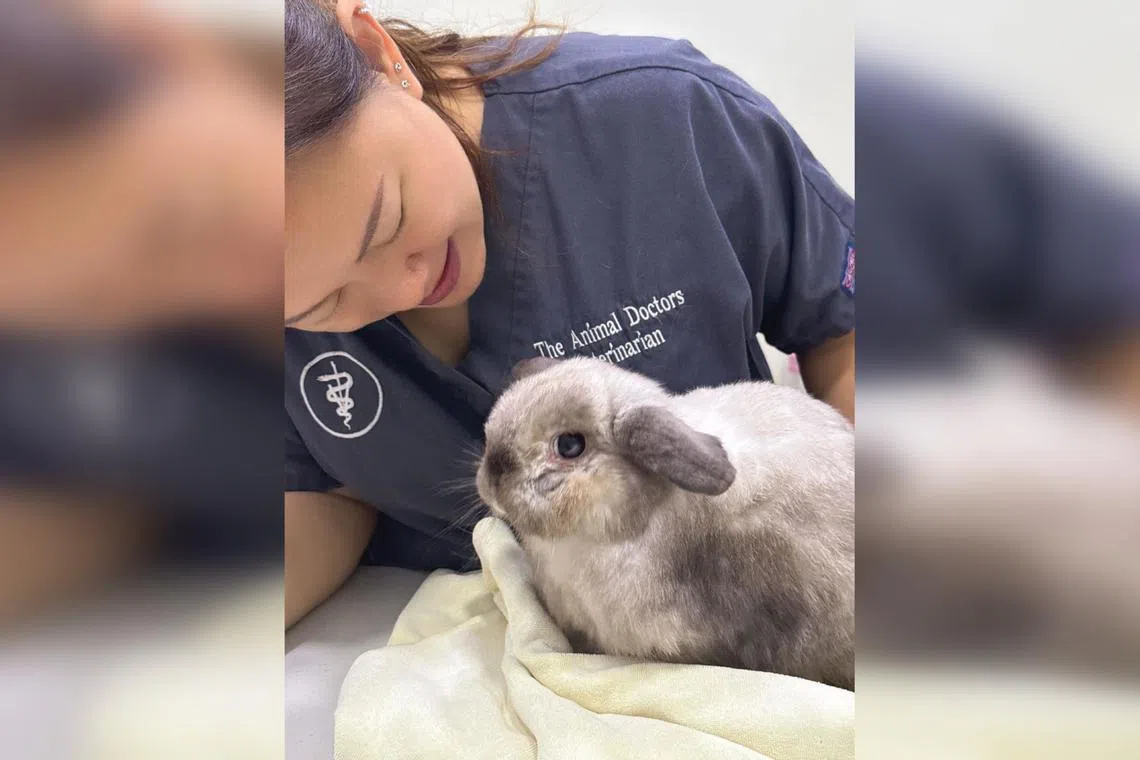
SINGAPORE – Rabbits have seen a surge in popularity in the last 10 years and are now among the most common companion mammals.
Rabbits are able to form deep bonds with family members, and we should keep them as healthy as we can throughout their lifespan. The Guinness Book of Records lists “Herbie” the Lionhead as the oldest living rabbit at 15 years old.
Rabbits are domesticated “prey” species; this is different from traditional companion animals. Different breeds of rabbits also have different medical needs. For example, the Netherland Dwarf rabbit has a short and flat snout that predisposes it to upper respiratory disease and dental disease.
Prey species with short lifespans
Prey species, being at the bottom of the food chain, tend to have short lifespans. They compensate by having many offspring and developing unique features to avoid potential predators.
Prey animals hide or mask signs of illness and appear normal even when they are sick. This means that when a change is noticed by an owner, the rabbit may already be in the advanced stages of disease.
Prey animals choose “flight” in the fight-or-flight response to threats. Any intervention, handling or physical examination can be deemed a threat to the animal, and the surge of adrenaline to escape the situation may even result in death.
Rabbits also have higher metabolic rates, making their basal requirements in terms of nutrition and therapeutics very different from those of dogs and cats.
True herbivores
Rabbits are true herbivores with a gastrointestinal system designed for digesting plant material. Their diet should consist predominantly of grass hays – grain hays should be avoided. High-fibre pelleted food given daily provides some energy, minerals and micronutrients. Fresh leafy vegetables are a good addition to the daily diet, and fruit may be given in small quantities as treats.
Rabbits have teeth that grow continuously throughout their lives. With such teeth, dental disease is the most common medical issue. Providing a high-fibre diet helps maintain the chewing surface of their teeth.
The rabbit’s gut constantly needs movement. Illness results in a secondary slowdown or cessation of movement in the gastrointestinal tract, known commonly as gut stasis. The first sign of a sick rabbit is usually a skipped meal. The cause might not be related to the gastrointestinal tract, but we always recommend veterinary attention if a rabbit is not eating.
The rabbit’s gut cannot tolerate carbohydrates and sugars, and a sudden consumption of excessive sugar (in treats or vegetables like carrots) can result in gas build-up. This can quickly lead to fatalities within a short time.
Ample space needed
Due to their small size, there is a misconception that rabbits are able to cope in small spaces. While rabbits are ideal companions for apartment dwellers, they still require an ample enclosure.
The enclosure must be large enough for the rabbit to perform three or four full hops on every side, and also allow it to stand and stretch out. Play pens are encouraged, as they give flexibility for altering the space. Rabbits should be allowed supervised free roaming at least once daily.
Rabbits are clean and fastidious animals that can easily be potty-trained. Once sterilised, potty-training becomes even more consistent.
If your rabbit is free-roaming, having a rabbit-proof house is essential for safety and the prevention of injuries. The flooring of areas that the rabbit spends time in must be padded and not made of wire mesh. This is to prevent painful sores that can develop with pressure.
The area where the rabbit is kept should be free of obstacles. Rabbits are curious and adventurous and can easily get hurt when navigating obstacles. Electrical wires must be kept away as inquisitive rabbits will chew on them, which may result in burns.
An extremely happy rabbit will show joy by doing “binkies”, which are mad dashes around the house, often with twists and turns in the air. You may think your rabbit has gone bonkers but this is absolutely normal.
Avoid carrying rabbits
Rabbits are highly social animals and environmental enrichment is essential. They thrive on interactive play – with chew toys, food hide-and-seek or grooming. Physical handling and carrying must be avoided as they can develop spinal injuries and fractures from inappropriate handling.
Sterilisation is crucial
Rabbits should ideally be kept in small family units, and it is our responsibility to keep them free of reproductive stress.
Desexing is particularly important for female rabbits. Non-sterilised female rabbits develop reproductive disease (ruptured blood vessels, internal bleeding, and uterine and breast cancers) from as early as two years old. Sterilised females have an extended lifespan of seven to 10 years as opposed to three to five years for unsterilised rabbits.
For male rabbits, the benefits of neutering are behaviour-related. Unsterilised males fight aggressively, often resulting in large wounds that can be fatal.
While rabbits can be sterilised from as young as four months old for population control, it is recommended to sterilise females when they are one year old, and males from six months old.
Responsible pet ownership
Veterinary care, like any medical service, has seen a rise in fixed and variable costs, such as in diagnostics, consumables, therapeutics, human resources and rent.
As veterinarians, we strive to provide the medical care needed and offer all options. Unfortunately, when weighing the costs of veterinary care against the initial purchase price of the pet, and recalling that as prey animals, rabbits seldom present their illnesses until the advanced stages of their disease, sometimes this can be cost-prohibitive for owners.
Acquiring a pet is a decision that should always be undertaken responsibly.
As pet insurance is not available for rabbits, it is even more important to consider the overall costs of husbandry, preventative healthcare, and incidental healthcare in times of emergency or urgent vet visits.
-
Cathy Chan is the co-founder and head veterinarian of The Animal Doctors and the vice-president of the Singapore Veterinary Association.
-
Vet Talk is a fortnightly column where veterinarians offer advice on pet issues.
