
Close Menu
GenzyPets

    Subscribe to Updates

    Get the latest creative news from FooBar about art, design and business.

    What's Hot

    Abigail’s House Of Buns – Chapter 102 – You Never Know

    Gizmo’s Guide to Winter Enrichment | Small Pet Select Blogs

    January 31st 2026: Top Cuties of the Week

    Facebook X (Twitter) Instagram
    Trending
    • Abigail’s House Of Buns – Chapter 102 – You Never Know
    • Gizmo’s Guide to Winter Enrichment | Small Pet Select Blogs
    • January 31st 2026: Top Cuties of the Week
    • Enzo is very sick. So today Belinda fills her blog with nice photos of him.
    • Why Your Rabbit Might Eat Less in Winter
    • Abigail’s House Of Buns – Chapter 103 – Goodbye to Love
    • Misting vs Fogging for Reptiles: Which Is Best?
    • Good Food For A Hamster Diet — Animal Hearted Apparel
    Facebook X (Twitter) Instagram
    GenzyPets
    Thursday, July 30
    • Home
    • Birds
      • Budgies
      • Canary Care
      • Cockatiels
      • Lovebirds
    • Chinchillas
      • Chinchilla Care
      • Chinchilla Food
      • Chinchilla Health
      • Chinchilla Cages
    • Ferrets
      • Ferret Behavior
      • Ferret Care
      • Ferret Food
      • Ferret Health
    • Fish & Aquatic Pets
      • Aquarium Care
      • Betta Fish
      • Goldfish
      • Shrimp Tanks
    • Guinea Pigs
      • Guinea Pig Breeds
      • Guinea Pig Care
      • Guinea Pig Diet
      • Guinea Pig Health
    • Hamsters
      • Dwarf Hamsters
      • Hamster Care
      • Hamster Food
      • Syrian Hamsters
    • Hedgehogs
      • Hedgehog Care
      • Hedgehog Diet
      • Hedgehog Habitat
      • Hedgehog Health
    • Mice & Rats
      • Mouse Care
      • Pet Mice
      • Pet Rats
      • Rat Care
    • Rabbits
      • Rabbit Breeds
      • Rabbit Care
      • Rabbit Nutrition
      • Rabbit Training
    • Reptiles
      • Bearded Dragons
      • Leopard Geckos
      • Small Snakes
      • Turtles
    GenzyPets
    You are at:Home»Hedgehogs»Hedgehog Health»Scientists trace microplastics in hedgehogs to a common source: pet food
    Hedgehog Health

    Scientists trace microplastics in hedgehogs to a common source: pet food

    PawvistaBy PawvistaJuly 25, 2026004 Mins Read
    Share Facebook Twitter Pinterest LinkedIn Tumblr Email
    Scientists trace microplastics in hedgehogs to a common source: pet food
    Share
    Facebook Twitter LinkedIn Pinterest Email
    Scientists trace microplastics in hedgehogs to a common source: pet food

    Your support helps us to tell the story

    From reproductive rights to climate change to Big Tech, The Independent is on the ground when the story is developing. Whether it’s investigating the financials of Elon Musk’s pro-Trump PAC or producing our latest documentary, ‘The A Word’, which shines a light on the American women fighting for reproductive rights, we know how important it is to parse out the facts from the messaging.

    At such a critical moment in US history, we need reporters on the ground. Your donation allows us to keep sending journalists to speak to both sides of the story.

    The Independent is trusted by Americans across the entire political spectrum. And unlike many other quality news outlets, we choose not to lock Americans out of our reporting and analysis with paywalls. We believe quality journalism should be available to everyone, paid for by those who can afford it.

    Your support makes all the difference.

    When colleagues and I found microplastics in hedgehog droppings, we wanted to know where they were coming from. One answer was surprisingly close to home: pet food.

    The story began in 2021, when we collected 189 hedgehog faeces samples from residential gardens and rehabilitation centres across the UK. We found plastic in 19% of them. Despite being one of Britain’s best-loved wild animals, and now officially listed as “near threatened”, no one knew hedgehogs were ingesting microplastics.

    To understand where these microplastics were coming from we decided to investigate their diet. Naturally, the European hedgehog eats invertebrates, including beetles, snails, slugs, earthworms, caterpillars and woodlice, so we started by looking at these. Colleagues and I analysed thousands of invertebrate and soil samples from 51 sites in Sussex, UK. We found plastics were widespread across different species and land types.

    Next, we wanted to understand if pet foods fed to European hedgehogs in rehabilitation centres and residential gardens contained microplastics. In the UK, many rehabilitation centres treat a high number of sick or injured mammals each year.

    Research suggests that food left out by people is the single biggest reason European hedgehogs visit residential gardens. Many hedgehogs have even become reliant on it, especially during the autumn and winter.
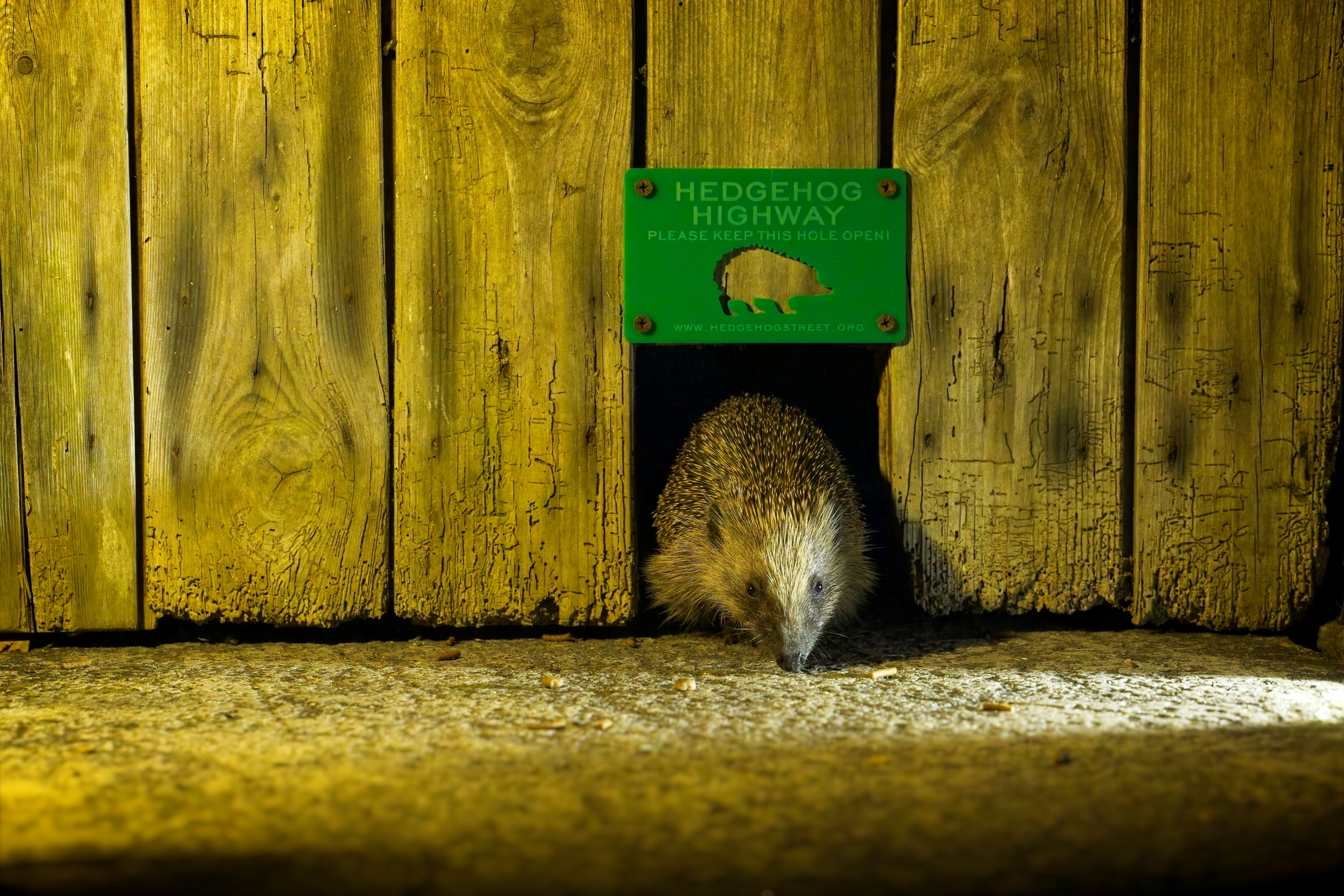
    Scientists collected 189 hedgehog faeces samples from residential gardens and rehabilitation centres across the UK
    Scientists collected 189 hedgehog faeces samples from residential gardens and rehabilitation centres across the UK (PTES & BHPS/Christopher Morgan)

    Often, this means commercially available cat, dog, or hedgehog food. To determine the levels of plastic contamination in pet foods colleagues and I selected 38 brands to test across different price categories, food types (wet and dry), and target animals (cat, dog, and wild hedgehog). We purchased six retail units of each product and took a random 1g sample from each tin, sachet, tray, or bag. Our study was recently published in the journal Environmental Toxicology and Chemistry.

    We found microplastics in 29 of the 38 pet food products we tested. In 18 products, contamination appeared in more than one retail unit. Although plastic was found across the products tested, those in the “value” price category had more positive samples.

    Dry food contained more plastic per gram, but animals typically eat much larger portions of wet food. As a result, wet food may lead to greater overall microplastic intake. For example, based on the average levels we found in wet dog food samples, a large dog such as a Labrador could ingest around 313 microplastic particles per day.

    Emily Thrift is a PhD Candidate and Doctoral Tutor in Ecology at the University of Sussex.

    This article was first published by The Conversation and is republished under a Creative Commons licence. Read the original article.

    Compared with studies of human food, we found that pet food had higher levels of microplastics. This is likely due to ingredient quality. For example, of the 21 products which contained animal derivatives, 19 had at least one plastic-positive sample, and 13 had at least two.

    What does this mean for pets and wildlife?

    All this suggests that pet foods may be an important source of microplastics for pets and wild hedgehogs (and other mammals).

    We still know relatively little about the health effects of microplastics in pets and wildlife, and we did not test the health impacts in our research. However, there is a growing body of evidence from laboratory studies that it leads to issues with fertility, organ functionality, and overall health.

    Given both this uncertainty and how common these particles were in the pet food we tested, reducing contamination at the manufacturing stage would be a good precaution.

    That’s why the government should mandate microplastic testing for processed food manufacturers, bringing them under the same strict regulatory safety checks used for other chemical contaminants. As consumers, we should be able to purchase affordable food that is good for our pets and wild mammals, while not causing a detrimental effect on the environment.

    This research was funded by the British Hedgehog Preservation Society and the University of Sussex

    common Food hedgehogs microplastics Pet Scientists source trace
    Share. Facebook Twitter Pinterest LinkedIn Tumblr Email
    Previous Article5 most beautiful rabbit breeds in the world you’ll instantly fall in love with
    Next Article Giant goldfish found in Okotoks sparks Alberta warning about invasive species
    Pawvista
    • Website
    • Facebook
    • X (Twitter)
    • Pinterest
    • Instagram
    • LinkedIn

    Related Posts

    Gizmo’s Guide to Winter Enrichment | Small Pet Select Blogs

    July 30, 2026

    Good Food For A Hamster Diet — Animal Hearted Apparel

    July 29, 2026

    Top Tunnels For Your Pet — Animal Hearted Apparel

    July 29, 2026
    Add A Comment
    Leave A Reply Cancel Reply

    Top Posts

    The Pros and Cons to Owning an Alaskan Malamute – Fantastic Furries

    July 27, 20266 Views

    Read This BEFORE You Get a New Ferret – The Modern Ferret

    July 27, 20265 Views

    Rabbit Teeth Grinding: What Is It & Why Do They Do It

    July 27, 20263 Views
    Stay In Touch
    • Facebook
    • YouTube
    • TikTok
    • WhatsApp
    • Twitter
    • Instagram
    Latest Reviews

    Subscribe to Updates

    Get the latest tech news from FooBar about tech, design and biz.

    About us

    Welcome to GenzyPets.com, your trusted source for everything related to micro pets and small companion animals.

    At GenzyPets, we believe that every pet deserves the best care, whether it's a hamster, guinea pig, rabbit, hedgehog, chinchilla, ferret, bird, reptile, fish, or any other small pet. Our mission is to provide pet owners with reliable, easy-to-understand, and practical information to help them give their pets healthy and happy lives.

    Most Popular

    The Pros and Cons to Owning an Alaskan Malamute – Fantastic Furries

    July 27, 20266 Views

    Read This BEFORE You Get a New Ferret – The Modern Ferret

    July 27, 20265 Views

    Rabbit Teeth Grinding: What Is It & Why Do They Do It

    July 27, 20263 Views

    Subscribe to Updates

    Get the latest creative news from FooBar about art, design and business.

    © 2026 GenzyPets.com. All Rights Reserved.
    • Terms & Conditions
    • Privacy Policy
    • Contact Us
    • About Us

    Type above and press Enter to search. Press Esc to cancel.