

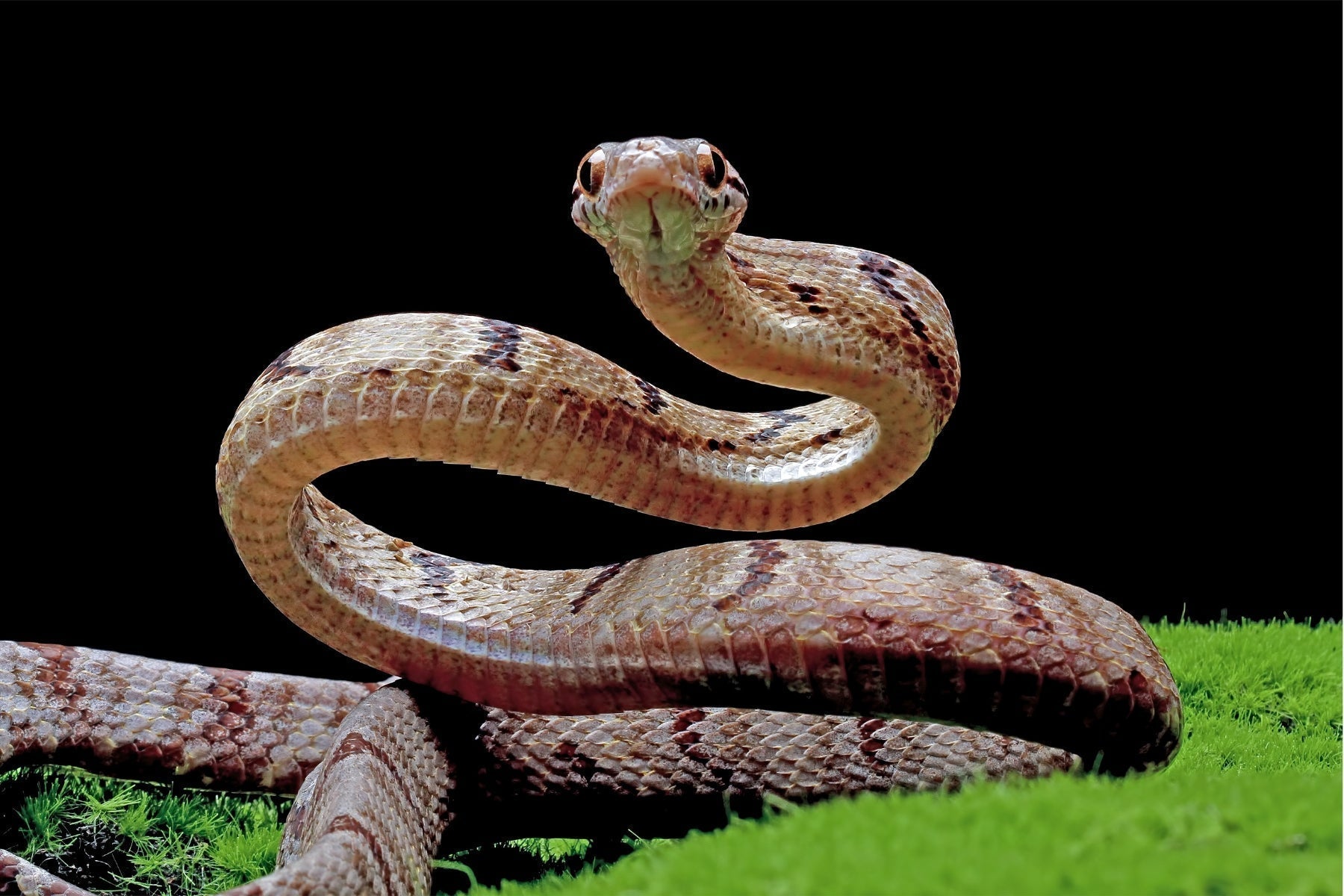
You find many types of snakes, but most fall into clear groups based on how they hunt, defend themselves, and live, from constrictors to venomous species and generally non-venomous colubrids. Snakes sit in Reptilia (suborder Serpentes), and this simple framework helps a confusing group make sense at first glance.
UK snakes include three species: the grass snake with its neat black collar, the rare smooth snake with a more slender body, and our native adder from the viper family with a distinctive zigzag pattern. Globally, snakes occupy deserts, forests, rivers, and moorland habitats, and the mix of camouflage, speed, or venom shapes each species’ unique characteristics. Understanding these patterns reveals how snakes fit into nature and why some are docile while others are more defensive.
Snake Classification and Families

We group snakes by shared traits, like body build, hunting method, and venom, so patterns across types of snakes actually make sense. All snakes sit in Serpentes (order Squamata).
Major Snake Families
-
Colubridae (colubrids): The largest family, spanning racers, kings, and many beginner-friendly, generally docile nature species worldwide. Most are non-venomous or mildly so; behaviour and habitat use flow seamlessly across deserts, forests, and wetlands.
-
Pythonidae & Boidae (pythons and boas): Constrictors with stocky bodies and a slightly broader head than many colubrids. Includes Malayopython reticulatus (the world’s longest snake) and Python bivittatus (Burmese python); powerful, ambush-oriented predators with a slender body relative to length in some species.
-
Elapidae (cobras, mambas, sea snakes): Front-fanged venomous species such as Ophiophagus hannah (king cobra) and Naja haje (Egyptian cobra). Often the “feared snakes” in their regions, but pattern, head shape, and behaviour need closer inspection for reliable ID.
-
Viperidae (vipers and rattlesnakes): Typically heavier set with wide heads; many show bold patterning (Europe’s adder is easily identified by a distinct zig zag pattern). North America’s Crotalus horridus (timber rattlesnake) represents the family in the eastern United States.
Pro Tip: learn the local “look-alikes,” then confirm with range, pattern, and head/scale clues, what seems the same at first glance often separates cleanly on closer inspection.
|
Family |
Key Traits |
Examples |
|
Colubridae |
Largest family, mostly non-venomous |
Garter snakes |
|
Boidae |
Constrictors, live birth |
Boas |
|
Pythonida |
Constrictors, egg-laying |
|
|
Elapidae |
Neurotoxic venom |
Cobras |
|
Viperidae |
Long fangs, haemotoxic venom |
Rattlesnakes |
Venomous vs Non-Venomous Snakes
Snakes subdue prey either with venom or by other means such as constriction. Most medically significant species sit in Elapidae and Viperidae. Elapids typically deliver fast-acting neurotoxins, while vipers often use haemotoxic/cytotoxic venoms.
Non-venomous groups include most colubrids, plus boas and pythons (though a few colubrids have mild, rear-fanged venom that rarely harms humans). Remember, “danger” isn’t defined by venom alone. Behaviour, size, and where you encounter a snake all matter, and many venomous snakes avoid people and bite only when threatened.
Constrictors and Their Diversity
-
How constrictors hunt: Wrap, squeeze, and hold. Compression restricts breathing and blood flow until the prey can’t fight back.
-
Where they appear: Constriction evolved across multiple families; many species use it effectively, not just the “big names.”
-
Pythons (Pythonidae): Among the longest snakes; egg-layers that often guard clutches. Many retain small pelvic spurs; ancestral leftovers.
-
Boas (Boidae): Similar build, but give birth to live young. Anacondas (a boa group) are among the heaviest snakes on Earth.
-
Diet range: Mammals, birds, amphibians, and other reptiles; opportunistic feeders that size prey to body width.
-
Metabolic edge: Slow metabolism equals long gaps between meals; a large feed can sustain them for weeks.
Venomous Snakes and Their Varieties

Most serious bites come from a few well-defined groups. Knowing how each hunts and what its venom does helps you assess risk and respond calmly. Remember: many venomous snakes avoid conflict. Most incidents happen when they’re surprised or badly handled.
-
Elapids (cobras, mambas, kraits): Fixed front fangs; venom typically neurotoxic (breathing/nerve effects). Fast-acting, so urgent hospital care and antivenom is required.
-
Vipers & pit vipers (adders, rattlesnakes): Long, hinged fangs; venom often haemotoxic/cytotoxic (bleeding, tissue damage). Deep bites; immobilise and seek antivenom.
-
Coral snakes: Elapids with small front fangs and bold bands in many species. Bites are rare but serious, so treat as a medical emergency.
-
Sea snakes: Marine elapids with potent neurotoxic venom; most incidents involve fishing nets. Support breathing and get antivenom quickly.
-
Risk isn’t venom alone: Behaviour, size, and encounter frequency matter; give snakes space and avoid handling to prevent bites.
-
First-aid basics: Keep the victim calm and still, apply pressure-immobilisation where appropriate, and get to the hospital for the correct antivenom.
Non-Venomous Snakes and Constrictors

Many snakes don’t use venom at all. Instead, they rely on strength, body control, and steady pressure to subdue prey. This group spans everything from large constrictors to smaller ground-dwellers, plus a few rarer families with unusual traits.
Pythons: Species and Habitats
Pythons (family Pythonidae) are powerful constrictors with heat-sensing pits, found across Africa, Asia, and Australia. They kill by constriction rather than venom. Standouts include the reticulated python, the world’s longest snake, and the Burmese python of forests and wetlands.
Indian and African rock pythons often keep close to water, while some species are arboreal: the green tree python rests coiled on rainforest branches. Smaller and notably calm, the ball (royal) python often curls into a tight ball when threatened.
Boas and Their Relatives
Boas are classic constrictors (family Boidae and close relatives), relying on strength and steady pressure rather than venom. They’re most diverse in the Americas, with outliers in Africa and parts of Asia, and most give birth to live young.
The boa constrictor (often called the red-tailed boa) ranges from forest to drier scrub, while the green anaconda, one of the heaviest snakes, haunts rivers, swamps, and floodplains, taking sizable prey. Smaller kin include sand boas (burrowing specialists that spend time beneath loose soil) and dwarf boas (Tropidophiidae), which keep to leaf litter and rely on surprise rather than size.
Colubrids: Common Non-Venomous Snakes
Colubrids (family Colubridae) are the snakes you’re most likely to meet, widespread on every continent except Antarctica and largely harmless. Familiar examples include corn, rat, and garter snakes. Garter snakes often patrol pond edges and streams, taking fish, frogs, and insects, while many “water snakes” in this family only look intimidating. Several colubrids mimic venomous species, the false coral snake’s bold bands, for instance, relying on speed, scent-tracking, and quick strikes rather than venom.
Other Non-Colubrid Non-Venomous Families
A few non-venomous lineages are small, secretive, and easy to overlook. The sunbeam snake, with smooth, iridescent scales, spends most of its life underground in Southeast Asia. Asian pipe snakes (Cylindrophiidae) and relatives such as Aniliidae, Loxocemidae, and Bolyeriidae have limited ranges and specialised habits. The tiny dwarf pipe snakes (Anomochilidae, e.g., Anomochilus) remain hidden for much of their lives, surfacing only occasionally.
Habitats, Adaptations, and Ecological Roles

Snakes thrive from heathland to rainforest, rivers to coastlines, and their bodies match the brief. Streamlined swimmers, heat-sensing ambush hunters, and perfectly camouflaged ground dwellers show how colouration, head shape, and movement style evolve for survival. Those same adaptations make snakes key predators (and prey) that keep food webs balanced.
-
Terrestrial (UK): Adder (distinct zig-zag) and the rare smooth snake (heathland specialist).
-
Semi-aquatic (UK): Grass snakes are semi-aquatic, often found around ponds, ditches, and even compost heaps; they lay eggs in warm, decaying vegetation.
-
Fully aquatic (global): Some snakes live almost entirely in water. Sea snakes are fully marine, and species like the elephant trunk snake spend their lives in freshwater habitats.
-
(UK): Grass snakes frequent ponds and compost heaps; they lay eggs in warm, decaying vegetation.
-
Arboreal: Slender, even-width bodies for balance; branch-to-branch hunters of small birds and lizards.
Notable and Rare Snake Species

Some snakes stand out for their deep history, tiny ranges, or close ties to people. These examples show just how widely snakes vary in size, behaviour, and ecological role.
Ancient and Extinct Snakes
Fossils push snake history back tens of millions of years, with Titanoboa cerrejonensis the heavyweight champion. Living approximately 60 million years ago in what’s now Colombia, it likely exceeded 12 metres and patrolled hot, swampy forests for large prey. Titanoboa’s size highlights how warmer climates shaped early snake evolution and helps explain how modern snakes adapted as temperatures and habitats changed, filling roles once held by outsized crocs and mammals.
Unusual and Region-Specific Snakes
Some lineages are small, secretive, and highly specialised. Worm and blind snakes (e.g., Anomalepidae, Typhlopidae) spend most of their lives underground, feeding on ants and termites with tiny eyes and smooth, burrowing bodies. Others are distinctive for behaviour or venom delivery: the burrowing asp (Atractaspididae) can side-stab without opening its mouth, the Asian pipe snake mimics a head with its blunt tail, mambas (Dendroaspis) combine speed with arboreal life in African forests, and bushmasters grow large in remote Neotropical rainforests.
Popular Pet Species
Many snakes stay popular in captivity because they adapt well to human care with calm temperaments, manageable size, and a willingness to eat frozen-thawed rodents in simple, correctly heated enclosures. Before choosing, consider adult size (space requirements), lifespan (many exceed 20 years), and legal status (some species face trade restrictions). Always buy captive-bred, check local laws, and avoid rare or wild-caught snakes.
Top 10 Popular Pet Snakes in the UK
-
Corn Snake (Pantherophis guttatus): The UK’s classic beginner: generally docile, easy to feed, wide morph range, adult length.
-
Royal (Ball) Python (Python regius): Calm, manageable girth/size; needs steady temps/humidity and can be fussy eaters, but very rewarding.
-
Western Hognose (Heterodon nasicus): Small, comical “upturned nose,” generally docile; straightforward care once settled.
-
Kingsnakes (e.g., California/Mexican Black, Lampropeltis spp.): Hardy, confident feeders; keep singly (food-driven, can eat other snakes).
-
Milk Snakes (Lampropeltis triangulum group): Bright bands, active but settle well; and usually reliable on frozen rodents.
-
Kenyan Sand Boa (Eryx colubrinus): Compact burrower, low climbing needs; likes a warm, dry spot and secure substrate.
-
Rainbow Boa (Epicrates cenchria): Gentle, slow-moving; thrives with simple, arid setups and regular, modest meals.
-
Garter Snake (Thamnophis spp.): Active, hardy, and generally docile; adaptable to a range of setups and a popular choice for keepers who want an engaging, beginner-friendly snake with straightforward feeding.
-
Green Tree Python (Morelia viridis) / Emerald Tree Boa (Corallus caninus): Highly sought-after arboreal species with striking colouration. Best suited to confident keepers with tall, well-planted enclosures, stable warmth, and humidity control.
-
Carpet Python (Morelia spilota complex): For keepers wanting “a bit bigger”; alert but workable with consistent handling and space.
Notes: Always buy captive-bred from reputable sources, house snakes individually, and match enclosure size, heat, and humidity to the species’ needs. Venomous species are not suitable pets and require licensing in the UK. Check out our blog on 7 Awesome Pet Snakes for more options.
Final Thoughts

Snakes are wonderfully varied, from calm colubrids to powerhouse constrictors, and understanding the main types of snakes makes identification, care, and appreciation much easier. If this guide has sparked new curiosity (or confidence) about UK natives and popular pet species, you’re already ahead of the curve. For help matching species to setups, sizing enclosures, or choosing reliable heating and UVB, our team at Reptile Centre is always happy to advise, so your next step is simple: ask, and we’ll get you and your snake on the right track. If you enjoyed this blog, check out our blog on Types of Lizards.
Frequently Asked Questions
Which snakes are typically found in tropical habitats?
Tropical and subtropical regions host the greatest diversity, where cobras, green tree pythons, anacondas, and many colubrids can thrive in rainforests, wetlands, and coastal zones. Warm temperatures and dense cover allow year-round hunting.
What enclosure setup does a pet snake need?
Start with a secure, escape-proof vivarium sized to the adult snake (e.g., approximately 90-120cm for corn/king; larger for pythons). Provide warm and cool zones, two snug hides, a stable heat source on a thermostat, a water bowl big enough to bathe, and easy-clean substrate. Monitor temps/humidity with digital probes.
How often should I feed, and is live feeding necessary?
Most pet snakes thrive on frozen-thawed rodents (safer and more humane than live). Juveniles typically eat every 5-7 days; adults every 10-14 days, adjusting by body condition. Offer appropriately sized prey (about 1-1.25× snake’s mid-body width), use feeding tongs, and avoid handling for 24-48 hours after meals.
Are slow worms snakes?
No. Slow worms are a legless lizard, not a snake (they have eyelids and a different body structure). In the UK, slow worms, along with our native snakes like the grass snake and adder, are legally protected, so they should be left alone and appreciated from a distance rather than handled or moved.
