

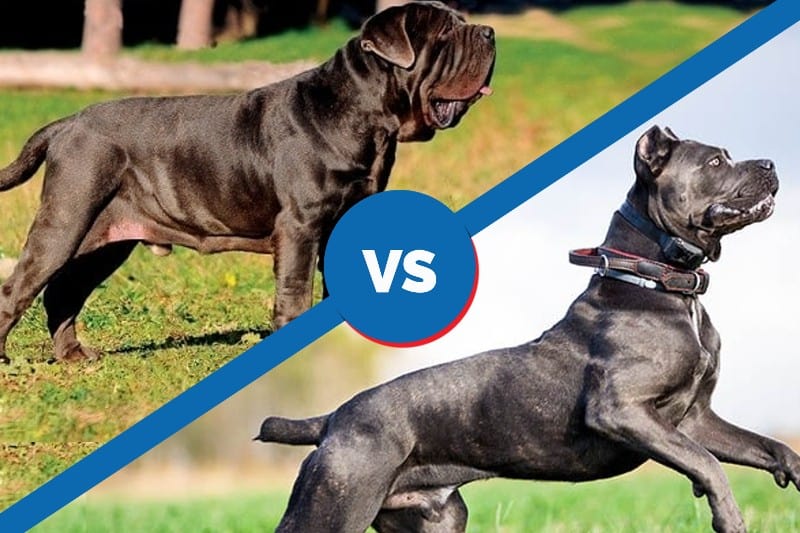
The Neapolitan Mastiff and Cane Corso are extremely large dogs originally bred in Italy. As you might guess from their size, they were both utilized for guarding and protection. They’re quite similar because of their similar backgrounds.
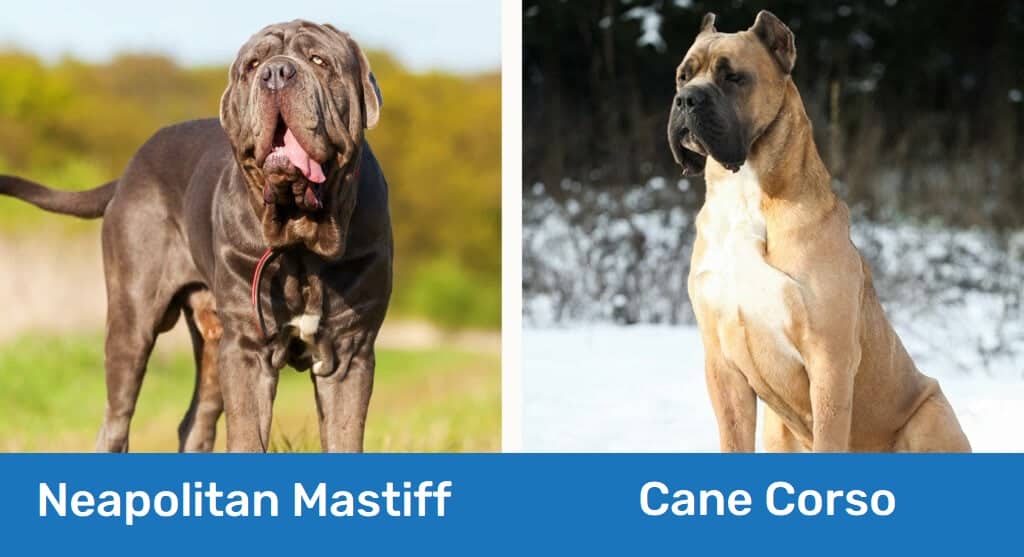
However, there are some distinctive differences between them. The Neapolitan Mastiff is much larger, for instance. There are also some slight temperament differences between them, which can play a huge role in which dog is best for you.
Below, we’ll look at both breeds to help you determine which one may work better in your life.
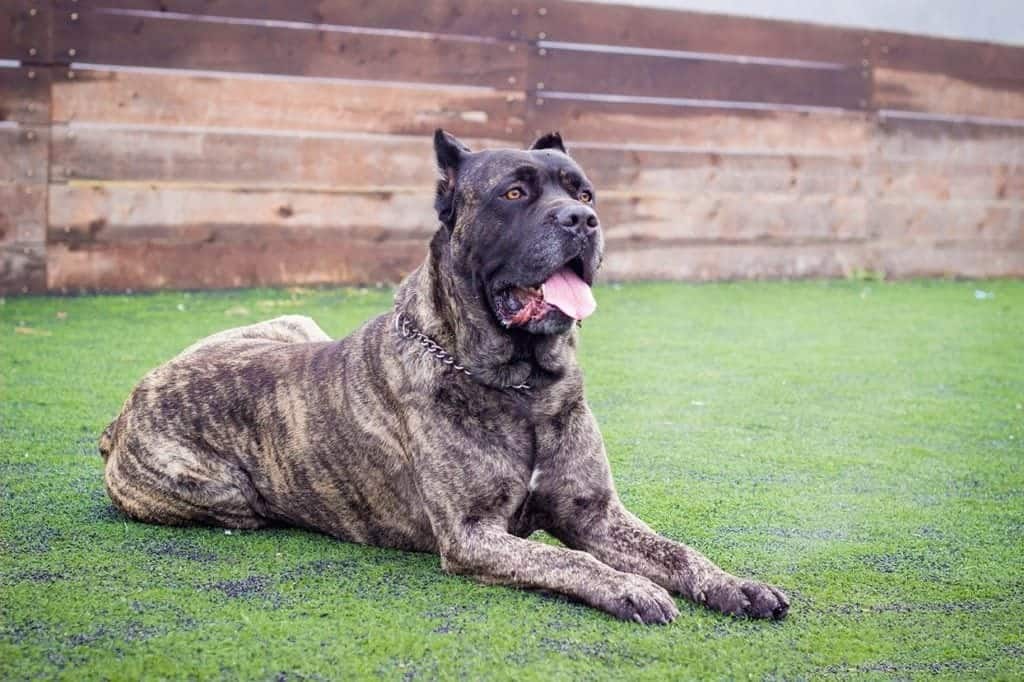
Visual Differences
At a Glance
Neapolitan Mastiff
- Average Height (adult): 26–31 inches (male), 24–29 inches (female)
- Average Weight (adult): 130–155 pounds (male) or 110–130 pounds (female)
- Lifespan: 8–10 years
- Exercise: Around 60 minutes
- Grooming Needs: Moderate, needs regular brushing
- Family-friendly: Yes
- Other pet-friendly: Yes
- Trainability: Independent and stubborn
Cane Corso
- Average Height (adult): 23–28 inches
- Average Weight (adult): 88–120 pounds
- Lifespan: 9–12 years
- Exercise: 60 minutes
- Grooming Needs: Moderate, needs regular brushing
- Family-friendly: Yes
- Other pet-friendly: Yes
- Trainability: Intelligent, independent
Neapolitan Mastiff Overview
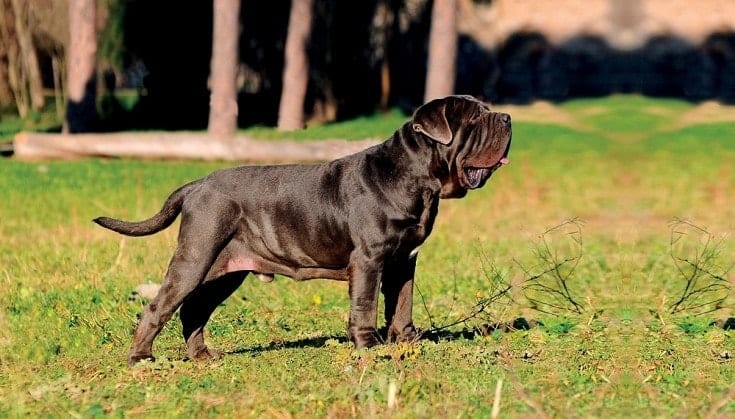
Neapolitan Mastiffs are extremely large dogs. They originated from Italy, where they were originally kept as guard dogs. Today, they still have many of their guarding instincts. However, they are mostly kept as companion animals.

Exercise
For the most part, these dogs are huge couch potatoes. They’ll spend much of their time lying around. However, they do still need a decent amount of exercise every day. We recommend that you plan to provide moderate exercise for around an hour a day, preferably broken into several different sessions.
As puppies, these dogs can be much more energetic. Therefore, you’ll often have to play with Neapolitan Mastiffs puppies more. However, you should never force-exercise these canines, as it can cause damage to their joints and bones. As big dogs, they’re much more likely to become injured. You should limit their jumping and running, especially when they are still puppies.
Grooming
These enormous dogs do not need much grooming. You’ll likely need to brush them weekly to remove excess fur and dirt. However, they won’t require much grooming beyond that. You can provide baths as needed (though they shouldn’t be needed very often). Their wrinkles may need wiping daily to prevent infections and similar problems.
Of course, they’ll also need their nails trimmed, and ears cleaned regularly. You should brush their teeth regularly to ensure their dental health is kept to a high standard. These dogs are prone to drooling. While this doesn’t necessarily add to their grooming needs, it is something to keep in mind.
Training
Neapolitan Mastiffs need a lot of training, as they’re larger dogs. However, they can also be quite stubborn and have strong protective instincts. Therefore, we highly recommend starting training as early as possible—even in the first 8 weeks of age.
As these dogs age, they can become harder to train and more stubborn. However, if you lay the foundation earlier, they’re still pretty easy to control. It’s just important to lay down this foundation as early as possible.
These dogs are naturally suspicious of strangers, so they need a lot of socialization. Otherwise, they may be fearful and aggressive toward any new person they meet. You’ll need to regularly take your puppy to public places to get them used to new people and places early.
Temperament
Neapolitan Mastiffs are large guard dogs. They love their family and are extremely devoted to them. They’re perfect for those interested in guard dogs, though they can also make great companion animals. They’re fearless and protective, though they aren’t as obedient as other breeds out there (which is why they aren’t commonly used in police or military work).
Instead, they tend to listen to their own instincts and follow them above any commands.
They can be quite affectionate and are often good with families. Their larger size means that they can knock children over with some ease. However, they’re often well aware of their body size and tend to be more careful than other large dogs.

Suitable For:
The Neapolitan Mastiff was originally bred as a guard dog, and it still makes a wonderful guard dog today. They require experienced, responsible owners, though, so we don’t recommend them for new dog owners. They require tons of socialization and training, so they also require more time upfront.
They can be a good option for those with children, but care should be taken to ensure the children behave correctly around them. They may not put up with much rough play.
Furthermore, they can drool and snore. You should be tolerant of these behaviors before adopting one.
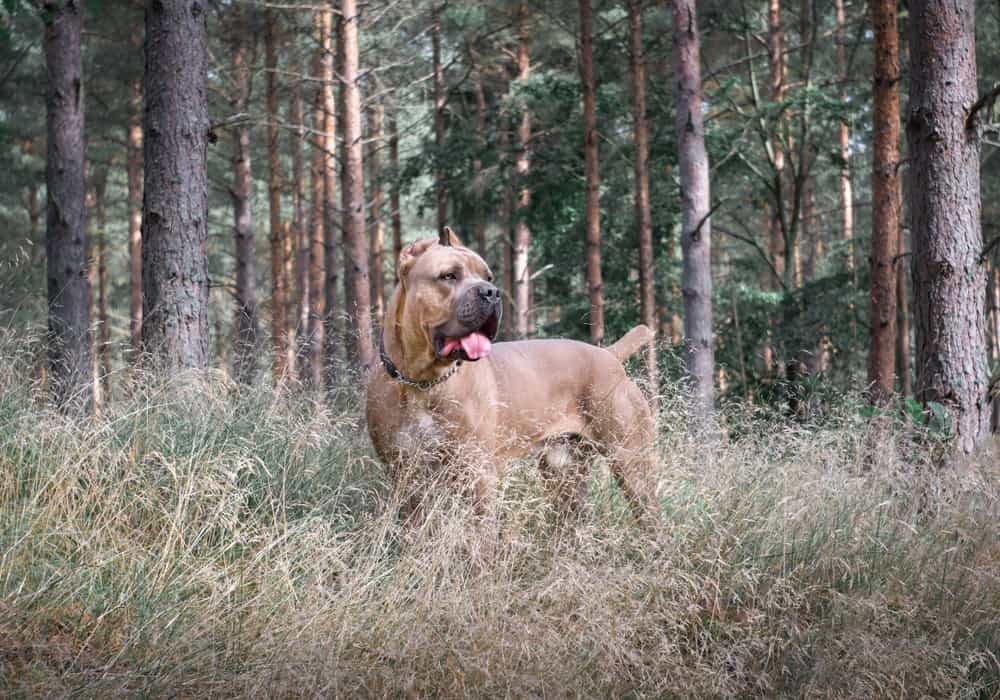
Cane Corso Overview
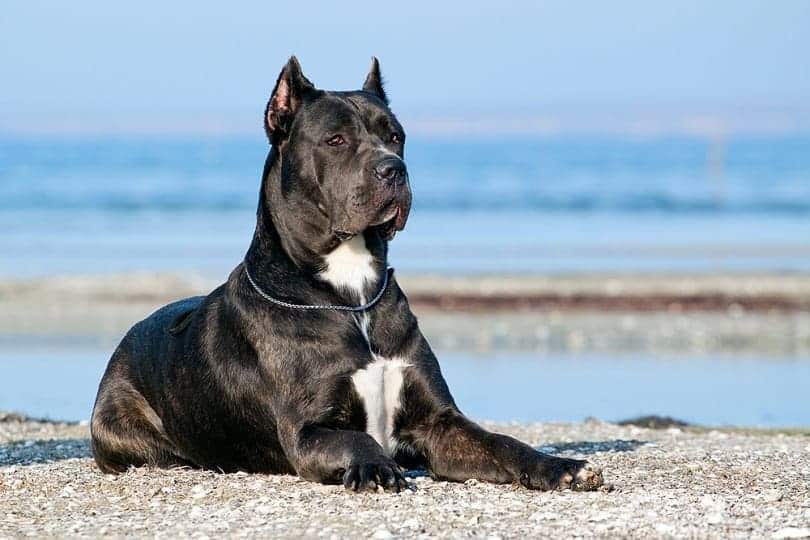
Cane Corsos may look and act similarly to a Neapolitan mastiff. However, they are quite different. Firstly, these dogs aren’t nearly as big, though they are still vigilant and make good guard dogs.
They make good companions today, though many people still keep them for protection.
Exercise
Cane Corsos are a working breed. Therefore, they need more exercise than the Neapolitan Mastiff. You should plan on spending around an hour exercising them each day and expect that exercise time to be quite intense. A brisk walk or jog is often best. Of course, they will enjoy long walks, too, especially if you let them sniff around a little. Most also like to play frisbee or fetch, which gives them some exercise.
These dogs can get bored pretty easily. Therefore, it’s important to keep them entertained and “working.” This breed can spend time herding and guarding livestock if you live on a farm.
Grooming
Due to their dense, short coat, these dogs don’t require much grooming. Their coat may differ depending on the climates in that they live. Their coat may be a bit thicker if you’re in a colder area.
Either way, you must keep them well-groomed by brushing them weekly. They tend to shed excessively in the spring and fall, when you may want to brush them even more often. You may also need to bathe them regularly, but they don’t need fancy haircuts. You’ll also need to trim their nails regularly and keep their ears and teeth clean.
Training
Training and socialization are vital for the Cane Corso. This breed is rather large, requiring lots of socialization to ensure they aren’t aggressive or fearful. You should start training your dog whenever they are young, as this helps lay a good foundation.
You should socialize your Cane Corso with various animals, including cats and livestock (if you plan on having them live on a farm). When socialized early, these dogs tend to take a protective role instead of seeing the animals as prey. However, early socialization is required.
These dogs have a natural tendency to be fairly aggressive. Therefore, you should work to get them used to many different people, including both in public and inside your home. They are prone to jumping, leaning, and leash-pulling. Because they’re so big, getting them to walk on a leash properly is recommended. They can easily knock someone over when fully grown.
Temperament
Despite their large, muscular appearance, these dogs are surprisingly affectionate and gentle. They bond deeply with their family members and can be quite affectionate. However, they are very large dogs. Therefore, care should be taken to ensure they learn how to behave around children (and the children should also be taught how to behave around dogs).
With proper care, these canines can be devoted protectors.
Suitable For:
Cane Corsos are substantially large dogs (though they’re not as large as the Neapolitan Mastiff). These canines are often more suitable for farms and homes with many pets, as they were originally bred as livestock guardians. They do best with an experienced owner who can provide the needed training and socialization.
We don’t recommend them for first-time owners, as their training needs are more substantial than other breeds.
Is the Neapolitan Mastiff or Cane Corso a Better Guard Dog?
Both breeds were bred explicitly for guarding purposes in their early history. They’re both incredibly large, powerful dogs with natural guarding instincts. Which one is better depends largely on what you’re looking for.
The Cane Corso is smaller, while the Neapolitan Mastiff is much bigger. Therefore, the Cane Corso can be easier to handle and more trainable. However, the Neapolitan Mastiff is absolutely the more intimidating option.
However, to truly take advantage of the Neapolitan Mastiff’s huge size, you may need to put more work into training. This may not be a huge deal if you’re a previous dog owner. However, this breed isn’t necessarily the best choice for new dog owners. Plus, their larger size often comes with a bigger price tag. They consume more food and require larger toys, beds, and crates.
Which Breed Is Right for You?
Both breeds are large and protective, making them great guard dogs. However, both can also be suitable as companion animals, depending on your particular situation.
The Cane Corso tends to be more active and athletic, requiring more exercise and stimulation. They’re also easier to train, making them a better choice for first-time owners (though they aren’t the best breed for first-time owners out of all dog breeds).
While the Neapolitan Mastiff is very laidback and less active, their larger size can make them more difficult to handle. They tend to be rather stubborn, so they’re best for those with some dog training experience.
Featured Image Credit: (L) Ricantimages, Shutterstock | (R) OlesyaNickolaeva, Shutterstock
