

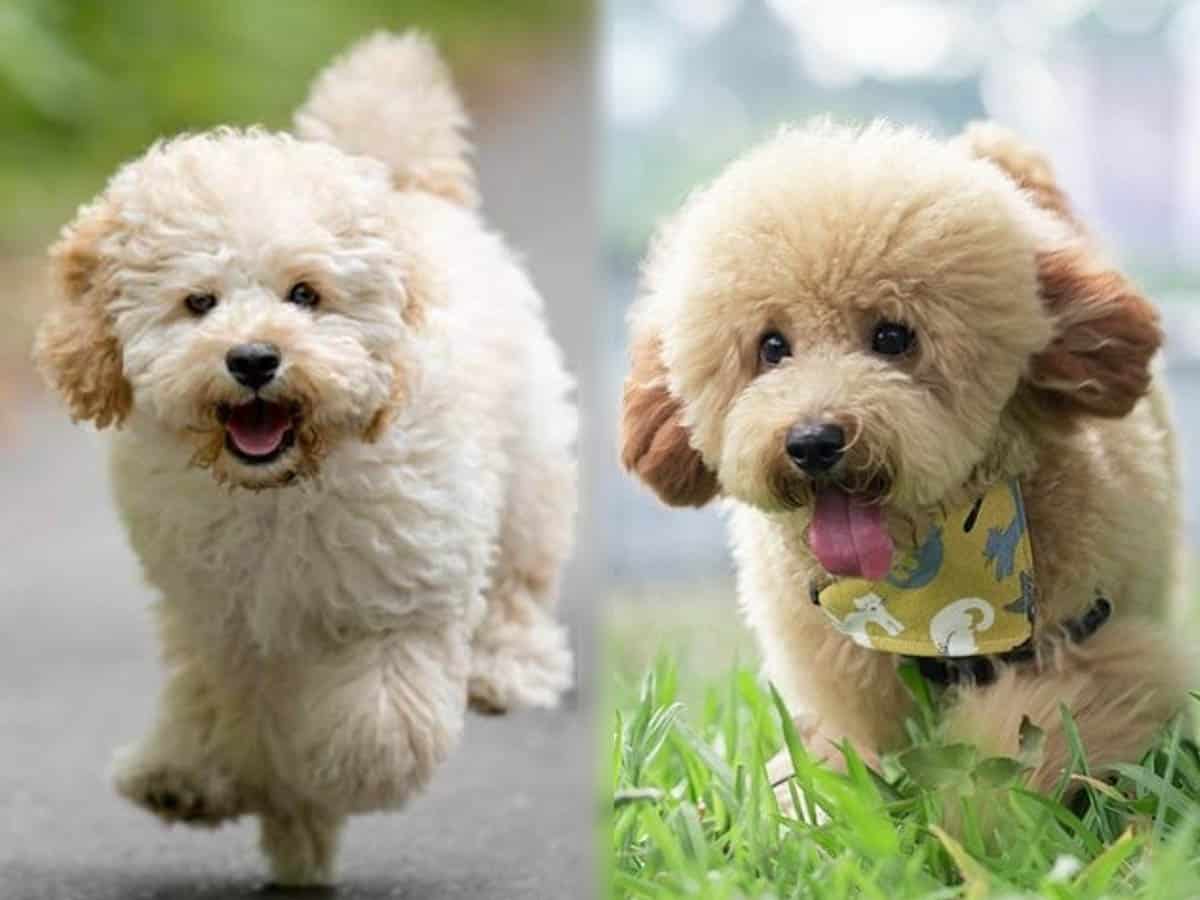
The Maltipoo is a beautiful small-sized dog that’s a cross between a Maltese and a miniature Poodle. They come in a variety of colors, and they shed very little. This makes them an ideal choice for allergy sufferers or people who prefer smaller dogs that don’t take up much room.
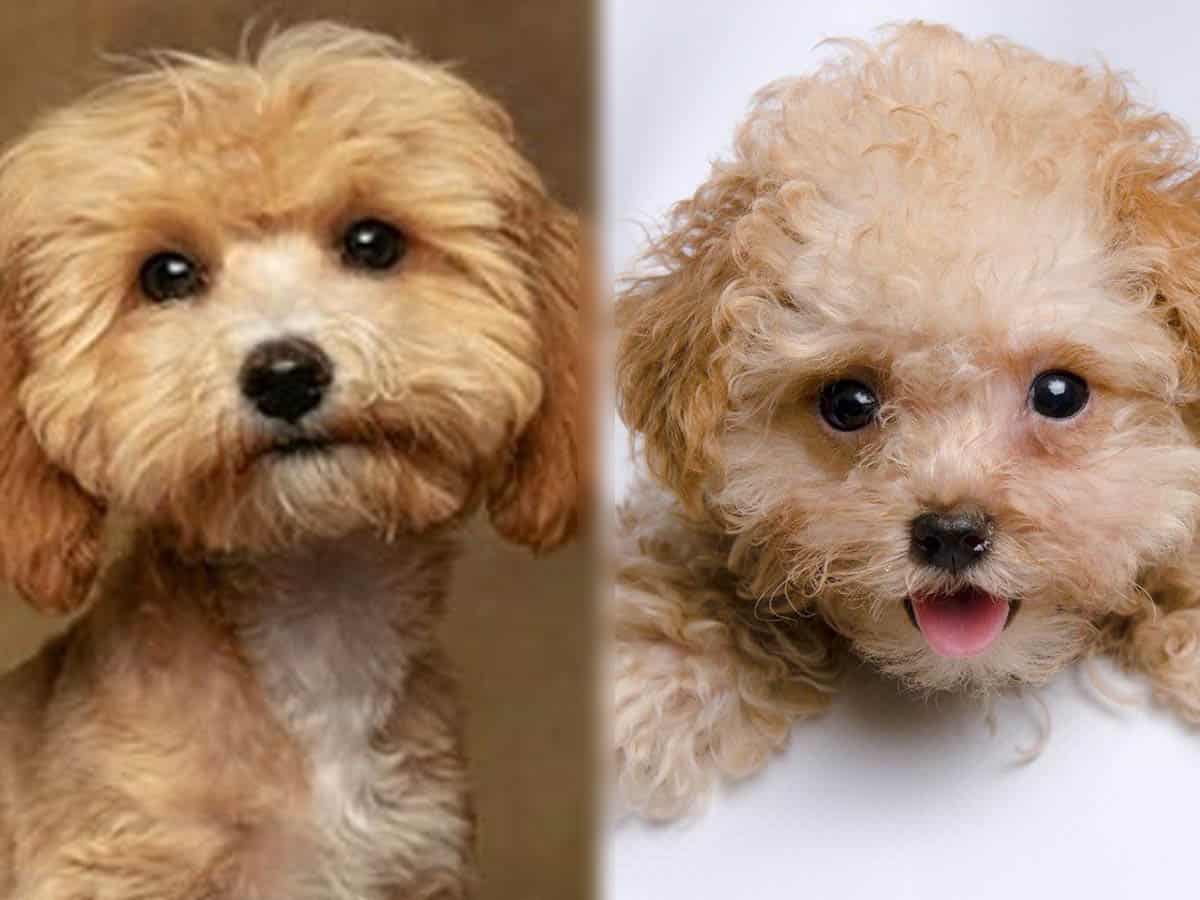
Toy Poodles, often referred to as “mini Poodles” are just about the same size as Maltipoos. These tiny dogs have the same short, tousled coat and are almost the same in appearance. And though these two breeds are related genetically, they do have strong differences in appearance and personality.
Visual Differences
At a Glance
Maltipoo
- Average height (adult): 10 inches
- Average weight (adult): 5-8 lbs.
- Lifespan: 10-15 years
- Exercise: 10 to 15 minutes a day
- Grooming needs: High
- Family-friendly: Mostly but may have challenges with young children
- Other pet-friendly: Yes
- Trainability: Easy
Toy Poodle
- Average height (adult): 9-11 inches
- Average weight (adult): 4-6 lbs.
- Lifespan: 12-15 years
- Exercise: 1 hour daily (2–30-minute sessions)
- Grooming needs: High
- Family-friendly: Yes
- Other pet-friendly: Yes
- Trainability: Very Easy
Maltipoo Pet Breed Overview

Personality
Because of their affectionate nature and loving personality, Maltipoo dogs make excellent therapy, service, and family dogs. They love to be active and take pleasure in being around people. They enjoy going on walks and playing with other dogs. These tiny dogs are loved by people who enjoy being around them and are considered one of the most loving dog breeds.
Maltipoos also make a great choice for pet owners who are just starting out. They are affectionate, friendly dogs who love to please their owners. They are able to adapt to any living situation, no matter how small or large it may be. People who are often away from their homes are not advised to have these dogs, as Maltipoos are susceptible to separation anxiety and need to receive attention to be happy day to day.
Training
Thanks to their genetic lineage, Maltipoos are highly intelligent–which makes training them a lot easier than other dog breeds. However, it can be challenging with young pups when it comes to obedience and potty training. The best way to train these dogs is to start early. Training can be started when your Maltipoo puppy is 8-12 weeks old. It usually takes between 2 and 3 months to train a Maltipoo puppy completely in the house.
Be sure to take them outside often and reward them for their achievements. As puppies, these dogs can only hold their urine for about 3-4 hours. As they get older, they’ll be able to keep the water on their own for 8 hours. It’s important to be consistent when potty training these pups and teaching them new obedience commands.
Grooming & Maintenance
The Maltipoo’s low-shedding and low-dander coat has a fluffy, soft, and wool-like texture. The coat is medium-long in length and can vary from curly to wavy. To keep its topcoat clean and free from mats, the Maltipoo requires daily brushing. To keep Maltipoos cool and tidy, many need to be trimmed 3-4 times a year. However, its head will need to be trimmed every month. It’s important to bathe your Maltipoo at least once per month to keep its hair soft and clean.
Health
A Maltipoo can be a lively, energetic dog, but it can still get sick like any other breed. As a crossbreed, they’re vulnerable to health problems that can affect the Maltese as well as the Poodle.
These problems include:
- Legg-Calve-Perthes Disease
- Patellar Luxation
- Portosystemic Shutter.
They are also prone to:
- Epilepsy
- Progressive Retinal Atrophy
- White Shaker Syndrome
This hybrid breed can develop mild skin problems, particularly if the puppy has a light coat. These designer dogs can also get food allergies. So, it’s important to make regular, consistent visits with your veterinarian in order to quickly diagnose any potential problems and treat them promptly.
Suitable for: small and large homes with singles or children
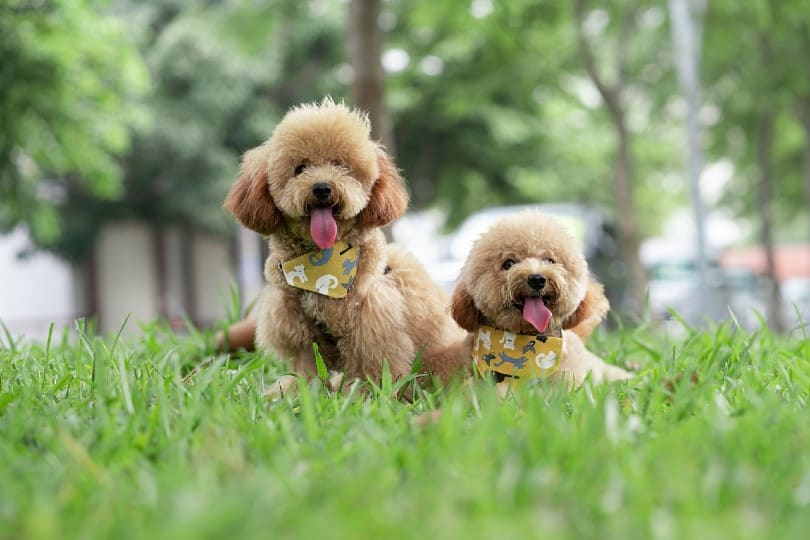
Toy Poodle Pet Breed
Personality
The Toy Poodle is intelligent, loving, and loyal. They love to learn, and you can easily find dozens of videos on the internet of tiny Poodles doing amazing tricks. They’re agile and love humans. These smart dogs are even known to sulk when they feel they have been excluded from family activity. This can lead to some whimpering, barking, and anxiety-riddled behavior such as shoe-chewing and restlessness.
These dogs can be noisy and need to be taught from a young age to use their bark for specific occasions rather than for any and everything. The Toy Poodle is known for being more playful and affectionate than larger Poodles. They are also much more comfortable with small animals like cats and rabbits when socialized early.
Training
Training Toy Poodles is also easier than it may be with other breeds–especially if you have a young pup. They are playful and energetic, and it is also very easy to socialize them. They love to be around people and hate being kept in a kennel.
Your Poodle should be exposed to other animals and people so that he can learn how to deal with different situations. Socialization of poodles should not be taken lightly and should start at an early age. Toy Poodles enjoy swimming and love cold water, which are great places to train them.
Due to their hunting heritage, they naturally possess a retrieving instinct. Toy Poodles are naturally good-natured and with a bit of repetition, they can easily be trained for day-to-day obedience and potty usage.
Grooming & Maintenance
Toy Poodles are hypoallergenic dogs that don’t shed as much as other breeds. Poodles are unique in that they have one coat and no undercoat, unlike other dogs. Poodles shed once a week, unlike other dogs who shed their hair every three to four days. They are also odorless (when compared to other dogs) so you may be less likely to have the lingering “dog smell” in your home if you have one of these pups.
But they do have a feathery topcoat that’ll need to be clipped every 2-3 months. You’ll also need to clean their floppy ears to remove any hairs or moisture buildup that could cause infection. Your Poodle will also need to be groomed daily to keep its coat from getting matted. Make sure you brush your hair from the roots to the ends to prevent hanging knots.
Health
Smaller breeds like Toy Poodles tend to live longer than larger breeds and can live up to 15 years. However, there are some conditions that both breeds are more vulnerable to than others. Due to their small size, Toy Poodles are susceptible to neurological conditions, cancer, and injuries from accidental trauma are more common in the Toy Poodle. It’s best to take these small dogs to the vet at least once every 4-6 months to ensure that they’re in good health. This becomes even more important as they age.
Suitable for: Families with children, or single households.
Your children can share the responsibility for caring for your dog. To ensure that things run smoothly, supervise young children around dogs.
Which Breed Is Right for You?
Maltipoos are great dogs for people who love high-energy dogs that don’t need a ton of daily activity. They’re great for apartment living, as they don’t bark as much as Toy Poodles or require as much exercise. These dogs are loyal and make fun-loving pets for owners who have time to devote to them.
Toy Poodles are great for single and family homes. They do require a couple of hours of exercise each day so they’re best for people who have room or can take them out of the home. They can be barkers, so it’s important to train them early to help temper this – especially if you live in an apartment building.
See Also:
Image Courtesy: Left – Maltipoo – Shutterstock; Right – Toy Poodle – Pixabay
