
Close Menu
GenzyPets

    Subscribe to Updates

    Get the latest creative news from FooBar about art, design and business.

    What's Hot

    Abigail’s House Of Buns – Chapter 102 – You Never Know

    Gizmo’s Guide to Winter Enrichment | Small Pet Select Blogs

    January 31st 2026: Top Cuties of the Week

    Facebook X (Twitter) Instagram
    Trending
    • Abigail’s House Of Buns – Chapter 102 – You Never Know
    • Gizmo’s Guide to Winter Enrichment | Small Pet Select Blogs
    • January 31st 2026: Top Cuties of the Week
    • Enzo is very sick. So today Belinda fills her blog with nice photos of him.
    • Why Your Rabbit Might Eat Less in Winter
    • Abigail’s House Of Buns – Chapter 103 – Goodbye to Love
    • Misting vs Fogging for Reptiles: Which Is Best?
    • Good Food For A Hamster Diet — Animal Hearted Apparel
    Facebook X (Twitter) Instagram
    GenzyPets
    Thursday, July 30
    • Home
    • Birds
      • Budgies
      • Canary Care
      • Cockatiels
      • Lovebirds
    • Chinchillas
      • Chinchilla Care
      • Chinchilla Food
      • Chinchilla Health
      • Chinchilla Cages
    • Ferrets
      • Ferret Behavior
      • Ferret Care
      • Ferret Food
      • Ferret Health
    • Fish & Aquatic Pets
      • Aquarium Care
      • Betta Fish
      • Goldfish
      • Shrimp Tanks
    • Guinea Pigs
      • Guinea Pig Breeds
      • Guinea Pig Care
      • Guinea Pig Diet
      • Guinea Pig Health
    • Hamsters
      • Dwarf Hamsters
      • Hamster Care
      • Hamster Food
      • Syrian Hamsters
    • Hedgehogs
      • Hedgehog Care
      • Hedgehog Diet
      • Hedgehog Habitat
      • Hedgehog Health
    • Mice & Rats
      • Mouse Care
      • Pet Mice
      • Pet Rats
      • Rat Care
    • Rabbits
      • Rabbit Breeds
      • Rabbit Care
      • Rabbit Nutrition
      • Rabbit Training
    • Reptiles
      • Bearded Dragons
      • Leopard Geckos
      • Small Snakes
      • Turtles
    GenzyPets
    You are at:Home»Guinea Pigs»Guinea Pig Care»How To Predator-Proof Your Chicken Coop 
    Guinea Pig Care

    How To Predator-Proof Your Chicken Coop 

    PawvistaBy PawvistaJuly 27, 2026005 Mins Read
    Share Facebook Twitter Pinterest LinkedIn Tumblr Email
    How To Predator-Proof Your Chicken Coop 
    Share
    Facebook Twitter LinkedIn Pinterest Email
    How To Predator-Proof Your Chicken Coop 

    Nothing quite ruins your day like heading out in the morning only to find that you didn’t properly predator-proof your chicken coop before a predator got in. Unguarded coops are constant targets for local wildlife, such as foxes.

    These creatures are persistent and shrewd. You have to anticipate how far they would go and remove any weak points they might exploit. Wooden sheds or loose wires can’t do much for your birds’ safety. 

    Regional Backyard Threats

    Where you live matters. The kinds of visitors you get around a chicken coop aren’t the same everywhere, so there’s no single behavioral checklist to consider when predator-proofing your chicken coop.

    Solid predator proof chicken coop featuring reinforced wire mesh construction, solid wooden frame, and secure locking mechanisms to protect chickens from regional backyard threats.

    Foxes

    Foxes don’t care whether they’re near farmland or the edge of suburbia. They move quietly, usually around dusk, slipping under weak spots in your run once no one’s watching closely anymore.

    Raccoons

    In North America, raccoons are a common problem around coops. They’ve got surprisingly capable paws and a habit of testing whether things like latches and handles aren’t properly secured. If there are eggs in the Nesting Pads, they’ll easily find those too.

    Weasels and minks

    These ones are almost everywhere around NA, Asia, and Europe. Adept at squeezing their slender bodies in, they are capable of decimating a flock, no matter how small a gap your door leaves.

    Opossums

    An open door or an overhanging tree branch nearby is usually enough to bring them straight to the coop.

    Birds of prey 

    Hawks and owls are definitions of trusting the process. They watch what’s happening below and act quickly once the chickens are out in the open.

    Hardware Cloth vs. Chicken Wire: Choosing the Right Defensive Shield

    When it comes to predator-proofing a chicken coop, chicken wire won’t hold for long. It’s fine for keeping your flock in the same area, but not much else; a raccoon’s hand or a fox’s teeth won’t struggle with it for long. 

    Hardware cloth is the stronger option, especially when you’re dealing with external predators. The tighter mesh and welded steel make it much harder to bite through or tear. Mesh sizing matters here. Anything too wide can give smaller creatures a way through.

    Predator-proof chicken coop protected with hardware cloth fencing, showing chickens safely enclosed in a secure outdoor run.

    One thing people overlook is how it’s attached. If it’s only stapled loosely, it can still be pulled away over time. 

    Predator-Proofing Your  Chicken Coop Below The Ground

    Some predators are likely to go under a coop as they do over it, especially if the soil is loose or unprotected.

    You can dig down and reinforce the base with hardware cloth, bury it in the soil, and pack it firmly with gravel or earth. It creates a barrier that makes digging far more difficult.

    If rocky ground or roots get in the way, a horizontal apron works better. You just need to lay hardware cloth flat along the ground and extend it outward from the coop. 

    Another way to predator-proof your chicken coop from the ground level is to lay a horizontal mesh flat against the soil and secure it with heavy landscaping staples. Conceal it with dirt or mulch. Pine Shavings or Chicken Hemp Hurd makes it easier to spot early signs of digging.

    Latches, Locks, and Nighttime Routines 

    Furry burglars are quick to exploit your mistakes. A loose door, a weak latch, or an unlatched vent can cause far more damage than people expect.

    • Standard hook-and-eye latches or basic sliding bolts won’t delay predators for long. Padlocks or spring-loaded carabiners add an extra step that most furry burglars might struggle to figure out.
    • Automatic doors are a great backup, but they only work if they shut completely.
    • Lock up before dusk settles in. While you’re at it, shake the latches and look for loose screws or rusty spots before walking away.

    Predator-Proofing A Chicken Coop On The Roof

    Fences and ground barriers usually get all the focus, but you can’t afford a blind spot up top when you plan to predator-proof your chicken coop.

    Use the right roofing materials 

    Smaller runs often use a full cover made from hardware cloth or a corrugated roof. That doesn’t just keep climbing visitors out; it also gives the flock shelter from rain and harsh weather. If you’re working with a larger run, consider using an aviary netting.

    Remove their jumping platforms 

    Overhanging branches are just an easy way for bobcats, opossums, and raccoons to jump over your fence. Trimming those back removes their natural launchpads.

    Seal the roofline gaps 

    Make sure there’s no gap where your walls meet the roof structure.
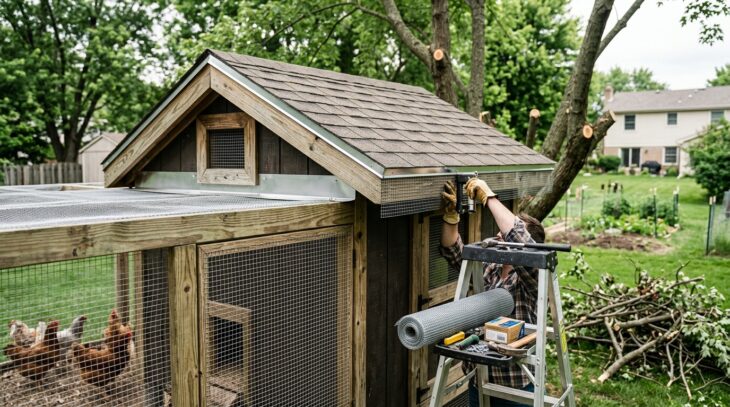
    Predator-proof chicken coop roof with sealed gaps, durable roofing materials, and removed climbing access points to protect chickens from predators.

    Conclusion: Secure Locks, Happy Chickens

    Nobody enjoys spending a Saturday burying hardware cloth or double-checking latches just to predator-proof a chicken coop. It beats waking up to a disorderly run. Predators don’t just give up because a door looks shut; they will test your run for weaknesses.

    Securing everything from the roof down to the dirt removes those easy targets. 

    Chicken Coop PredatorProof
    Share. Facebook Twitter Pinterest LinkedIn Tumblr Email
    Previous ArticleWhy Ferrets Steal/Stash Things & What Can You Do About It?
    Next Article The rabbits smell something odd. It smells like something’s on fire.
    Pawvista
    • Website
    • Facebook
    • X (Twitter)
    • Pinterest
    • Instagram
    • LinkedIn

    Related Posts

    Abigail’s House Of Buns – Chapter 102 – You Never Know

    July 30, 2026

    January 31st 2026: Top Cuties of the Week

    July 30, 2026

    Why Your Rabbit Might Eat Less in Winter

    July 30, 2026
    Add A Comment
    Leave A Reply Cancel Reply

    Top Posts

    The Pros and Cons to Owning an Alaskan Malamute – Fantastic Furries

    July 27, 20266 Views

    Read This BEFORE You Get a New Ferret – The Modern Ferret

    July 27, 20265 Views

    Rabbit Teeth Grinding: What Is It & Why Do They Do It

    July 27, 20263 Views
    Stay In Touch
    • Facebook
    • YouTube
    • TikTok
    • WhatsApp
    • Twitter
    • Instagram
    Latest Reviews

    Subscribe to Updates

    Get the latest tech news from FooBar about tech, design and biz.

    About us

    Welcome to GenzyPets.com, your trusted source for everything related to micro pets and small companion animals.

    At GenzyPets, we believe that every pet deserves the best care, whether it's a hamster, guinea pig, rabbit, hedgehog, chinchilla, ferret, bird, reptile, fish, or any other small pet. Our mission is to provide pet owners with reliable, easy-to-understand, and practical information to help them give their pets healthy and happy lives.

    Most Popular

    The Pros and Cons to Owning an Alaskan Malamute – Fantastic Furries

    July 27, 20266 Views

    Read This BEFORE You Get a New Ferret – The Modern Ferret

    July 27, 20265 Views

    Rabbit Teeth Grinding: What Is It & Why Do They Do It

    July 27, 20263 Views

    Subscribe to Updates

    Get the latest creative news from FooBar about art, design and business.

    © 2026 GenzyPets.com. All Rights Reserved.
    • Terms & Conditions
    • Privacy Policy
    • Contact Us
    • About Us

    Type above and press Enter to search. Press Esc to cancel.