


If you want to learn more about Spaniels, understanding the difference between the Cavalier and King Charles Spaniel is a good place to start.
The Cavalier King Charles Spaniel and King Charles Spaniel are undoubtedly similar, but their differences make them two separate breeds. Anyone passionate about the two breeds will quickly correct you if you say they’re the same breed. Let’s take a look at what makes them different.
Visual Differences

At a Glance
Cavalier King Charles Spaniel
- Average height (adult): 12 to 13 inches
- Average weight (adult): 13 to 18 pounds
- Lifespan: 12 to 15 years
- Exercise: 1+ hours
- Grooming needs: Low to Moderate
- Family-friendly: Yes
- Other pet-friendly: Yes
- Trainability: Easy
King Charles Spaniel
- Average height (adult): 9 to 10 inches
- Average weight (adult): 8 to 14 pounds
- Lifespan: 10 to 12 years
- Exercise: 1+ hours
- Grooming needs: Moderate
- Family-friendly: Yes
- Other pet-friendly: Yes
- Trainability: Moderate
King Charles Spaniel Overview
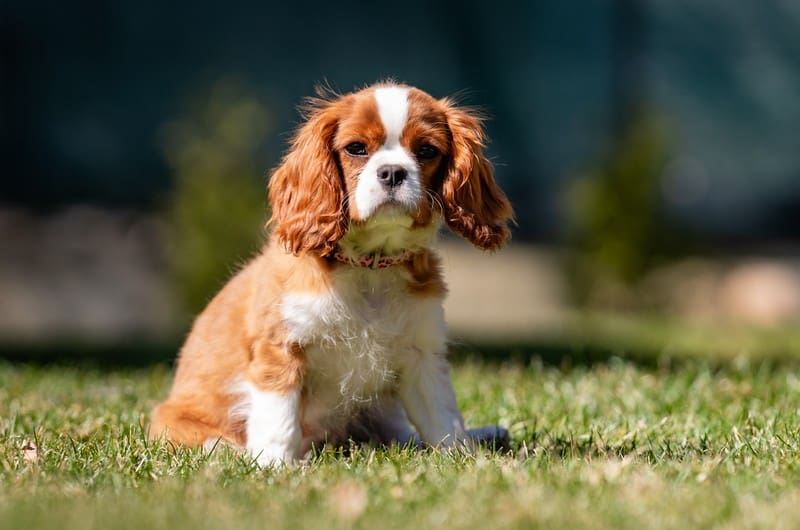
Let’s begin with the King Charles Spaniel.
Also known as the English Toy Spaniel, the King Charles Spaniel is small compared to the Cavaliers. It has a square, snub nose, and a dome-shaped head. The ears are long and luscious, and the eyes are dark and innocent.
King Charles Spaniels are known for their joyful, merry personality, fitting for being dogs of the “Merry Monarchs.”
A Life of Luxury
King Charles Spaniels are named after Charles I and Charles II of the 1600s. The two rulers loved their Spaniels so much, King Charles II decreed that toy spaniels be the only dog allowed in the House of Parliament.
At the time of Charles I and II, King Charles Spaniels looked more like Cavalier King Charles Spaniels, with flatter heads and longer noses. During the Victorian Era, King Charles Spaniels were crossed with Asian flat-nosed breeds. The result is the King Charles Spaniel we know today.
King Charles Spaniel Care
Exercise
King Charles Spaniels are a nice mix between exercise nuts and couch potatoes. Outdoors, they love running and chasing. Inside, King Charles Spaniels will happily relax next to their owners.
Walking and playing fetch are great options for exercising your King Charles Spaniel. During the blistering months of summer, exercise your pup in the morning or late evening. Their smushed faces cause breathing difficulties, making it hard to cool themselves.
Training
King Charles Spaniels are typically meant as lap dogs. They don’t undergo laborious training for hunting, but some people have used the breed for sport and have had great success.
King Charles Spaniels can be bull-headed during training, so patience and positive reinforcement are important. Harsh methods never work with this breed since they have sensitive spirits.
Grooming
King Charles Spaniels have long, wavy, silky coats that require brushing at least twice weekly. Without weekly brushing, the fur becomes matted, and your King Charles Spaniel can develop skin issues. A long-toothed comb specifically for removing mats is necessary with this breed.
Bathing should be done every four to six weeks, along with trimming the face and feet. Nails should be trimmed often, and teeth brushed once per week.
Keep an eye on those floppy ears, too—you never know what’s brewing inside! If you notice they’re a bit dirty, time to give them a cleaning!
Suitable for:
King Charles Spaniels are best suited for low-active homes. These aren’t dogs you’ll take on a run or hike. They love a good backyard play session and are happy to lounge afterward.
King Charles Spaniels love almost anyone, but they’re wary of strangers. Thankfully, they’re adaptable and affectionate. Over time, they’ll be your best friend. They also do very well with children and other dogs.
Cavalier King Charles Spaniel Overview
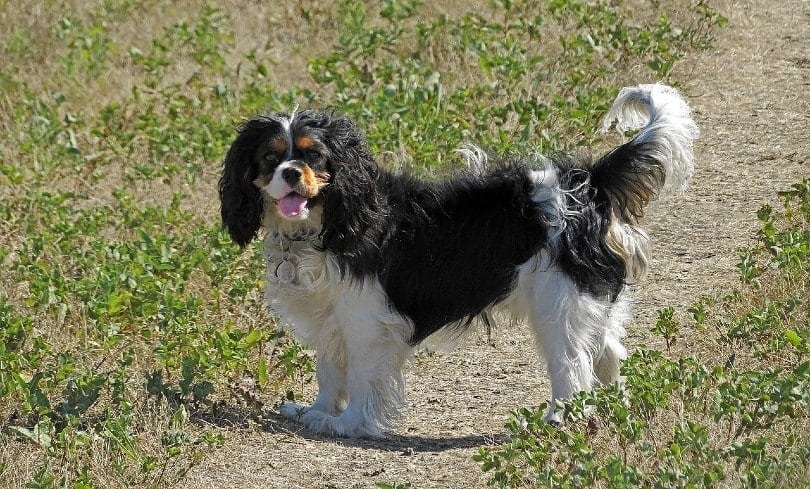
Cavalier King Charles Spaniels have flat heads and longer noses. They’re known as the “old-style breed” because they look like the spaniels that King Charles I and II owned. But at one point, the world almost said goodbye to the Cavalier King Charles Spaniel forever.
On the Brink of Extinction
Cavalier King Charles Spaniels share the same history with King Charles Spaniels. In fact, there was no distinction between the two breeds.
When Queen Victoria came to the throne, people started breeding King Charles Spaniels with flat-nosed breeds. The result was a different kind of King Charles Spaniel compared to King Charles I and II’s time. People loved the flat-nosed look so much the traditional flat-head, long-nose style became nearly extinct.
Thankfully, the old-style breed was revived in the 1920s. The UK lobbied that the two breeds remain distinct, so the old-style breed was given the name Cavalier King Charles Spaniel in honor of King Charles the Cavalier.
Cavalier King Charles Spaniel Care
Exercise
Unlike the King Charles Spaniel, the Cavalier prefers more rigorous exercise like long walks, runs, and canine sports. After a long day of exercising, the Cavalier is happy to veg at home with its owner.
Cavalier King Charles Spaniels retain hunting and scenting instincts, so these could be put to work in hunting sports. But be careful! A chance off-leash may send your Cavalier on unpredictable adventures.
Training
Cavaliers are easy to train. They love pleasing their owners and excel in basic puppy training. You can go a step further and train them in hunting sports as well.
Early socialization is always necessary for dogs, but Cavaliers tend to do well with children and other dogs because of their sweet nature.
Grooming
Cavaliers have long, silky coats that require brushing once or twice weekly. Their long floppy ears should be checked for infection since moisture and debris like to hide. Nails should be trimmed often, and teeth brushed once per week.
Suitable for:
Cavalier King Charles Spaniels are excellent for active families, especially families who enjoy hunting. Their sweet, gentle nature makes them excellent companions for children and play buddies for other dogs. Cavaliers are easier to train, more accepting of strangers, and require less grooming than competitors.
Which Breed Is Right for You?
The King Charles Spaniel and Cavalier King Charles Spaniel make excellent family pets. Both breeds are devoted, affectionate, and gentle. So, which one is right for you?
The King Charles Spaniel requires some extra grooming and has more health issues. They’re also more stubborn when it comes to training. They’re not the best for active families. However, owners looking for a dog to hang out with mostly indoors may find this breed ideal.
On the other hand, Cavaliers are more active and trainable. They don’t have flat noses, so health problems are fewer. Families who want to spend time indoors and outdoors will love the Cavalier.
Featured Image Credit: Left – Cavalier King Charles Spaniel – Shutterstock; Right – King Charles Spaniel – Shutterstock
