

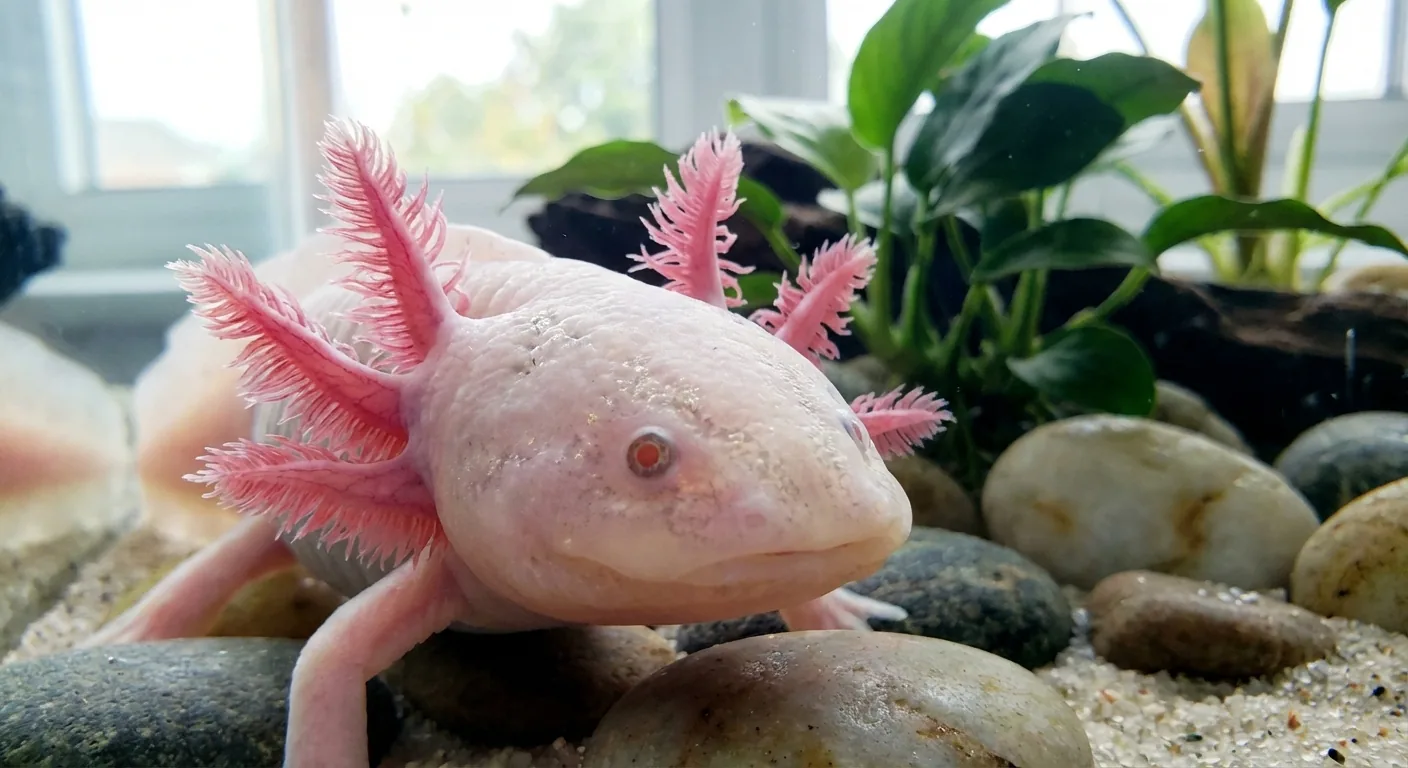
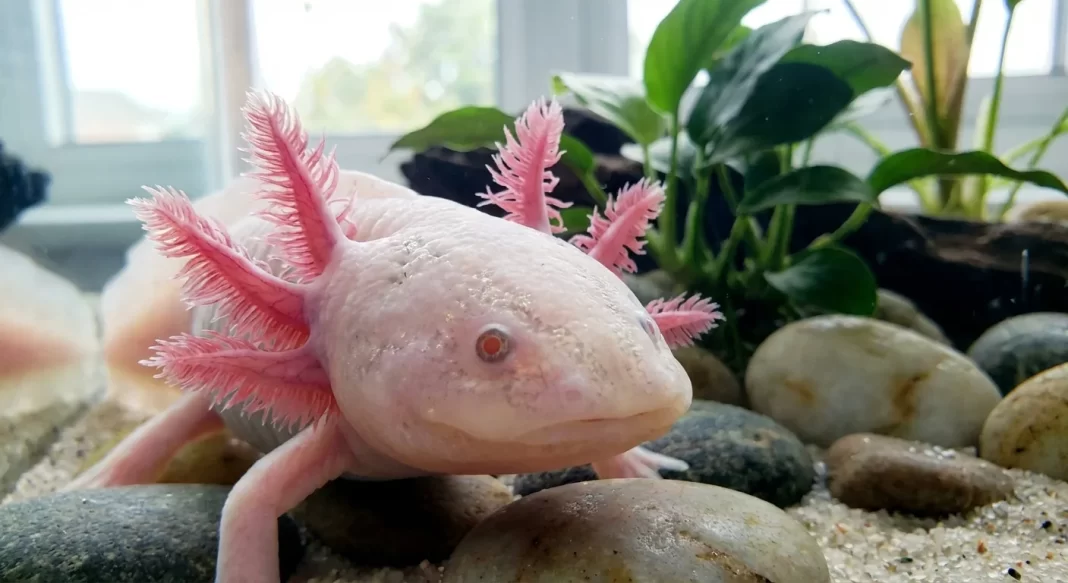
Axolotls are legal to own in most of the United States. A few states restrict or ban them, and federal import rules tightened in 2025. The reason is usually invasive-species and disease risk, not the wild animal’s endangered status. Pet axolotls are captive-bred. Always confirm your own local law before you buy.
Where are axolotls illegal to own in the United States?
A few US states are commonly reported as banning axolotls for private pet owners. California, Maine, New Jersey, and Washington DC appear most often on those lists. Wildlife rules change and vary by source. So treat any list as a starting point, and confirm your status with your state wildlife agency before you buy.
Most of the country allows axolotls without a permit. The restricted set is the exception. The states below are the ones named most often as off-limits to private keepers (source: state-by-state status per World Population Review). Each one restricts the genus Ambystoma to protect native salamanders. The pet trade is not illegal everywhere. Skipping this check is one of the quietest but costliest axolotl beginner mistakes, because an animal bought into a banned state can be seized.
| Jurisdiction | Commonly reported status | Reason usually cited |
|---|---|---|
| California | Banned for private pet ownership | Protects native California tiger salamander; genus listed as restricted |
| Maine | Banned for private pet ownership | Restricted wildlife; protects native salamanders |
| New Jersey | Banned for private pet ownership | Prevents crossbreeding with native tiger salamanders |
| Washington DC | Banned under exotic-animal rules | Exotic-animal restriction |
California is the one keepers ask about most. It is widely reported that a private person who just wants a pet axolotl cannot get a permit there. The state lists the genus as a restricted animal. It saves permits for zoos and research facilities (per World Population Review). Penalties can be steep, with fines and possible jail time. That is why the safe move is to never bring one into a state on the restricted list. The same logic drives the Maine and New Jersey bans. Both aim to protect native salamanders from a related captive species. Washington DC is different. It restricts axolotls under broad exotic-animal rules, not a salamander concern. Not every ban shares the same reason. None of this is legal advice. The only sure answer for your address comes from your state wildlife agency, whose prohibited-species list is the document that governs.
Which states require a permit instead of an outright ban?
A second group of states allows axolotls but only with a permit, rather than banning them entirely. New Mexico and Hawaii are the two most consistently named. In these states ownership is possible on paper, but the permit process, import documentation, and inspections can be demanding enough that many casual keepers treat them as effectively off-limits.
The permit route exists for a reason. These states want to screen animals for disease and control import. They do not block ownership outright. New Mexico is commonly reported to require an import permit. It can also ask for veterinary health certificates and facility paperwork. Hawaii is an island ecosystem, very sensitive to introduced species. It is reported to require a Department of Agriculture import permit, with serious penalties for unpermitted import (per World Population Review). So a permit state is not a simple yes. Confirm exactly what your state requires before you commit to the animal and the setup costs in the axolotl cost of ownership guide. An unobtainable permit is the same as a ban for most pet keepers. The full commitment behind owning one, legal hurdles included, sits in the axolotls as pets overview.
Which states have changed their axolotl laws recently?
Axolotl law is not static, and at least two states have shifted recently. Arkansas added axolotls to its prohibited captive-wildlife list in 2024 and ran a registration window for existing owners that has since closed. Virginia moved the other way, lifting an earlier restriction so that axolotls became legal to keep there.
These two cases show why a list alone is never enough. Arkansas added the species in 2024 and let current owners register their animals at no cost, but the registration deadline was June 30, 2025, after which no new axolotls may be obtained in the state (source: registration deadline and prohibition per Arkansas Game and Fish Commission). The agency cited disease risk from chytrid fungus and ranavirus, plus the chance of hybridizing with native Arkansas salamanders, as its reasons (per Arkansas Game and Fish Commission). Virginia, by contrast, is reported to have lifted its ban in 2021, making the animals legal there. From a rescue-intake perspective, the animals that land in trouble are often those whose owners assumed a status from an old article and never rechecked when a rule changed under them.
What federal rules apply (the 2025 Lacey Act change)?
Beyond state law, a 2025 federal change added axolotls to the Lacey Act’s injurious-species list. The main effect is simple. Importing axolotls into the United States is now federally restricted. Moving them to DC or US territories can require a federal permit. The change targets imported and wild-caught animals. It does not target the captive-bred pet trade between most states.
The federal rule sounds broader than it is. Listing the species as injurious means it cannot be brought into the country. The step was taken over a fear that released or escaped animals could spread disease to native amphibians (source: Lacey Act listing and disease rationale per Popular Science). A federal wildlife official quoted in that coverage put it plainly, advising buyers to check the fine print before they buy an axolotl (per Popular Science). What the rule does not do is outlaw owning a captive-bred axolotl in a state where it is legal. The line that matters is import versus simple in-state ownership. The Lacey Act also bars selling or moving wildlife that breaks a state, tribal, or foreign law. So a sale that breaks a state rule can become a federal problem too. For a keeper buying a captive-bred animal where it is legal, none of this changes daily life. Anyone moving animals across a border should read the rule with care.
| Federal point | What it means for keepers |
|---|---|
| Lacey Act injurious listing (2025) | Importing axolotls into the US is federally restricted |
| Transport to DC or territories | May require a federal permit |
| Existing captive-bred pets | Not banned federally where state law allows them |
| Interstate sales | Must not violate any state, tribal, or federal law |
The safe reading is that the federal change tightens the border and the edges, while your day-to-day right to keep a pet still comes down to your state. When the two layers disagree, the stricter one governs.
Are axolotls legal outside the United States?
Outside the US the picture varies. Axolotls are legal to keep in much of the United Kingdom and Europe. They are also legal in most of Canada, though provincial rules differ. Australia is the notable restriction. Keeping is allowed in some areas, but importing axolotls into the country is banned, and at least one territory bans them entirely.
The international rules split into ownership and trade. The two are not the same. Most of Europe allows axolotls as pets, though some states ask for trade paperwork. Canada is generally relaxed but leaves the detail to each province, so a Canadian keeper still checks locally. Australia is the outlier worth flagging. The country bans import of axolotls, so no new genetics can legally enter. The Northern Territory is reported to ban them outright (international status per World Population Review). That import ban has a side effect. Australian captive groups stay genetically isolated, with no fresh bloodlines from overseas. Behind all of this sits the species’ CITES Appendix II listing. It regulates trade in the wild animal but still allows captive-bred ones to be traded with the right paperwork. The lesson for a reader abroad is simple. Legal to keep does not always mean legal to import. The two questions need separate answers.
| Region | Commonly reported status |
|---|---|
| United Kingdom | Legal to keep, no permit |
| European Union | Generally legal; some states want trade documentation |
| Canada | Legal in most provinces; check provincial rules |
| Australia | Import banned; some areas prohibit keeping (e.g. Northern Territory) |
As always, these are summaries rather than guarantees, and a reader outside the US should confirm with their national or provincial wildlife authority before buying or moving an animal across a border.
Why do these restrictions exist?
The restrictions exist mainly to protect native amphibians, not because the pet trade endangers wild axolotls. Regulators worry that escaped or released axolotls could interbreed with native salamanders or spread amphibian diseases. The wild axolotl is critically endangered in Mexico, but that is a separate issue from the captive-bred animals sold as pets.
Two fears drive most of the rules. The first is cross-breeding. Axolotls share the genus Ambystoma with native tiger and spotted salamanders. So agencies worry a released animal could breed with local species and muddy their genes. In real life, getting the two to cross is hard. But regulators act on caution, not on the odds. The second fear is disease. Axolotls can carry chytrid fungus and ranavirus. Both have wiped out wild amphibians elsewhere. That is why agencies like Arkansas list disease as a top concern (per Arkansas Game and Fish Commission). A dumped pet does not need to breed to do harm. It can simply carry a germ into a creek. It helps to keep the wild and captive stories apart, and the species background in the axolotl facts guide makes the split clear. The wild axolotl is critically endangered in its native Xochimilco canals (source: conservation status per Conservation International). Its home range in the lakes near Mexico City has shrunk hard, a story the why is the axolotl endangered guide and the axolotl origins guide tell in full. The pet line is different. It is captive-bred and many generations removed from the wild.
| Concern | What regulators fear | Reality for pet keepers |
|---|---|---|
| Hybridization | Released axolotls breed with native salamanders | A risk only if an animal escapes or is released |
| Disease | Chytrid and ranavirus spread to wild amphibians | Captive animals should never be released or dumped |
| Ecological competition | Axolotls compete with or prey on natives | Same: keep animals contained, never release |
| Endangered-trade myth | That buying pets harms wild axolotls | Pets are captive-bred; buying one does not affect the wild population |
That last row matters. Buying a captive-bred axolotl from a documented source neither helps nor harms the wild population, and choosing a healthy, well-sourced animal is covered in the healthy-axolotl selection guide. The one rule that ties every concern together is simple: never release a pet axolotl into the wild.
How do you check if axolotls are legal where you live?
Check your own legality in layers: start with your state or provincial wildlife agency, then your county or city, then any landlord or HOA rules. A static list online is a clue, not an answer, because rules change and local ordinances can be stricter than the state. The agency that manages fish and wildlife is the authoritative source for your address.
A checklist beats a list of states because the rules stack. A state can allow axolotls while a county bans exotic pets. A landlord can forbid large tanks. Work the layers in order and you will not be caught out. Run the routine below before you buy, or before you move an animal across any border.
- Search your state or provincial wildlife or fish-and-game agency for “restricted” or “prohibited” species, and look for axolotl or Ambystoma.
- If you cannot find a clear answer, call or email the agency directly and keep the reply.
- Check county and city ordinances for exotic-pet or aquarium rules.
- Check any landlord, lease, or HOA restrictions on aquatic pets.
- Confirm the seller can legally ship to your address, since some sellers block restricted states.
- Recheck before any interstate or international move, because your destination’s rules apply.
If at any point the answer is unclear, treat it as restricted until the agency confirms otherwise, and consult your state or local wildlife agency rather than guessing, because laws change. This is general information, not legal advice.
What happens if the law changes while you own one?
If a new restriction lands while you already own an axolotl, states often open a registration or grandfathering window for existing animals, as Arkansas did. Outside such a window, keeping a now-banned animal can mean confiscation and penalties. The safe response is to watch your agency’s announcements and register promptly if a window opens.
Law changes rarely come with much warning. So the keepers who fare best are the ones paying attention. When Arkansas added axolotls, it let current owners register their animals for free. That window closed on the deadline, and after it no new animals could be bought (per Arkansas Game and Fish Commission). That pattern is common: register what you have, buy nothing new. If you ever face a move into a banned state, plan ahead. Rehoming to a legal owner is far better than risking seizure. The animal often lives a decade or more, as the axolotl lifespan guide notes, so the planning is worth it. Keeping the animal healthy through any change, including an emergency like a power outage, still follows the same care in the axolotl care guide. For the legal detail of a change where you live, your wildlife agency is the only sure source.
Frequently asked questions
Are axolotls legal in California?
It is widely reported that axolotls are not legal to keep as pets in California, because the state restricts the genus Ambystoma to protect its native salamanders, and a private individual cannot get a pet permit. Permits are generally reserved for institutions like zoos and research facilities. Because penalties can be significant and rules can change, confirm the current status directly with the California Department of Fish and Wildlife before assuming anything. This is general information, not legal advice.
Why are axolotls banned in some states but legal in most?
The banned states share a concern about native salamanders. Axolotls are in the same genus as native tiger and spotted salamanders, so regulators worry about hybridization if an animal escapes, and about diseases like chytrid and ranavirus spreading to wild amphibians. States without large vulnerable native salamander populations, or with different policy priorities, often see less reason to restrict them. The bans are about protecting local wildlife, not about the pet animals being dangerous to people.
Does owning a pet axolotl harm the endangered wild population?
No. The wild axolotl is critically endangered in Mexico’s Xochimilco canals, but the animals sold as pets are captive-bred and many generations removed from wild stock. Buying a captive-bred axolotl from a documented source neither helps nor harms the wild population. The one action that does cause harm is releasing or dumping a pet axolotl into local waterways, which risks spreading disease and is exactly what the ownership restrictions aim to prevent. Never release a pet animal.
Can I ship or move an axolotl into a state where it is banned?
You should not. If a state bans axolotls, bringing one in, by shipping or by moving with the animal, generally violates that state’s law regardless of where you bought it. Many reputable sellers already block shipping to restricted states for this reason. Before any interstate move, check the destination state’s rules, since its law governs once the animal is there, and rehome the animal to a legal owner rather than risk confiscation if the destination prohibits it.
Is it legal to breed or sell axolotls?
In states where ownership is legal, keeping and breeding axolotls for personal purposes is generally allowed, but selling them can trigger additional rules. Some jurisdictions require a breeder or seller license, and interstate sales must not violate any state or federal law, including the federal import restriction. If you plan to sell, check your state’s commercial-wildlife and pet-dealer requirements first. The rules for a hobby breeder selling a few animals can differ from those for a larger operation.
Will more states ban axolotls in the future?
It is possible. The 2025 federal injurious-species listing and recent state additions like Arkansas suggest a trend toward tighter rules, driven by amphibian-disease and hybridization concerns. That does not mean a wave of bans is certain, but it does mean any keeper should treat legal status as something to recheck periodically rather than confirm once. Watching your state wildlife agency’s announcements is the reliable way to catch a change before it affects you.
Related guides
By the ExoPetGuides editorial team (AI-assisted drafting; human-reviewed), reviewed by an exotic-animal veterinarian.
Updated 2026-06-06.
Primary sources: Popular Science (US Fish and Wildlife Service coverage), Arkansas Game and Fish Commission, World Population Review, IUCN Red List.
Disclaimer: This content is for educational purposes only and is not a substitute for professional veterinary advice. Always consult a qualified veterinarian, ideally an exotic-animal specialist, for any health concern about your pet. Care recommendations may vary based on species, individual animal, and local regulations.
