
Close Menu
GenzyPets

    Subscribe to Updates

    Get the latest creative news from FooBar about art, design and business.

    What's Hot

    Boo! Which rabbit or guinea pig is the scariest or funniest of them all?

    Do Rabbits Get Bored? How to Keep Your Bunny Mentally Stimulated

    Abigail’s House Of Buns – Chapter 89 – Trick or Treat

    Facebook X (Twitter) Instagram
    Trending
    • Boo! Which rabbit or guinea pig is the scariest or funniest of them all?
    • Do Rabbits Get Bored? How to Keep Your Bunny Mentally Stimulated
    • Abigail’s House Of Buns – Chapter 89 – Trick or Treat
    • November 1st 2025: Top Cuties of the Week
    • Daylight Saving Time is back. Or forward. Or maybe in multiple positions …
    • Abigail’s House Of Buns – Chapter 90 – Test Model
    • Gizmo’s Thankful Feast: Best Guinea Pig Forage Tray for Fall | Small Pet Select Blogs
    • November 8th 2025: Top Cuties of the Week
    Facebook X (Twitter) Instagram
    GenzyPets
    Friday, July 31
    • Home
    • Birds
      • Budgies
      • Canary Care
      • Cockatiels
      • Lovebirds
    • Chinchillas
      • Chinchilla Care
      • Chinchilla Food
      • Chinchilla Health
      • Chinchilla Cages
    • Ferrets
      • Ferret Behavior
      • Ferret Care
      • Ferret Food
      • Ferret Health
    • Fish & Aquatic Pets
      • Aquarium Care
      • Betta Fish
      • Goldfish
      • Shrimp Tanks
    • Guinea Pigs
      • Guinea Pig Breeds
      • Guinea Pig Care
      • Guinea Pig Diet
      • Guinea Pig Health
    • Hamsters
      • Dwarf Hamsters
      • Hamster Care
      • Hamster Food
      • Syrian Hamsters
    • Hedgehogs
      • Hedgehog Care
      • Hedgehog Diet
      • Hedgehog Habitat
      • Hedgehog Health
    • Mice & Rats
      • Mouse Care
      • Pet Mice
      • Pet Rats
      • Rat Care
    • Rabbits
      • Rabbit Breeds
      • Rabbit Care
      • Rabbit Nutrition
      • Rabbit Training
    • Reptiles
      • Bearded Dragons
      • Leopard Geckos
      • Small Snakes
      • Turtles
    GenzyPets
    You are at:Home»Fish & Aquatic Pets»Shrimp Tanks»Black Beard Algae: How to Kill It for Good
    Shrimp Tanks

    Black Beard Algae: How to Kill It for Good

    PawvistaBy PawvistaJuly 27, 2026005 Mins Read
    Share Facebook Twitter Pinterest LinkedIn Tumblr Email
    Black Beard Algae: How to Kill It for Good
    Share
    Facebook Twitter LinkedIn Pinterest Email
    Black Beard Algae: How to Kill It for Good

    Black beard algae is the one that makes hobbyists want to tear a tank down. It grips onto plant edges, driftwood, and equipment in dark, bristly tufts, and most snails and shrimp will not touch it. Worse, scrubbing it off rarely works because it comes right back. The good news is that black beard algae has a specific weakness, and once you understand what drives it, you can beat it for good.

    Shop our recommended freshwater gear on Amazon.Shop on AmazonAs an Amazon Associate we earn from qualifying purchases.

    What Black Beard Algae Is

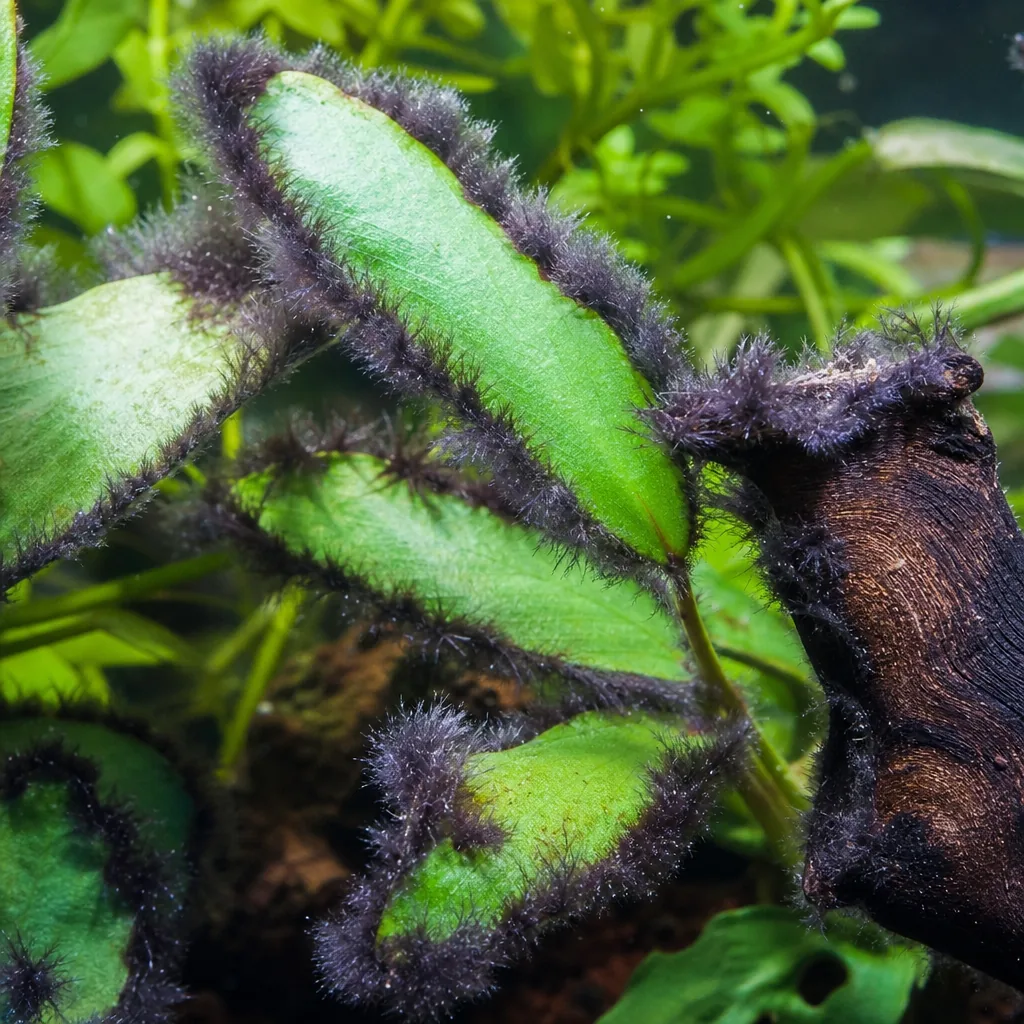
    Despite the name, black beard algae, often called BBA, is a red algae from the Audouinella and related groups. It appears as dark gray, black, or even reddish tufts with a fuzzy, beard-like texture. It anchors firmly to surfaces, especially slower-growing plant leaves, hardscape, and the edges of equipment where water flows past.

    Its toughness and the fact that most cleanup crews ignore it are exactly why it earns its reputation.
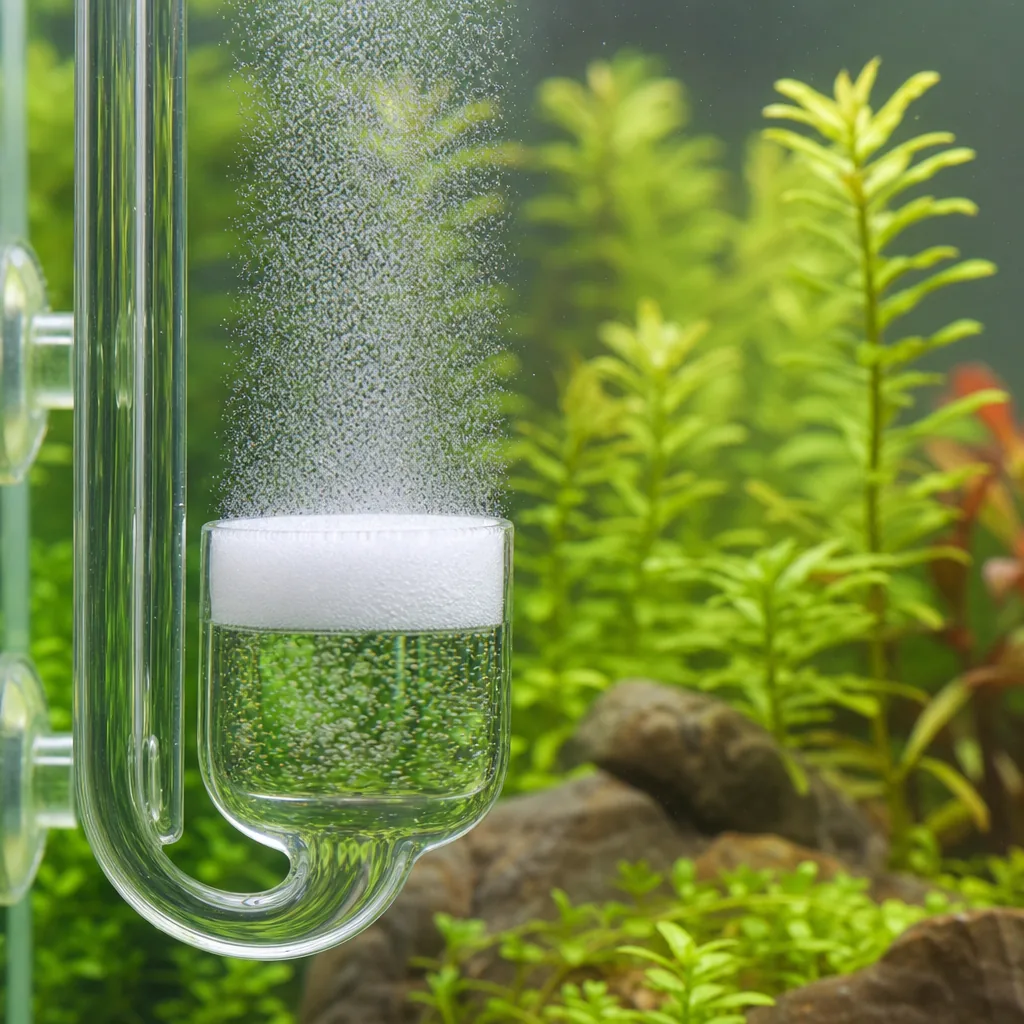
    CO2 diffuser releasing bubbles in planted tank

    The Root Cause: Unstable CO2

    The single biggest driver of black beard algae is fluctuating or low CO2, particularly in tanks with decent light. BBA thrives where carbon availability is inconsistent, because unstable CO2 stresses your plants and gives the algae an opening.

    This is why BBA often appears near filter outputs and areas of high flow: those spots see the most fluctuation in dissolved gases. If you run injected CO2, an inconsistent supply, poor distribution, or drops overnight are prime suspects.

    Fixing the underlying instability is what stops new BBA from forming. Everything else just removes what is already there.

    Step 1: Stabilize Your Tank

    Before treating existing algae, address the conditions feeding it:

    • If you inject CO2, make it consistent and well distributed, with stable levels throughout the photoperiod.
    • If you do not run CO2, consider reducing light intensity or duration so plant demand matches what the tank can supply.
    • Keep flow steady and avoid dead spots as well as areas of extreme turbulence.
    • Maintain healthy, actively growing plants so they outcompete the algae, as covered in our planted tank guides.

    A stable tank is one where BBA simply cannot get established, which is the real long-term cure.
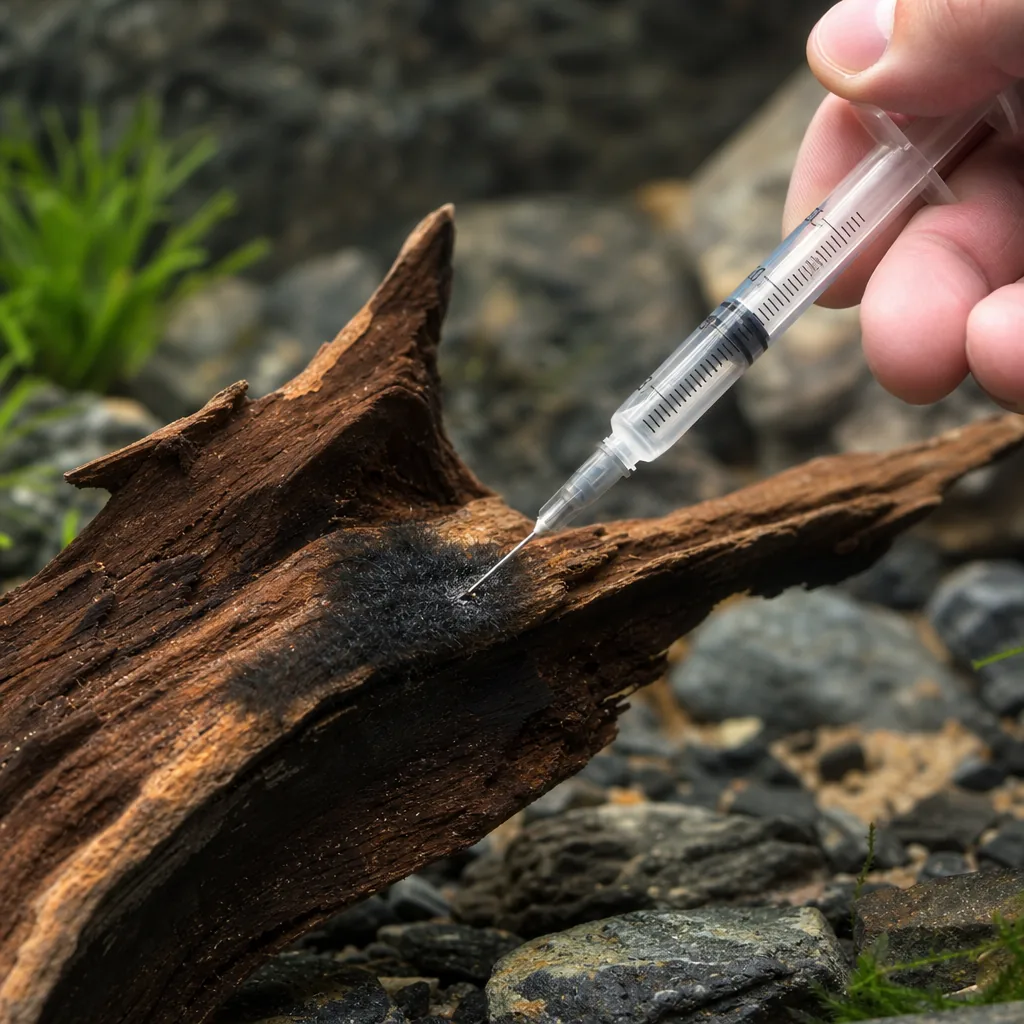
    Syringe spot-treating black beard algae on hardscape

    Step 2: Spot-Treat With Liquid Carbon

    The most reliable way to kill existing BBA is spot-treating with a liquid carbon product. Applied directly, it damages the algae, which then turns red or pink and dies back over the following days.

    • Turn off filters and flow briefly so the treatment stays on the target.
    • Use a syringe or pipette to apply liquid carbon directly onto the affected areas.
    • Watch for the algae to turn red or pink, the sign it is dying.
    • Follow product dosing guidance carefully, as overdosing can harm sensitive plants and livestock.

    Dead BBA that has turned red is then far easier to remove, and grazers become more willing to eat it.

    Step 3: Remove Affected Material

    For heavily infested leaves or removable items, physical removal is fast and effective:

    • Trim badly affected leaves rather than trying to save them.
    • Remove decor and hardscape and treat it outside the tank if needed.
    • Manually pull off larger tufts where you can.

    Combining removal with a stable environment prevents the algae from simply regrowing on the same spots.
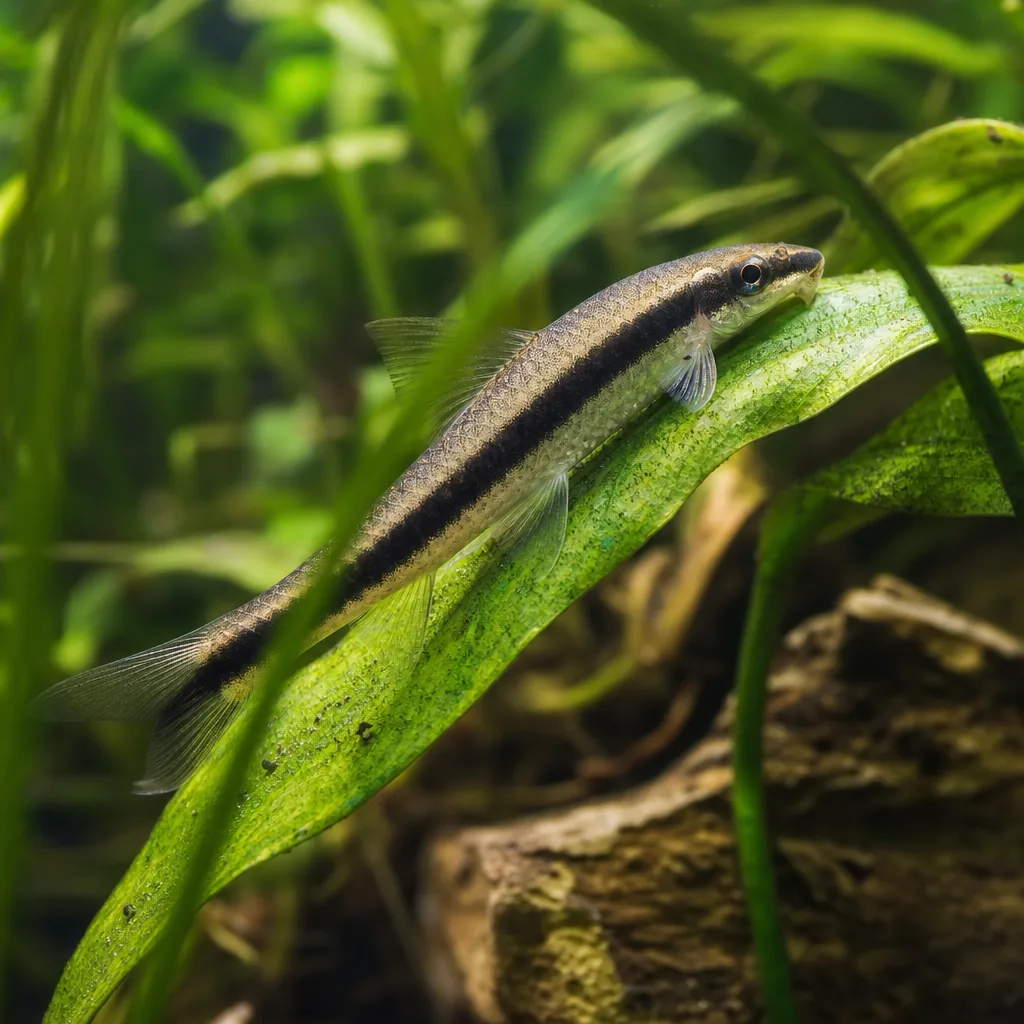
    Siamese algae eater grazing on aquarium leaf

    Step 4: The Right Cleanup Crew

    Most algae eaters ignore BBA, but a few will graze it, especially once it has been weakened by liquid carbon treatment. Certain algae-eating fish and Amano shrimp may pick at dying, reddened BBA. Do not rely on them to clear a live outbreak, but they help mop up after you have done the real work.

    Staying Ahead of It

    Once you have cleared black beard algae, keeping it gone is about consistency. Stable CO2, matched lighting, steady flow, healthy plants, and regular maintenance all deny it the instability it needs. Quarantine or inspect new plants before adding them, since BBA often hitchhikes in on new arrivals.

    Treat the cause, not just the symptom, and BBA stops being the tank-wrecker everyone dreads. For liquid carbon, CO2 equipment, and cleanup crew ideas, see our recommended gear, and find more algae guides on the blog.

    Ready to set up your tank? Shop Freshwater gear on Amazon.Shop on AmazonAs an Amazon Associate we earn from qualifying purchases.

    Frequently Asked Questions

    What causes black beard algae?

    The main driver is unstable or low CO2, especially in tanks with decent lighting. Fluctuating carbon availability stresses plants and gives the algae an opening, which is why BBA often appears near filter outputs and high-flow areas.

    Why won’t my snails or shrimp eat it?

    Black beard algae is tough and most cleanup crews ignore it while it is alive. After it is weakened with liquid carbon and turns red, some algae eaters and Amano shrimp will pick at it, but they cannot clear a live outbreak.

    How do I kill black beard algae directly?

    Spot-treat it with a liquid carbon product applied directly to the algae with a syringe while flow is off. The BBA turns red or pink and dies back over several days. Always follow dosing guidance to protect plants and livestock.

    How do I stop it from coming back?

    Fix the root cause by keeping CO2 stable, matching light to plant demand, maintaining steady flow, and growing healthy plants. A stable tank denies BBA the instability it needs to establish.

    Can black beard algae come in on new plants?

    Yes, it frequently hitchhikes on new plants. Inspect or quarantine new arrivals and remove any visible tufts before adding them to your tank to avoid introducing a fresh outbreak.

    Algae Beard Black Good kill
    Share. Facebook Twitter Pinterest LinkedIn Tumblr Email
    Previous ArticleThe Bristle Worm: Reef Guardian or Aquarium Nightmare? | Reef Builders
    Next Article How to Get Rid of Aiptasia in a Reef Tank
    Pawvista
    • Website
    • Facebook
    • X (Twitter)
    • Pinterest
    • Instagram
    • LinkedIn

    Related Posts

    Good Food For A Hamster Diet — Animal Hearted Apparel

    July 29, 2026

    Nerite Snails: The Best Algae-Eating Snail Explained

    July 29, 2026

    Are Budgies Good Pets? A Complete Beginner’s Guide for Australian Bird

    July 29, 2026
    Add A Comment
    Leave A Reply Cancel Reply

    Top Posts

    The Pros and Cons to Owning an Alaskan Malamute – Fantastic Furries

    July 27, 20266 Views

    Read This BEFORE You Get a New Ferret – The Modern Ferret

    July 27, 20265 Views

    Rabbit Teeth Grinding: What Is It & Why Do They Do It

    July 27, 20263 Views
    Stay In Touch
    • Facebook
    • YouTube
    • TikTok
    • WhatsApp
    • Twitter
    • Instagram
    Latest Reviews

    Subscribe to Updates

    Get the latest tech news from FooBar about tech, design and biz.

    About us

    Welcome to GenzyPets.com, your trusted source for everything related to micro pets and small companion animals.

    At GenzyPets, we believe that every pet deserves the best care, whether it's a hamster, guinea pig, rabbit, hedgehog, chinchilla, ferret, bird, reptile, fish, or any other small pet. Our mission is to provide pet owners with reliable, easy-to-understand, and practical information to help them give their pets healthy and happy lives.

    Most Popular

    The Pros and Cons to Owning an Alaskan Malamute – Fantastic Furries

    July 27, 20266 Views

    Read This BEFORE You Get a New Ferret – The Modern Ferret

    July 27, 20265 Views

    Rabbit Teeth Grinding: What Is It & Why Do They Do It

    July 27, 20263 Views

    Subscribe to Updates

    Get the latest creative news from FooBar about art, design and business.

    © 2026 GenzyPets.com. All Rights Reserved.
    • Terms & Conditions
    • Privacy Policy
    • Contact Us
    • About Us

    Type above and press Enter to search. Press Esc to cancel.