

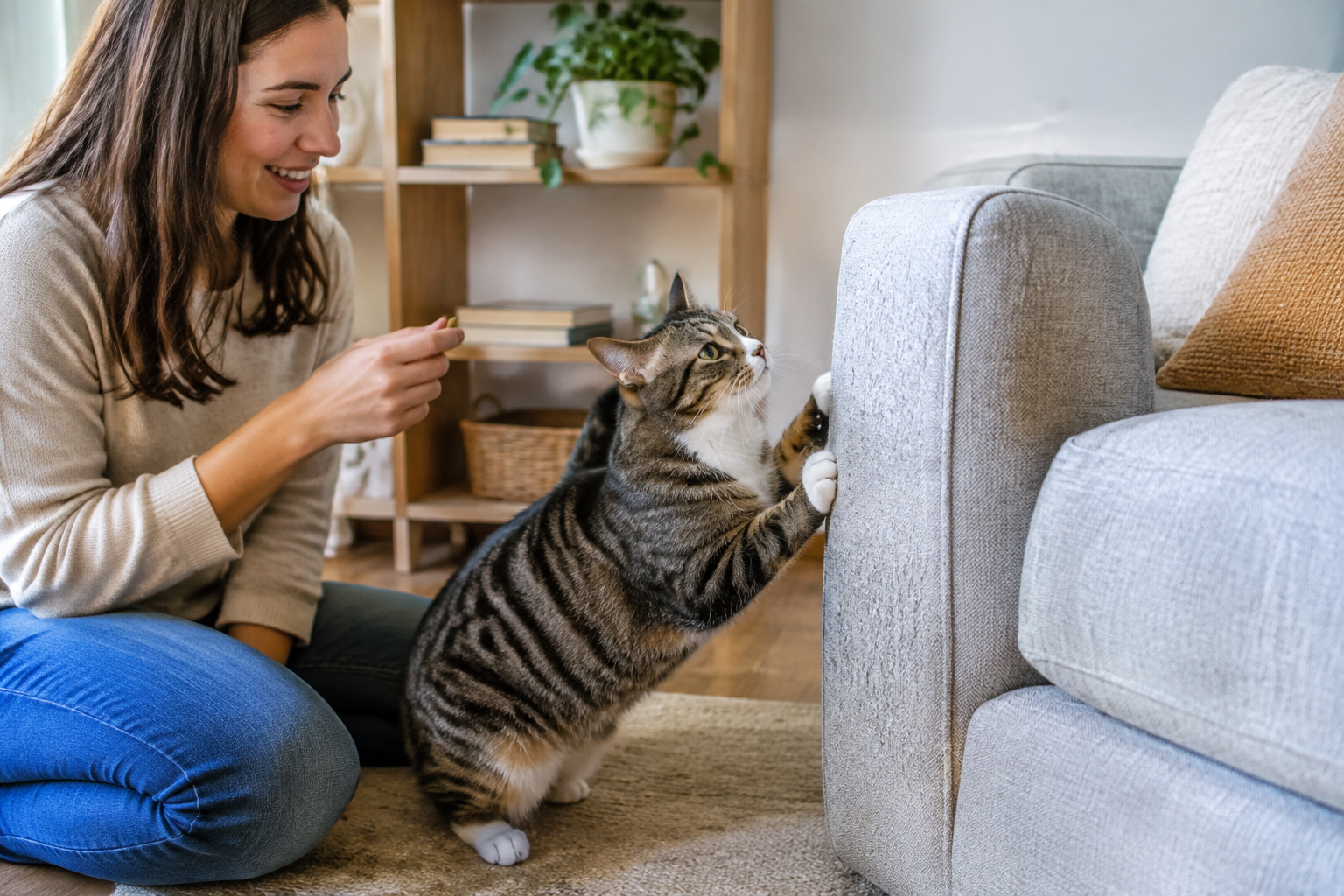
How to stop cat scratching furniture starts with understanding why cats scratch, not just stopping the habit. When you work with their instincts, you can protect your sofa and reduce stress at the same time.
Why cats scratch and what it means
Cats scratch for several normal reasons. First, they stretch their bodies and flex their paws. Second, they mark territory with scent and visible scratch marks.
However, scratching can also signal boredom, stress, or frustration. A cat that lacks outlets may turn to furniture because it already feels rewarding and easy.
In many homes, the behavior is not about disobedience. Instead, it reflects a cat trying to meet a need in the fastest way available. That is why how to stop cat scratching furniture works best when the plan supports the cat, not just the couch.
How to stop cat scratching furniture with calm observation
Start by watching when and where the scratching happens. For example, does it appear after naps, before meals, or when visitors arrive? Those details help you connect the behavior to stress, energy, or habit.
Next, notice the surface and the target. Some cats prefer vertical corners, while others like flat arms or woven textures. Also, look for body signals such as tail swishing, focused staring, or quick scratching bursts.
These clues help you choose the right support. When you understand the pattern, how to stop cat scratching furniture becomes much more practical and much less stressful.
Read triggers and warning signs early
Timing often reveals the trigger. If scratching increases when a home feels busy, your cat may need more safe space. If it happens when alone, boredom or separation stress may play a role.
Also, watch for warning signs that the behavior is escalating. These signs include repeated scratching in the same spot, pacing, vocalizing, hiding, or suddenly guarding a favorite area.
Sometimes, a sudden change matters more than the scratching itself. If your cat starts scratching differently, or more often overnight, take note. In some cases, pain, stress, or illness can change grooming and marking habits.
How to stop cat scratching furniture through training
Begin with a better legal target, such as a sturdy scratching post or pad. Place it close to the furniture your cat already uses. Then make it appealing with stable placement and the right texture.
Whenever your cat uses the new scratcher, reward the choice right away. Use praise, treats, or gentle petting if your cat enjoys touch. Because timing matters, the reward should happen within a few seconds.
Next, guide your cat toward the new option before furniture scratching starts. This approach uses desensitization, which means helping your cat feel comfortable with a new thing in small steps. It also uses counter-conditioning, which means pairing the new behavior with something pleasant.
If your cat walks past the scratcher, you can toss a treat nearby. Then, when they touch it with a paw, reward again. Over time, the scratcher becomes the preferred choice.
Build a home setup that supports better habits
Management matters just as much as training. Put scratching posts in key spots, especially near nap areas, doorways, and the edges of rooms. Since cats often scratch after waking, placement makes a big difference.
Also, cover the most tempting furniture temporarily if needed. You can use washable throws, furniture covers, or double-sided tape designed for pets. However, keep these tools short-term and pair them with better choices.
Routine helps too. Feed, play, and rest on a regular schedule so your cat feels secure. When daily life becomes predictable, many cats scratch less from stress or pent-up energy.
How to stop cat scratching furniture with enrichment
Enrichment gives your cat other ways to satisfy natural behavior. For example, use wand play, puzzle feeders, and short climbing sessions. These activities help burn energy and reduce restless scratching.
Also, rotate toys so the environment stays interesting. Cats often lose interest in the same object every day. Therefore, small changes keep enrichment fresh without overwhelming them.
If your cat likes height, add a perch or cat tree near the scratching area. This lets them survey the room and scratch in a more natural location. As a result, how to stop cat scratching furniture becomes part of a larger comfort plan.
Safety, health, and when to get help
Always rule out health concerns if the scratching suddenly changes. Pain, skin irritation, mobility concerns, or anxiety can all affect behavior. So can household stressors like new pets, loud construction, or recent moves.
If you notice biting, hissing, hiding, or other sudden behavior changes, schedule an in-person vet visit first. Then, if needed, ask for a certified behaviorist. Early support can prevent the problem from becoming more intense.
Also, keep children and other pets safe around a stressed cat. Give the cat quiet escape routes and avoid crowding them near the scratching area. In addition, never force contact when your cat seems overwhelmed.
Common mistakes that slow progress
One common mistake is waiting too long to provide an approved scratcher. If the furniture stays the only option, the habit becomes stronger. So, set up alternatives before punishment or frustration enters the picture.
Another mistake is choosing the wrong scratcher type. Some cats want tall posts, while others prefer cardboard or horizontal mats. Therefore, observe preferences instead of guessing.
It also helps to avoid loud reactions. Scolding can add stress and may make the cat scratch when you are not looking. Instead, stay calm, redirect gently, and reward the right choice.
Finally, do not expect instant change. Habit shifts take practice. With consistency, how to stop cat scratching furniture becomes a training process, not a one-time fix.
A simple checklist for busy pet owners
- Place scratching posts near the furniture your cat targets.
- Choose at least two scratch textures or styles.
- Reward use of the scratcher immediately.
- Block access to the favorite furniture spot when needed.
- Add daily play and puzzle feeding.
- Watch for stress, pain, or sudden behavior changes.
- Ask a vet or behaviorist if the problem worsens.
Conclusion
Scratching is a normal cat behavior, so the goal is redirection, not suppression. When you meet the need with good placement, routine, and rewards, your home becomes calmer.
Most importantly, patience and consistency create lasting change. If you stay focused on comfort and prevention, how to stop cat scratching furniture becomes much easier to manage, and your cat can keep expressing natural instincts in a better way.
