

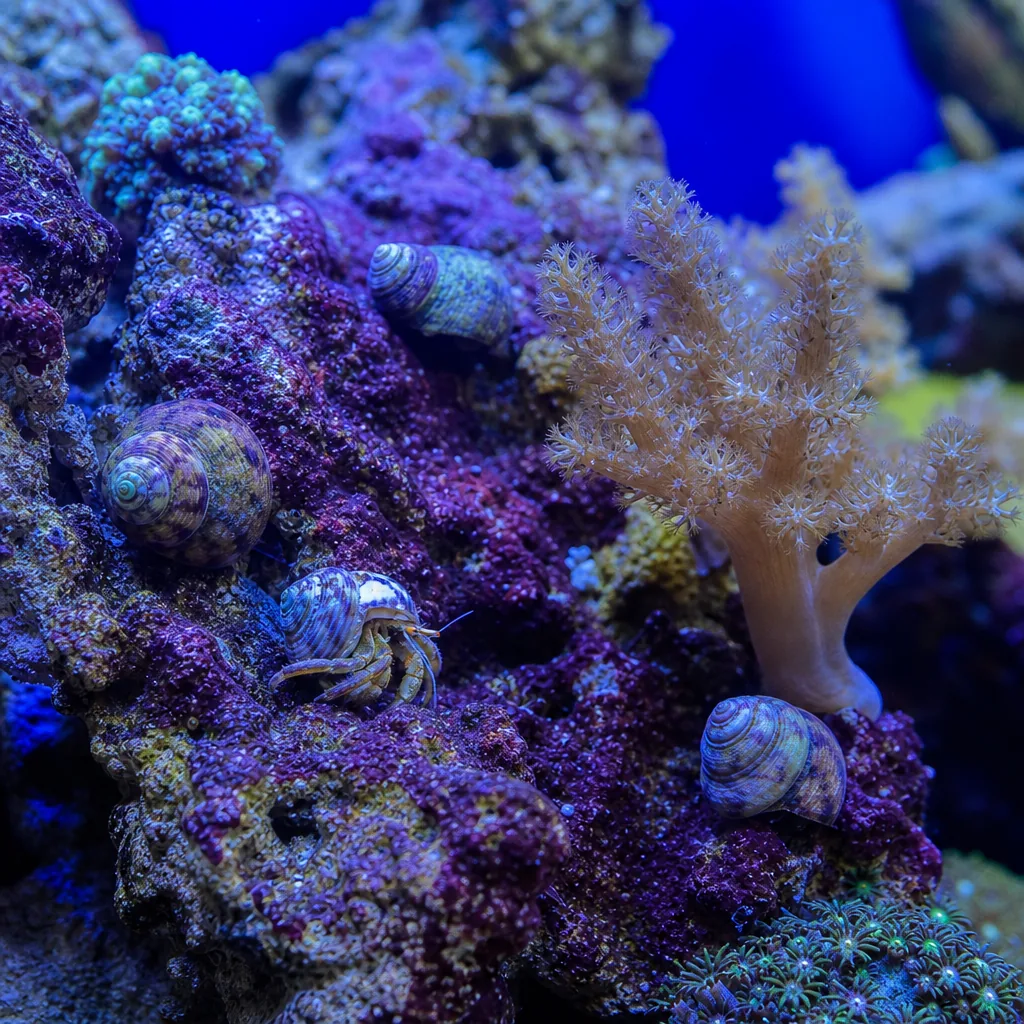
Everybody wants a magic list of critters that make algae disappear, and I understand the appeal after you have scrubbed the glass for the third time in a week. The honest truth is that a cleanup crew (CUC) is a maintenance tool, not a cure. It grazes film algae, turns sand, and eats leftover food and detritus so your skimmer and water changes do less work. Build it to match your rock, your sand, and the nuisances you actually have.
What a Cleanup Crew Actually Does
A good crew handles three jobs: grazing film and hair algae off rock and glass, sifting the sand so it does not go anaerobic, and scavenging uneaten food before it rots. What it does not do is remove nutrients from the system. When a snail eats algae, the nitrate and phosphate that grew that algae are still in your tank, just repackaged as waste. That is why overstocking a CUC to fix an algae bloom usually backfires: you add a bunch of animals, they starve once the bloom clears, they die, and the die-off feeds the next bloom.
Start conservative. It is far easier to add a few more snails next month than to feed a crew that has eaten itself out of house and home.
The Best Snails for a Reef Tank
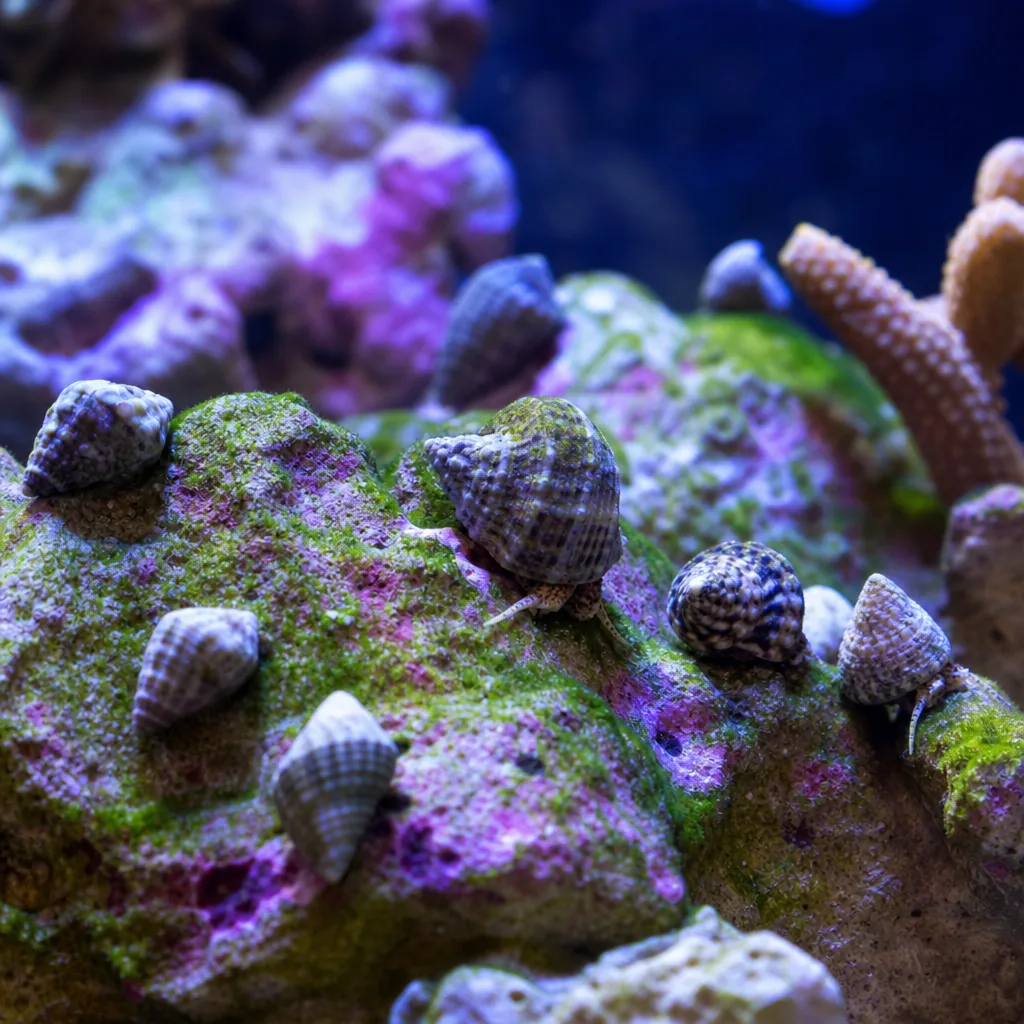
Snails are the backbone of most crews because they are peaceful, reef-safe, and each species tends to specialize.
- Trochus and Turbo snails – workhorse grazers for film and hair algae on rock and glass. Trochus can right themselves if they fall; Turbos are hungrier but can bulldoze frags.
- Nassarius snails – sand-bed scavengers that stay buried until food hits the water, then emerge like little vacuums. Great for leftover food, not algae.
- Cerith snails – do double duty on glass, rock, and sand, and they eat detritus and some algae.
- Astrea snails – solid glass and rock grazers, but they often cannot flip themselves upright, so check for stranded ones.
A common mistake is stacking one species. A mix that covers glass, rock, and sand beats a pile of a single type.
Crabs and Shrimp: Useful but Watch the Temperament
Crabs earn their keep but come with a caveat: many are opportunistic and will eat what they can catch as they grow.
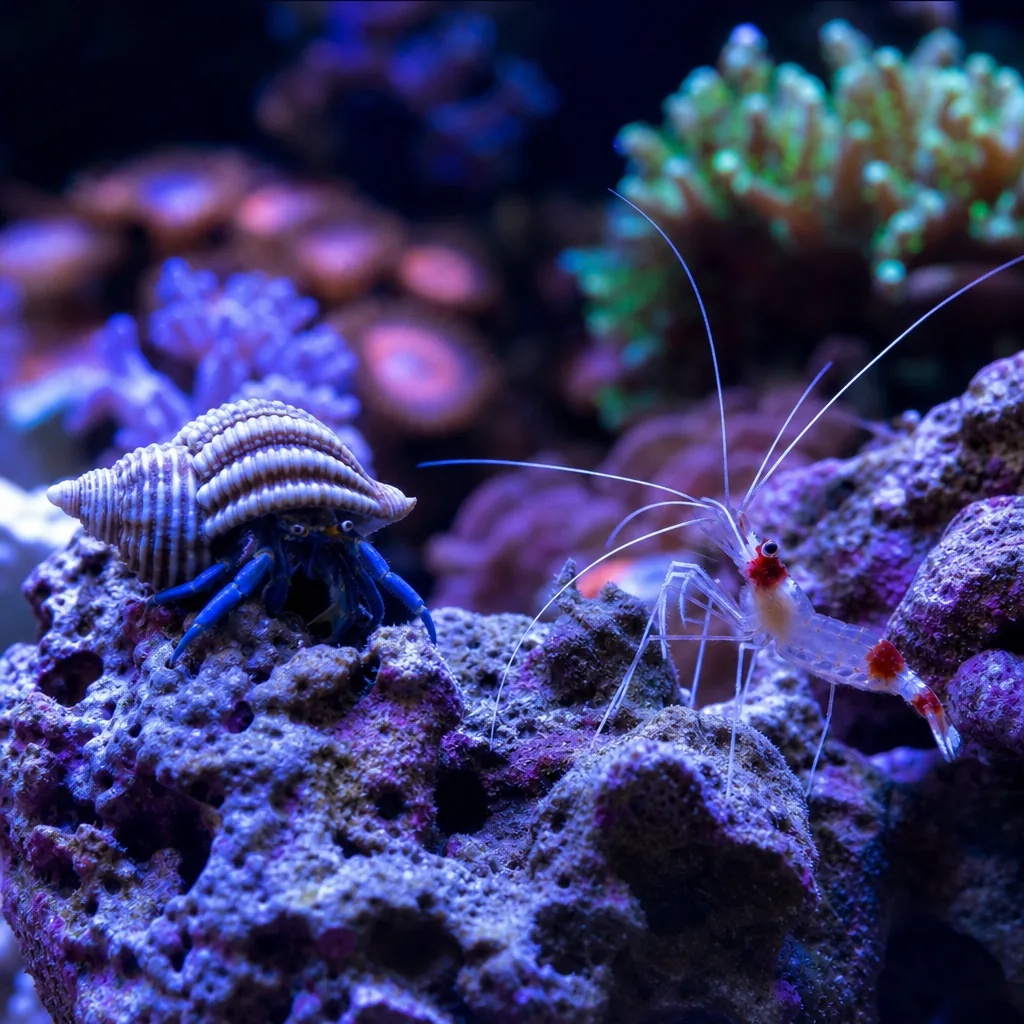
- Blue and scarlet hermit crabs – active scavengers and decent algae grazers. Provide extra empty shells so they do not kill snails for a new home.
- Emerald crabs – one of the few animals that will pick at bubble algae, though results vary by individual. Best kept one per tank in most setups.
- Peppermint shrimp – can help control Aiptasia, but buy true Camposcia-free peppermints and expect mixed results.
- Skunk cleaner shrimp – not a cleanup animal in the algae sense, but they pick parasites and detritus and are a joy to watch.
Sand-Sifting Options
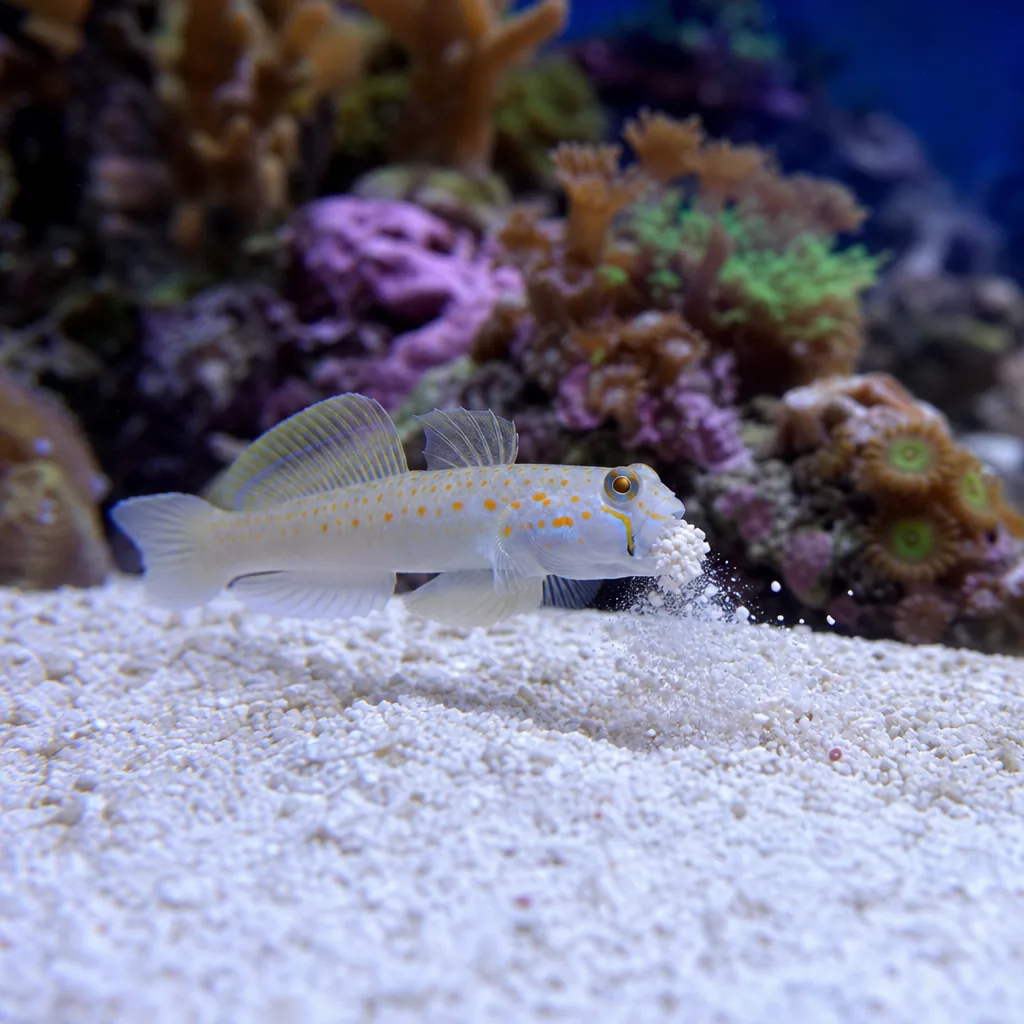
If you run a sand bed, keeping the top layer turned prevents dark, gunky patches. Nassarius snails and certain sand-sifting stars or gobies help, but be careful: sand-sifting sea stars often slowly starve in tanks without a huge, mature sand bed, so I usually steer newer reefers toward snails and a sifting goby instead. A watchman goby also pairs well with other tank residents and adds movement to the sand.
How Many Should You Add?
Skip the old “one snail per gallon” rule; it leads to starvation. Think in terms of surface area and bioload instead. A modest nano can be well served by a handful of mixed snails and a couple of small hermits. A larger system scales up, but add in waves and watch how fast they clear algae before buying more. If your crew clears everything in a day and then wanders looking for food, you have too many.
Quarantine and acclimation matter here too. Inverts are extremely sensitive to salinity swings and copper, so drip-acclimate them slowly and never dose copper-based medications in a display with inverts.
Matching the Crew to Your Problem
Before you buy, name the nuisance. Film algae on glass calls for Trochus and Cerith. Leftover food and a dirty sand bed call for Nassarius. Hair algae calls for Turbos plus fixing the nutrient source. Bubble algae calls for an emerald crab plus manual removal. If you are still dialing in the basics, our saltwater care section covers nutrient control and lighting, and you can browse grazers and tools in the shop.
The Part Nobody Wants to Hear
A cleanup crew is the last 10 percent of algae control, not the first 90. If you are feeding heavily, running old bulbs, or skipping water changes, no number of snails will keep up. Fix flow, feeding, and nutrient export first; then the crew has a fighting chance and will keep the tank looking sharp between maintenance days. For the nutrient side of the equation, a refugium or good skimmer does the heavy lifting the snails cannot.
Get those fundamentals right and a small, varied crew will do more for your tank’s appearance than any single “miracle” invert ever could.
Frequently Asked Questions
Will a cleanup crew get rid of an algae outbreak?
No. A crew grazes existing algae but does not remove nutrients. Fix feeding, flow, and nutrient export first, then let the crew maintain the clean look.
How many snails should I add to my reef tank?
Add conservatively and scale up in waves based on surface area and how fast they clear algae. Overstocking leads to starvation and die-off that feeds the next bloom.
Are hermit crabs reef safe?
Mostly, but they are opportunistic. Provide extra empty shells so they do not kill snails, and expect them to scavenge whatever they can catch as they grow.
What eats bubble algae?
Emerald crabs will sometimes pick at it, but results vary by individual. Combine one emerald crab with careful manual removal for best results.
Can I add a cleanup crew to a brand-new tank?
Wait until the tank has cycled and grown some film algae for them to eat. Adding a large crew to a sterile new tank usually results in starvation.
