


A reptile terrarium is where your scaly friends rest, roam, and heat up. Every part of this space contributes to their general well-being, including digestion and alertness. They feel relaxed when they get the standard amount of temperature, lighting, and humidity.
This guide explains why fixing them in the right habitat is crucial. You’ll also learn how to maintain proper temperature levels, promote their natural behavior, and perform other regular care routines.
Why Size and Style Are Important For Reptile Terrarium
The enclosure determines how freely your reptile can move and adapt to temperature changes. Select a size and composition based on the species, its behavior, and your local climate.
Space for health and activity
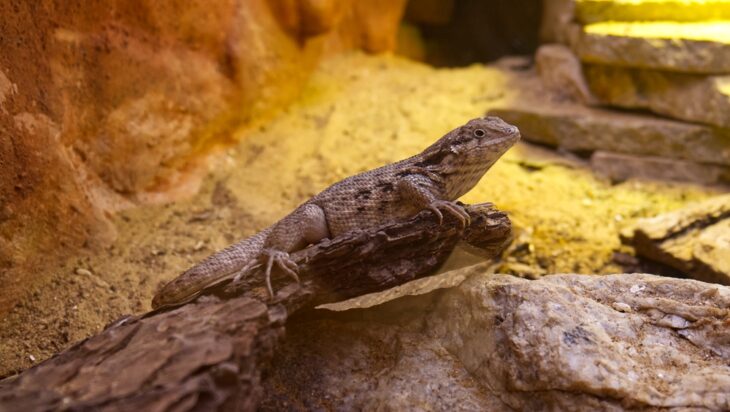
A spacious reptile terrarium allows your friends to stretch, climb, and exercise without feeling exposed. Additional space improves airflow, and a clear boundary between warm and cool areas. It also provides space for enrichment items such as tree limbs and rocks.
Small enclosures can make your biggies pace, hesitate to eat, or feel lazy to move. The rule of thumb is 1.5 to 2 times the length of an adult reptile.
Appropriate material and design for maintaining stable temperatures
Glass terrariums provide a transparent environment and are ideal for species that require specific humid conditions. PVC aquariums provide even heating, which can be suitable in situations where maintaining constant temperatures is difficult.
Temporary containers are suitable for shipping or short-term use, but they rarely provide long-term comfort. Selecting both the right size and material will go a long way in keeping your reptile active, comfortable, and healthy.
Facilitating Natural Behavior: Enrichment, Plats, and More
Enrichment isn’t about overstuffing. A balanced environment provides space for your reptile to roam and also includes areas for rest and privacy.
Enrichment Ideas for Reptilian Terrarium
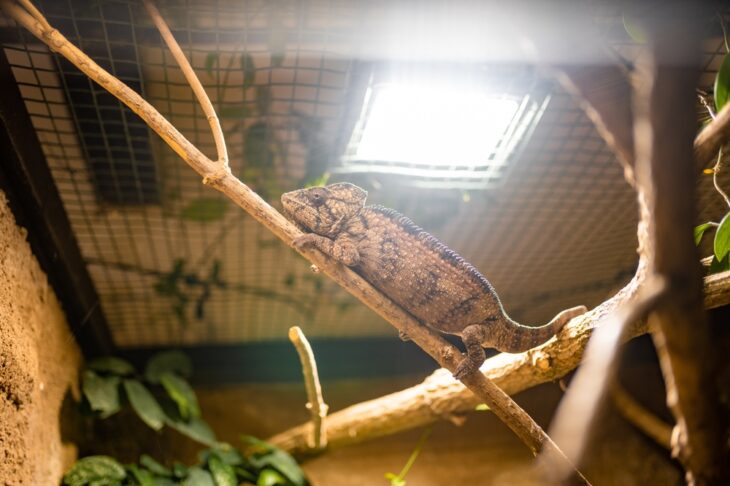
A safe and comfortable enclosure is more than just the bare necessities. Thoughtful enrichment within a reptile terrarium allows your companion to climb, rest, explore, and have private spots. These activities support physical health and prevent stress-related behaviors.
Create hiding spots
Variety matters when providing shelters:
-
- Ground-level hides for security
-
- Elevated hides to hit distant targets
-
- Flat rocks, cork bark, or textured resting ledges feel different from enclosed spaces
Add at least two options:
Climbing structures
Encourage strength and coordination with:
-
- Background sides for multi-directional movement
-
- Species that naturally climb or perch need vertical spaces as much as floor space.
Plants and cover
Besides trees, plants also contribute to natural structural elements and vegetation:
-
- Live plants retain the humidity and beautify the surroundings
-
- Artificial plants provide shade and foliage
Both options will fragment the open space, providing a place to retreat or observe.
Keep the environment fun
Minor changes in the environment can make a difference in behavior and alertness:
-
- Rotate branches or move hides
Selection Guide For Substrates Within A Reptile Terrarium
The proper structure inside the reptile terrarium helps them feel secure and encourages natural behavior. Every item should serve a specific purpose.
Pick the best substrate for your species
Choose a substrate based on your reptile’s natural habitat:
For dry-climate species: Hard surfaces for traction:
-
- Aspen shavings (tortoises and corn snakes)
-
- Slate or ceramic (juveniles)
For moisture-loving species: materials that hold humidity without becoming soggy:
-
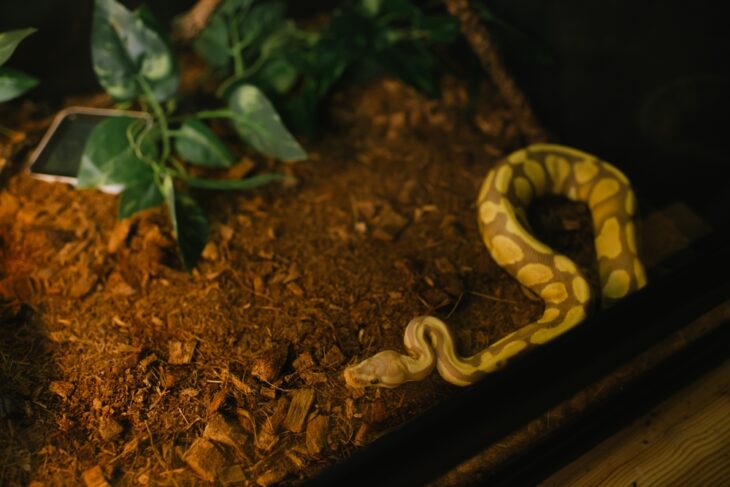
- Coconut coir (ideal for burrowers)
-
- Cypress mulch (ball pythons and skinks)
-
- Commercial bioactive mixes
Quarantine options
-
- Paper towels (highly absorbent)
-
- Carpet or liner (reusable and washable)
Use loose substrates (e.g., coarse particles such as sand and leaf litter) with caution and monitor to prevent ingestion issues.
Understanding Heat Gradients and Temperature Control
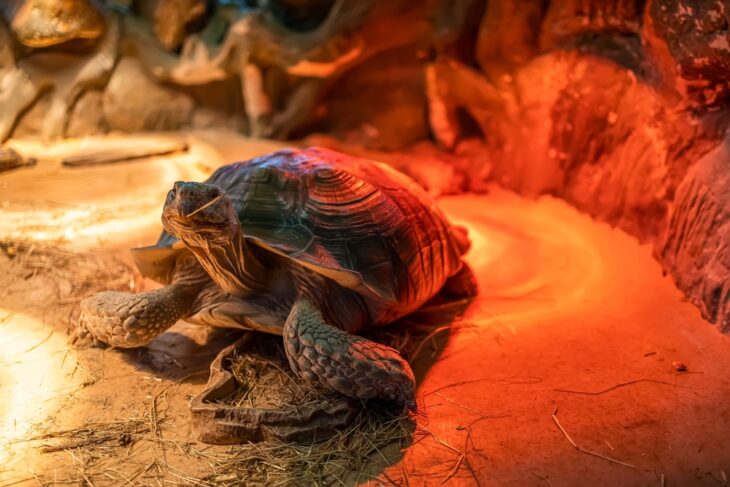
Warmth has a direct impact on digestion, energy levels, and immune health. The right reptile terrarium will provide a temperature gradient (i.e., warm to cool areas), allowing your companion to migrate towards a preferred zone if needed.
Design warm and cool zones
- Basking spots: Concentrated heat for digestion and rest
- Cool areas: where your reptile seeks refuge when the temperature feels too high
Select the appropriate heating sources
Overhead bulbs, ceramic emitters, and radiant panels vary in size according to the enclosure and species. On the other hand, heat mats are used to enhance warmth, but they should never be used as a replacement for overhead heating sources.
Use thermostats for safety
Thermostats prevent rapid changes in temperature, thereby preventing burn or overheating-related health risks.
Lighting Requirements: UVB, Positioning, and Other Details
Lighting influences feeding behavior and nutrient absorption. A reptile terrarium should have a day-night cycle and shouldn’t be brightly lit all the time.
Ensure adequate UVB exposure
UVB light helps reptiles absorb calcium, supporting bone strength. Insufficient exposure can weaken the bone.
Optimize bulb placement and maintenance
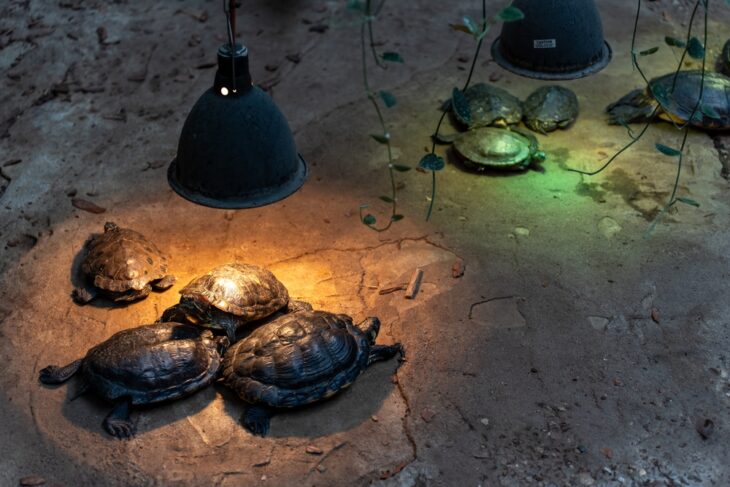
Bulb strength and distance from your reptile affect effectiveness. You should replace your bulbs according to the manufacturer’s instructions to maintain optimal UVB provisions.
Use timers for consistency
Timers maintain a predictable lighting schedule, eliminating the need for manual adjustments. This helps your reptile maintain regular cycles.
Conclusion: Caring For a Terrarium Is Just Like Caring For Your Reptiles
When a reptile terrarium has the right heat and light, with a layout that makes sense, your friend can move, rest, and adjust to temperature changes as needed. Keeping those basics steady makes the space feel calm and easier to care for.
