

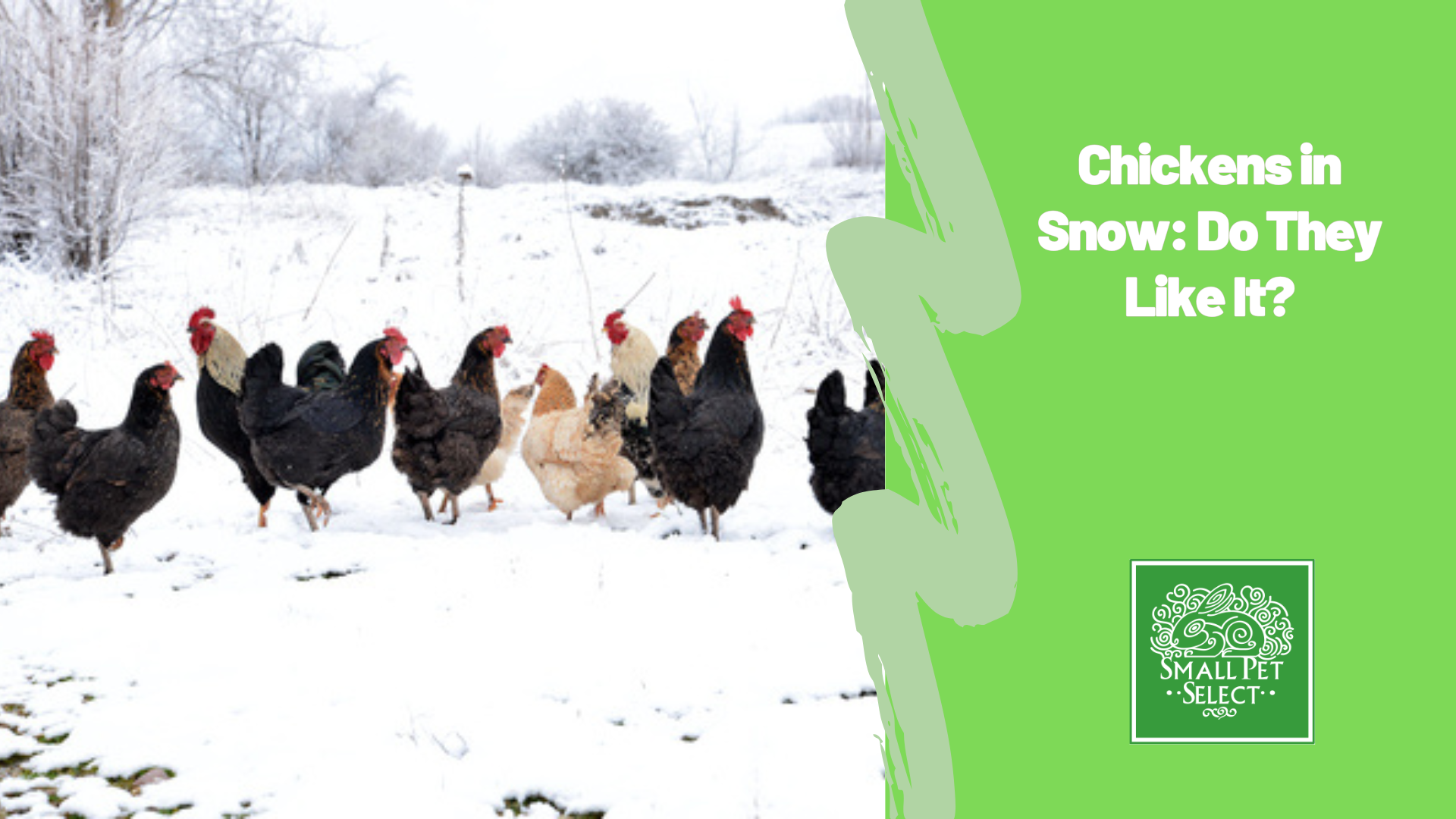
Many chickens in snow often look like tiny explorers, cheeks puffed as they face the cold, white world on a winter morning. Do they secretly like it, or is the ice and glare a bit freaky?
The truth is that each breed handles colds slightly differently, depending on its temperament and physical characteristics. Observing these cues helps you determine the best way to care for them.
This article explores whether chickens prefer cold weather, which breeds generally thrive in winter, and provides guidance on protecting their health regardless of the temperature.
Chickens In Snow: Is It Playtime For Them?
Many things determine whether chickens in snow treat the white ice as a playground or a disaster. Among them are the following:
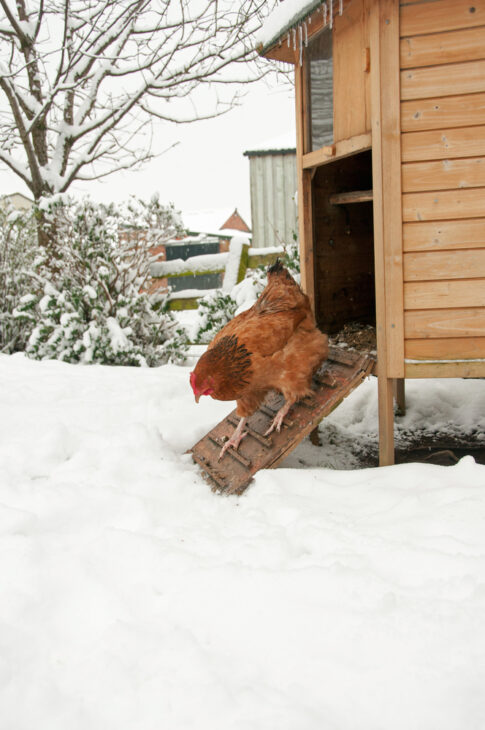
Breed and physical characteristics
Some of your friends are better equipped for winter than others. For example, Brahmas and Orpingtons possess small combs and dense plumage, which helps them retain heat. Leghorns have larger combs that tend to freeze easily.
Personality difference
Personality also matters. Some chickens are curious about the white world and wander through the flakes; others hole up in the coop.
You’ll notice a few pecking at the snow with interest. The rest may stand on one leg to protect their toes, watching the world with wary eyes,
Other factors include:
- Previous experience: Birds that have been through several winters are rather more comfortable.
- Feather density: A dense, insulating coat helps stand the chill.
How Does Freezing Temperatures Affect A Chicken’s Body?
Even with plumy feathers, chickens’ skin can get frostbite. Moisture from breathing or wet ground tends to accumulate on the combs and wattles. When that moisture freezes, it can constrict blood flow, leading to tissue damage.
Wet feathers are another problem. Moisture from slush or heavy snow can drain the warm air within the plumage, which is crucial for retaining body heat.
Overall, it’s often more important to stay dry than warm. A wet bird might suffer from respiratory illness and immune system stress.
You should regularly check the legs and toes of chickens in snow for signs of swelling, paleness, or gray discoloration.
Time Limits for Chickens During Snow Conditions
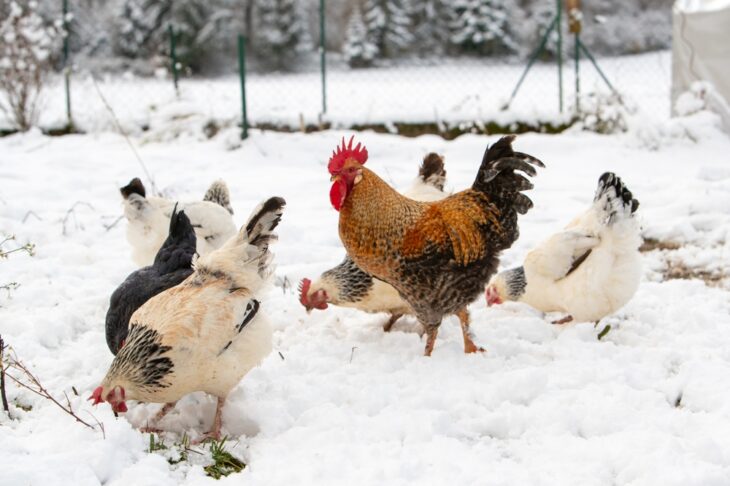
How long chickens can stay outside in the snow depends on how extreme the weather is, alongside the flock’s overall health. In most cases, some friends regulate themselves well. If temperatures drop too low or wind conditions worsen, they’ll usually return to the coop on their own.
That being said, supervision remains important. Monitoring outdoor time helps ensure none gets trapped in deep snow or isolated from the flock.
Here are factors to consider when deciding time limits:
- Wind Chill: High wind speeds can rapidly remove heat from feathers, making even warm days perilous.
- Sunlight: If it’s sunny out, your avian friends can spend more time basking in natural warmth.
- Snow Depth: Chickens find heavy snow more difficult to move through than the scattered ones. In such cases, you should create a small pathway for them in the area around the entrance.
Other cues to watch include prolonged immobility, shivering, or a chicken huddling alone. It shows that it needs to be led to shelter.
How To Make Your Chickens More Comfortable During Frost
Making life easier for chickens in snow requires some tweaks to their environment and routine. For instance, layers of straw or wood chips on icy surfaces act as a shield, minimizing direct contact with ice and snow.
Providing evening winter snacks like cracked corn for Starters, Layers, or Growers helps them generate internal heat as their bodies process the meals. You can also help by:
- Providing lukewarm water: Replacing frozen water regularly keeps them hydrated.
- Making windbreaks: You can use plywood or heavy plastic sheeting to block harsh winds while still allowing outdoor access.
- Adding elevated perches: Raised resting spots will keep their feet off frozen, wet ground.
Winter Coop Requirements For Your Feathered Friends
Organizing a proper coop is key to keeping chickens safe in snowy conditions. The design should focus on good ventilation without creating drafts. Adequate airflow allows moisture to escape rather than drip down onto birds, which can cause frostbite or breathing problems.
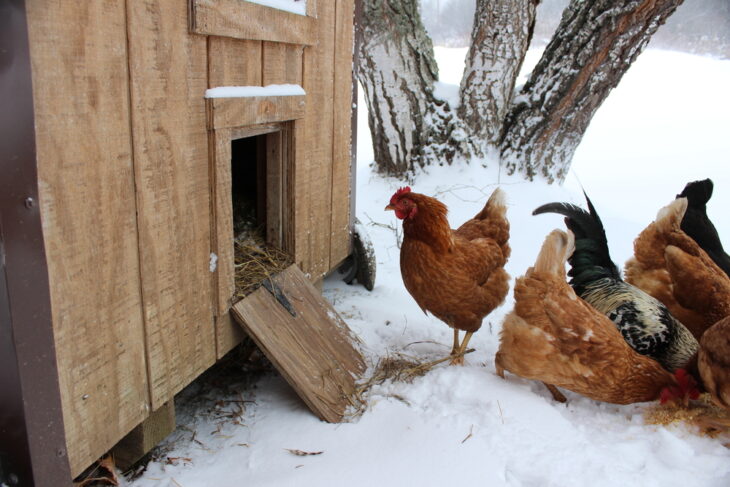
Using high-quality bedding, such as Pine Shavings and Nesting Pads, keep roosting and laying areas dry and insulated. A clean, well-managed coop also reduces ammonia buildup, which becomes more noticeable when coops are closed up during cold weather.
You can further improve conditions by adding a Tunnel Habitat or sheltered extension. This provides chickens with a protected space to move and stay active, shielding them from direct exposure to snow and wind.
For more information on habitat management and integrating your chickens into a garden or run throughout the seasons, see this resource on free-range vs. run integration. Overall, keeping the coop dry, sanitary, and well-ventilated is the most effective way to protect flock health until spring arrives.
Conclusion: Chickens Can Thrive Under Frosty Conditions
Chickens in snow can remain healthy when their basic needs are met. Cold tolerance varies among birds, so careful observation is crucial. Pay attention to behavior, choose cold-hardy breeds, and maintain a dry, well-ventilated environment throughout the winter.
With consistent care and timely adjustments, chickens can safely and comfortably make it through the colder months.
