

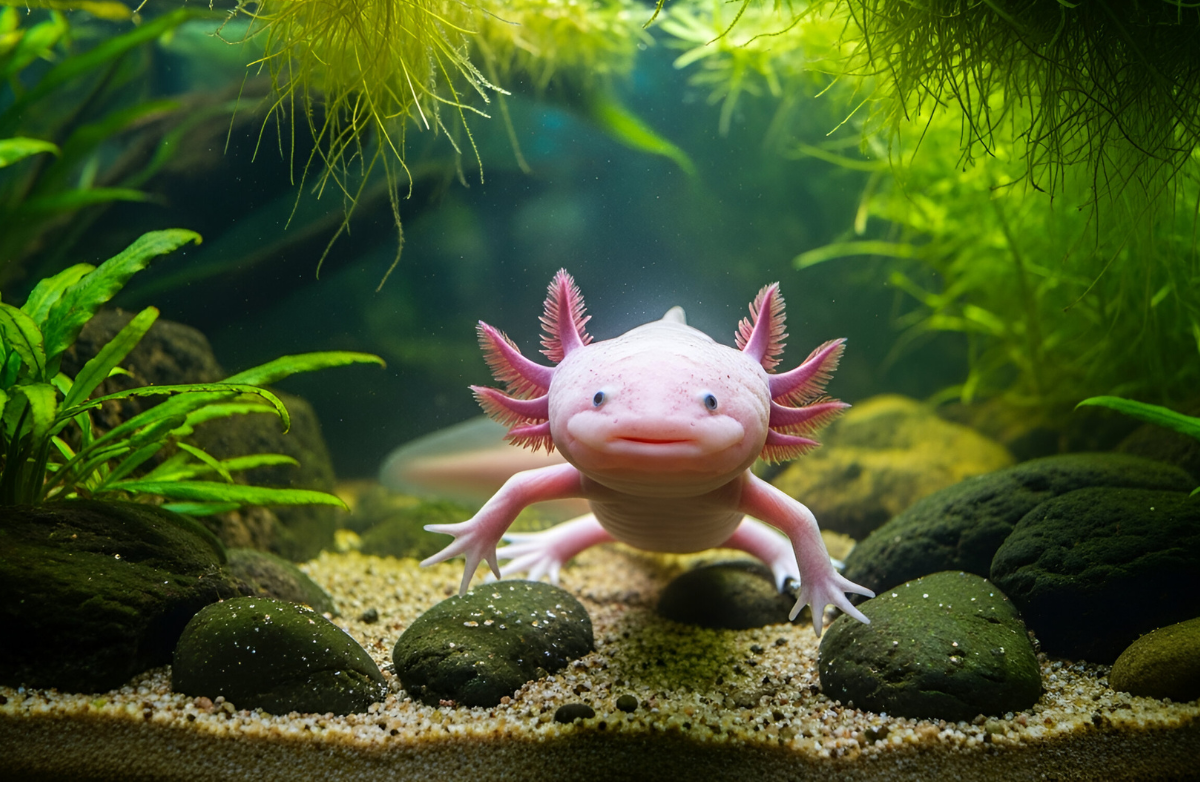
The ideal axolotl tank size is at least 70 litres, 90x45cm. Going lower and wider is always recommended for their health and happiness. These curious little creatures need plenty of space to swim and explore, and a roomy tank helps keep water conditions stable and cleaner for longer. Cramped setups can lead to stress and health issues, so it’s worth getting the size right from the beginning.
Axolotls also prefer wide tanks with a large surface area rather than tall ones, since they spend most of their time near the bottom. If you’re planning to keep more than one, aim for an aquarium with a wider width to ensure your axolotls have enough room to move around comfortably!
Axolotl Natural History and Habitat Insights

Axolotls, also known as ‘Mexican walking fish,’ are fascinating amphibians native to the lakes around Mexico City, especially Lake Xochimilco and Lake Chalco. These cool, plant-filled waters were once ideal habitats, but pollution, habitat loss, and invasive species have made axolotls critically endangered in the wild. Today, most axolotls are bred in captivity and have gained popularity in the pet trade and scientific research.
One of their most unique traits is neoteny – they remain aquatic and keep their gills for life, unlike most salamanders, reaching adulthood without having to undergo metamorphosis. This means they need cool, clean, still water with plenty of hiding places.
While they thrive in captivity, their wild populations remain in crisis. Supporting conservation and choosing responsible breeders helps protect this remarkable species and their place in the ecosystem.
Minimum Axolotl Tank Size Requirements

Axolotls need tanks that match their size and activity level to stay healthy in captivity. Picking the right tank size helps with axolotl care and reduces their stress levels.
Tank Size Guide
For a fully grown axolotl, aim for a tank that’s at least 90x45cm and roughly 70 litres. That’s the minimum, but if you can go bigger, do! Axolotls can grow up to 45 cm, and extra space means more comfort and cleaner water.
Planning to keep more than one? Add at least 30 extra litres (about 8 gallons) per axolotl. For two adults, a 90 cm long tank or one that holds at least 100 litres (around 26 gallons) is a better fit. Make sure the tank has a lid so your axolotl doesn’t decide to test its terrestrial metamorphosis!
While younger axolotls don’t need as much room, we prefer to plan ahead and use the adult size from the get-go, because they’ll grow quickly.
Here’s a quick guide:
-
Juvenile (under 15 cm): minimum 40 litres (10 gallons)
-
One adult: minimum 54 – 75 litres (15–20 gallons), ideally more
-
Two adults: minimum 100 litres (26 gallons), 90–120 cm in length
Surface Area vs Volume
When setting up an axolotl tank, surface area matters just as much as volume, if not more. Because axolotls are fully aquatic and produce a lot of waste, a wide, shallow tank offers better oxygen exchange and more usable space than a deep one.
These bottom-dwelling amphibians rarely swim upward, so extra depth doesn’t benefit them much. We suggest using a fine sand substrate as anything rough may injure their delicate skin. A tank with a broad footprint allows your axolotl to move around, rest comfortably, and helps maintain cleaner water.
Why Axolotls Need Space
Axolotls aren’t going for gold when swimming but prefer to take it easy, enjoy extra room to roam, forage, and behave naturally. A cramped tank can cause stress, leading to health issues and poor water conditions. Larger tanks also help by diluting waste and making water quality easier to manage.
If you’re keeping more than one, extra space is even more important to prevent territorial behaviour. While axolotls are naturally solitary, they can coexist peacefully when the tank is large enough and the setup meets their needs.
Water Parameters and Quality Control

You can achieve optimal health for your axolotl by ensuring a comfortable environment with clean, safe water and steady parameters. Water temperature, pH, and toxin levels all need regular attention to prevent stress and health issues.
Maintaining Temperature
Axolotls thrive in cool water, ideally between 16°C and 18°C. Warmer temperatures – especially anything over 24°C – can lead to stress, illness, or worse. To keep things stable, place the tank away from heaters and direct sunlight. If your home tends to run warm, a small fan over the water or an aquarium chiller can help.
Heaters aren’t usually needed unless your room gets unusually cold. Use a reliable thermometer to check the water daily, as sudden temperature swings can be harmful.
The following table can help:
|
Temperature |
Effect on Axolotl |
Action Needed |
|
10 – 15°C |
Safe, but slow activity |
Monitor |
|
16 – 18°C |
Ideal |
Maintain |
|
19 – 23°C |
Slight stress |
Cool Tank |
|
24°C + |
Dangerous |
Urgent cooling |
Testing and Adjusting pH
Axolotls need a steady pH to stay healthy, especially for their sensitive skin and gills. Aim to keep the pH between 7.4 and 7.6. If the water is too acidic or too alkaline, it can cause breathing problems or even chemical burns. Use a freshwater test kit weekly to keep tabs on the levels.
To raise a low pH, you can add a bit of crushed coral or a pH buffer. If it’s too high, try partial water changes with dechlorinated tap water or add natural wood to bring it down. Always adjust slowly and retest after each change. Stability is key here, especially for the beneficial bacteria in your filter.
Managing Ammonia, Nitrites and Nitrates
Ammonia, nitrites, and nitrates are harmful waste by-products that can build up quickly in an axolotl tank. Even small amounts can damage their skin and gills or make them seriously ill. Aim for 0 ppm of ammonia and nitrite and keep nitrate levels under 20 ppm.
Use a reliable test kit each week to check your levels. A strong filter is essential to handle the high-protein diet axolotls need. To help even more, consider adding live plants, which naturally absorb nitrates and support a healthier environment.
|
Chemical |
Ideal Level |
Danger Level |
|
Ammonia |
0 ppm |
>0.25 ppm |
|
Nitrite |
0 ppm |
>0.25 ppm |
|
Nitrate |
<20ppm |
>40 ppm |
Water Changes and Conditioning
Regular water changes are key to a healthy axolotl tank. Change around 20–30% of the water each week and always treat tap water with a conditioner to remove chlorine and chloramine before adding it to the tank.
After feeding, use a siphon or turkey baster to clean up any leftover food or waste to prevent buildup. Avoid changing all the water at once, as this can remove the beneficial bacteria that help break down toxins. It’s also a good idea to keep some aged, conditioned water on hand for small top-ups if the water level drops due to evaporation.
Feeding and Diet in Relation to Tank Size

When caring for axolotls, their diet and feeding routine directly impact water quality. A larger tank makes it easier to manage leftover food and waste, helping you maintain a cleaner, healthier environment with less effort.
Recommended Foods and Feeding Practices
Axolotls are carnivores and thrive on a protein-rich diet. Good food choices include earthworms, bloodworms, blackworms, brine shrimp, red wigglers, axolotl or salmon pellets, either live or frozen. Live worms usually create less mess than pellets, which can break down and cloud the water if not eaten right away.
Variety is key to meeting their nutritional needs. Adult axolotls usually eat two to three times a week, while juveniles should be fed daily. Offer only what they can finish in a few minutes and always remove any uneaten food to keep the water clean. Avoid feeder fish from pet stores, as they can carry harmful diseases. We would advise using fish you’ve raised yourself if you go that route.
Axolotl Health, Breeding, and Behaviour

Here’s a quick guide to what matters most when it comes to your axolotl’s health, breeding, and behaviour. These tips will help you create a safe, stress-free space where your axolotl can thrive.
Signs of Stress or Overcrowding
-
Curled gills, folded tails, floating oddly, or loss of appetite.
-
Aggression, nipping, and injuries in crowded setups.
-
Poor water quality and limited space delay healing and limb regrowth.
-
Watch for reduced movement or excessive hiding.
Breeding Tips
-
Only breed healthy, mature adults.
-
Use large tanks to reduce stress during mating.
-
Adults may eat eggs. It’s best to remove and hatch them in a separate tank.
-
Eggs hatch in ~2 weeks; keep larvae in clean, filtered water.
-
Too many axolotls in one tank increases risk of injury or egg loss.
Growth, Regeneration, and Lifespan
-
Axolotls grow up to 30 cm and can live 10 – 15 years.
-
Regenerate limbs best in clean water and low-stress environments.
-
Regularly check for sores, missing limbs, or appetite loss – these often point to environmental issues.
Wrapping Up
Keeping axolotls can be incredibly rewarding, especially when you give them the right setup from the start. Your axolotl’s tank size plays a major role in its health. Lower, wider tanks help dilute waste, meaning the water stays cleaner for longer and you won’t need to change it as often.
Be mindful of their delicate skin and gills. Fine sand or a bare bottom tank is safer than gravel, and a fully cycled aquarium with stable water volume makes all the difference.
Whether you’re keeping a single golden albino or thinking to breed axolotls, always prioritise floor space, clean water, and enough space to thrive. With the right care, these active pets can live happy, healthy lives for over a decade. If you’d like expert advice on your friendly faced salamander’s care, feel free to get in touch with our team at the Reptile Centre – we’re always happy to help with all things reptile and amphibian!
Frequently Asked Questions
Are axolotls social animals?
No, despite appearances! Most tank mates can stress axolotls or get nipped – it’s safest to house them alone but if you must, with other axolotls of a similar size.
What substrate is safest for axolotls?
Fine sand or a bare bottom tank is best. Avoid gravel as it can be swallowed and lead to impaction.
Can live plants like java moss or java fern go in an axolotl tank?
Yes. These aquatic plants are safe and help absorb waste, improving water quality for aquatic amphibians like axolotls.
